PHOTO
The GCC Railway project will require not only the completion of physical infrastructure but also common operational standards, digitalisation and streamlined customs processes to succeed, the CEO of Saudi Railway Company said on Tuesday.
“The infrastructure is one part – what comes after is equally important,” Bashar Al-Malik said during a panel discussion at the Global Rail event in Abu Dhabi.
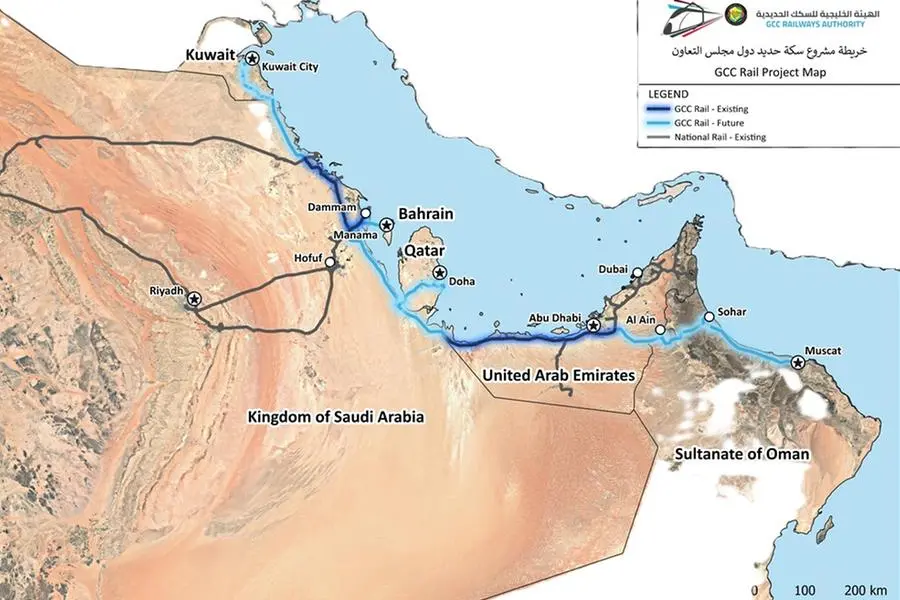
The six-member GCC states are developing the $250 billion, 2,117-kilometre cross-border GCC Railway, which is scheduled to be completed by December 2030.
The SAR Chief executive called for unified operational standards to ease train movements between ports, a digital platform where data can be accessed by rail operators, terminal operators, logistics providers and customers, and better last-mile delivery infrastructure.
“Establishing an integrated corridor where the goods can easily be transferred from ports to economic zones and vice versa is important as well,” he said.
Al-Malik stressed that customs regulations are critical to the project's success. “There is room for improvement over there that would support succeeding in the operational phase,” he noted.
According to the GCC Railway Authority website, freight trains will operate at 80–120 km/h speed while passenger trains will run at speeds above 200 km/h. The network will use diesel traction with ETCS-Level 2 signalling.
(Reporting by Anoop Menon; Editing by SA Kader) (anoop.menon@lseg.com)
Subscribe to our Projects' PULSE newsletter that brings you trustworthy news, updates and insights on project activities, developments, and partnerships across sectors in the Middle East and Africa.