PHOTO
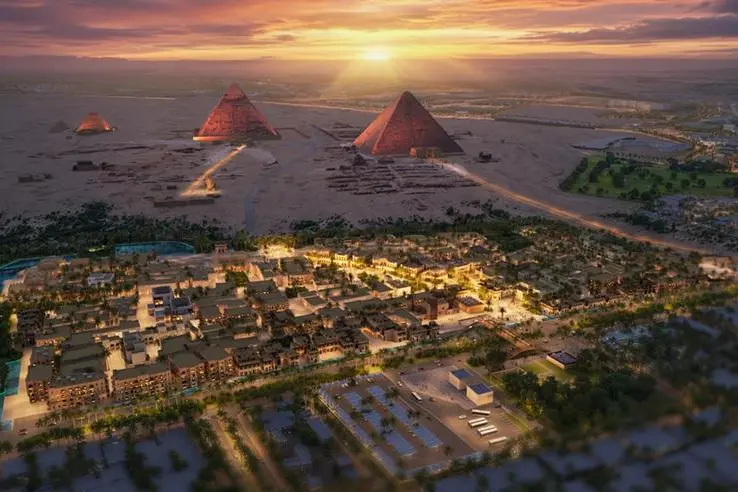
U.S.-headquartered hospitality focussed design firm WATG will this week present the final package of its master plan for the Giza Pyramids region to senior Egyptian government officials, including the Ministry of Tourism, Ministry of Housing, New Urban Communities Authority, the Deputy Governor of Giza, and Prime Minister Mostafa Madbouly.
WATG said in a statement that the master plan constitutes a cornerstone of Egypt’s nationwide tourism vision and long-term economic development strategy
It reimagines a significant expanse of the Western Desert plateau overlooking the Nile Valley, aiming to enhance visitor experience, protect heritage assets, and support sustainable growth over the next 15 years in line with Egypt’s 2040 vision.
Developed by WATG’s multi-disciplinary team—comprising international heritage planners and local Egyptologists—the master plan seeks to balance conservation of one of the world’s most iconic UNESCO sites with Egypt’s tourism boom, infrastructure development, and local communities, according to the statement.
WATG conducted extensive fieldwork, including two in-depth site missions covering the plateau, necropolises, and floodplain, spanning major archaeological zones such as Giza, South Saqqara, and Dahshur, along with adjacent communities.
The plan also emphasises an implementation framework, which ensures an adaptable, future-proofed process that enables Egypt to evolve this region sustainably for decades to come.
Major steps in this development are already being made, with the opening of the Grand Egyptian Museum in November 2025.
Rob Sykes, Associate Principal and Director of Advisory at WATG, said: “It is a rare privilege to engage with a place that holds such immense meaning for humanity. Helping to reimagine this cultural landscape — with respect, sensitivity, and a commitment to its long-term stewardship — has been an honour for everyone on our team. We are excited to have unlocked a wide range of compelling tourism investment opportunities, and we look forward to working with the private sector to realise their potential in the coming years.”
Bassem Fahmy, Head of the Scientific Committee, added: “This project is a strategic move to protect, organise, and elevate the area sustainably and competitively on a global scale, while carefully unlocking opportunities for investment, infrastructure, and community benefits. Our main focus now is to turn these strategies into concrete actions, ensuring every development honours the site's sanctity while providing the modern efficiency needed to handle millions of future visitors.”
(Writing by Majda Muhsen; Editing by SA Kader)
Subscribe to our Projects' PULSE newsletter that brings you trustworthy news, updates and insights on project activities, developments, and partnerships across sectors in the Middle East and Africa.