PHOTO
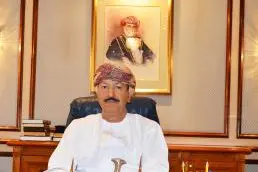
A leading provider of business information and a publisher of annual trade and investment resources, The Business Year (TBY) recently met with HE Hamood Sangour Al-Zadjali, Executive President of the Central Bank of Oman (CBO), to discuss the recent activities in the banking sector of the country.
The interview with HE Hamood Al-Zadjali will be part of TBYs fourth publication on the economy of Oman, The Business Year: Oman 2017.
During the interview, HE Hamood Al-Zadjali told TBY about some of the driving factors that have allowed Omans banking sector to achieve consistent and even robust growth despite challenges brought about by the declining hydrocarbon sector. He cited that the financial profile of Omani banks has remained strong in several of the most important metrics, such as asset quality, provision coverage, capital adequacy, and profitability. Offering a succinct summary of the CBOs approach to developing the banking sector in Oman, HE Hamood Al-Zadjali stressed that, A well-calibrated and progressive approach to banking sector reforms has led to the emergence of a strong and resilient banking system over the years. Despite the challenges facing the economy, the future prospects of the banking sector remain promising taking into account the pace of economic diversification, accommodative monetary policy, sustained domestic demand with a growing young population, and the enhanced role of the private sector in the development process. He also touched on the countrys rapidly expanding Islamic banking segment and mentioned that the combined assets of Islamic banks now comprise about 8% of the Omani banking systems consolidated assets, worth OMR 2.5 billion. HE Hamood Al-Zadjali also spoke about how CBOs monetary policy is designed to tackle liquidity issues in the banking sector, which is a pressing problem in the Gulf. He added that, It was recently decided to permit banks to invest in unencumbered treasury bills, Government Development Bonds, and Oman Government Sukuk to be part of eligible reserves in the statutory reserve requirements up to a maximum of 2% of deposits, effective as of April 2016. The reserve requirement remains unchanged at 5% of the banks deposit base. He continued, It is envisaged that this would make available liquid funds approximately to the order of OMR400 million in the hands of banks.
Apart from HE Hamood Al-Zadjalis contribution, the new publication will feature around 150 interviews with key decision makers from both the public and private sectors of Oman across all sectors.
TBYs publications are read by worldwide corporate clients, international institutions such as the IMF and the World Bank, and as national and international private companies, accountancy firms, financial institutions, industrial conglomerates, and governmental organizations. The Business Year: Oman 2017 will be distributed extensively both globally and domestically and will reach an even larger audience through its fully integrated website and mobile applications for iPad, iPhone, and Android platforms.
Press Release 2016