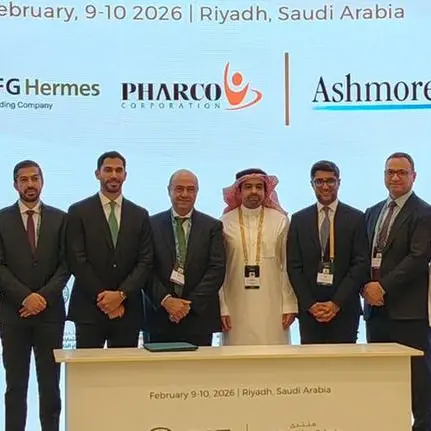
Memorandum of Understanding was signed between PEIE and Export Credit Guarantee Agency of Oman (ECGA)
While the industrial sector is witnessing a significant boost in the Sultanate which is supported directly by the Government of Oman through loans, facilities and well infrastructured industrial estates, experts urge the growth of exports and facilitation of customs procedures to step up the reach of Omani exports to international markets. These areas were highlighted at the Exports and Customs Seminar yesterday (Tuesday) at Grand Hyatt Muscat under the auspices of Hilal bin Hamad Al Hasani, CEO of the Public Establishment for Industrial Estates (PEIE).
Speaking about the importance of the seminar, Al Hasani remarked, "This seminar comes in line with efforts undertaken by PEIE to support industrialists and gather experts from relevant institutions to discuss, raise various issues and outline recommendations to solve challenges. In fact, the Exports and Customs Seminar endeavours to achieve a positive impact reflected on the industrial sector in Oman through facilitating the access of exports to foreign markets by diminishing expected risks and challenges that exporters may face, and provide constant information and services to them."
In order to expand the spread and presence of Omani products in global markets, the Ministry of Commerce and Industry, the Public Establishment for Industrial Estates, Oman Chamber of Commerce and Industry, and the Public Authority for Investment Promotion and Export Development have set an integrated programme to promote these products externally. "A number of Omani Products Exhibitions took place in Saudi Arabia and Qatar during the past two years, and another exhibition will be held this year in the UAE. Undoubtedly, these exhibitions offer greater opportunity for the locally manufactured products to touch upon the markets outside the country," Al Hasani noted.
Memorandum of Understanding
The seminar witnessed the signing of a Memorandum of Understanding between PEIE, represented by its CEO Hilal bin Hamad Al Hasani, and Export Credit Guarantee Agency of Oman (ECGA), represented by its General Manager Nasir bin Issa Al Ismaily, to cooperate in various fields including organising conferences, seminars, workshops, webinars, and other events. The MoU also states the promotion of ECGA and its services to PEIE tenants (exporters), supporting the creation of business opportunities for ECGA, and organising Business to Business Networking (B2B) between ECGA and PEIE tenants.
Remarkable Growth
Addressing the audience at the opening session of the seminar, Eng. Basim Al Nassri, Director General of Marketing and Media at PEIE, said, "Organised by PEIE and held as part of Oman Manufacturing Group (OMG) series of seminars, the Exports and Customs Seminar aims at involving exporters and government entities where they can cooperate and find out what needs to be done to resolve the challenges; learning the best practices in customs and exports from the other countries which overcame these issues; and discovering the possibility of using the advanced Automated Entry Processing Systems."
Al Nassri went on saying, "This seminar comes at a time when Omani non-oil exports are witnessing remarkable growth. Figures recently published by the National Centre for Statistics and Information (NCSI) report an 8.4 per cent growth in non-oil exports from the Sultanate in 2013, and a 22.8 per cent growth in non-oil imports over the same period."
Panel Discussion
The panel discussion was moderated by Ahmed Farooqui, General Manager- Procurement & Supply Chain at Oman Cables Industry, and it featured a lineup of speakers comprising Lieutenant Colonel Mansoor bin Nasser Al Rahbi, Assistant General of Customs Affairs, Royal Oman Police; Warith Al Kharusi, Executive Director of Al Safwa Group & Partners; Salem Al Bortmany, Deputy General Manager of Areej Vegetable Oils & Derivatives; and Mohamed Al Jabri, Head of Marketing, Export Credit Guarantee Agency of Oman.
"The expected outcome of the event is to have a better understanding on today's issues faced by the industry and authorities through an open and fair dialogue between the two. It is important that all stakeholders work together to meet the challenges heads-on," commented Ahmed Farooqui.
Farooqui added, "Exports cannot be seen in isolation, exports are connected very strongly with imports and manufacturing. The ease in setting up a manufacturing facility or ease in expansion by providing processing of documentations at a faster pace (duty exemption, other governmental requirement etc.) plus simplifying import documentations/processes allowing self-clearance through online services and efficient logistics will help exports to grow exponentially."
Farooqui's vision on exports is to have a seamless process starting from imports to the customers' warehouse (i.e. imports of raw materials, manufacturing and exporting to customers). "This will also involve Customs clearances at all borders/ports. This means, while we work internally to improve infrastructure, we also have to work on simplifying customs process at destination countries be it the GCC or outside GCC. In today's world of stiff competition, we have to make our produce high quality and very cost effective. One of the most critical elements of ensuring cost effectiveness is logistics. We must make our logistics highly efficient which includes professionalising logistics service providers, road network, port facilities, customs and railways connecting producers to customers," he noted.
Besides, Farooqui added, "Oman has strategic location on the main sea routes. The government should tap into this under-utilized asset and increase the export volumes. This can be done by reintroducing Oman as a regional hub and facilitating re-exporting by having improved free zones. It is highly encouraging that the government is having serious focus on improving trade and logistics. An important component of trade facilitation is custom. Currently customs operation is manual. Having a centralized online "one stop shop" will definitely improve the process for all. The Electronic Data Interchange should be all combined in one online platform in which all trade parties log into this system (shipping lines, importers, exporters, freight forwarder, customs, ports, etc.)."
Farooqui recommended an imbalance of containerized trade (export-import) in which more imports are coming into Oman compared to export. He stressed this might be a contributing factor to Oman being more expensive to import raw materials to. He also mentioned that regular communication between the Trade and Government can help in addressing the issues on time for quick actions and can create a better environment for business community.
Lieutenant Colonel Mansoor Al Rahbi noted that current efforts of the Directorate General of Customs aspire at developing the status of the Sultanate's exports through implementing its vision and applying various services.
Strategic Location
On the other hand, Warith Al Kharusi commented that the geographical location of Oman is an advantage. Furthermore, he added that the Sultanate has to learn from and collaborate with the competitors in order to advance this field. "Omani manufacturing has been successful, and local products are widely recognised locally as well as abroad. Additionally, logistics and supplying chain is vital. Professionals in this field have to discuss the current status, the challenges, and look into ways to overcome them."
"Oman has a very strategic geographical location where it is ideal in terms of export as well re-export. In order to enhance the exports, both government and private sectors need to work hand in hand to overcome any obstacles and barriers," Mohamed Al Jabri pointed out, adding: "The future vision of Export Credit Guarantee Agency of Oman is to spread its services to all manufacturing units in Oman, and introduce new products which are geared for the global market." Al Jabri also mentioned that the seminar shall raise more awareness among companies as well as individuals on the services offered by various organisations to exporters.
Contribution
On his side, Salem Al Bortmany noted, the non-oil Omani origin exports increased from 173 million during the year 1996 to RO 3594 million in 2012 registering a Compounded Annual Growth Rate of 19.5?, as per export statistics published by PAIPED. "This growth was contributed by various factors including expansion of existing manufacturing units, in addition to new export oriented units, started during the period of growth. Furthermore, such growth could not have happened without a significant contribution, direction, vision and support from various government bodies, departments and institutes," he commented.
Starting from exemption of import duties of raw materials, machineries and equipment to identify target export markets, Al Bortmany believes that the Directorate General of Customs plays a great role in supporting and contributing towards the economy and social development inside the country. "Whereas, in export market another government body tries to guarantee and cover all risks with respect to secure payment, when and if occurred, through Export Credit Guarantee Agency (ECGA). However, currently there are issues, challenges and difficulties related to exemption of import duties, service offered by customs at all entry points as well as exports related matters and issues related to ECGA, which shall be discussed with participants from various industries at the seminar," Al Bortmany pointed out.
He adds, "Major concern in business is to ensure partnership with customs through transparent and predictable border procedures and improve compliance of manufacturers, hence addressing the matter of economic development. Capacity building strategy can be a right approach to overcome most of the existing issues as well as future challenges which might occurs across customs with respect to high increase in volume and values, both import as well export of non-oil Omani origin. Therefore, this seminar seems to be a right platform to discuss and may be to come up with appropriate views, recommendations and action plans to overcome such challenges in near future, a medium and longer-term."
It is noteworthy that the OMG series of seminars aim at underlining various areas related to businessmen, employees and students of higher education institutions in the Sultanate. OMG seminars have been initiated to bring together local manufacturers and various industries to network and discuss on the recent trends triggered in the industry and promote the development of the manufacturing sector in Oman.
© Press Release 2014