PHOTO
Dubai, UAE — UAE residents are approaching Eid al-Fitr 2026 with a festive mood centered on family connection, mall outings and shared food experiences, while spending intentions remain resilient but increasingly selective, according to a new consumer study by Toluna.
Family, Food and Mall Culture Define the Eid Experience
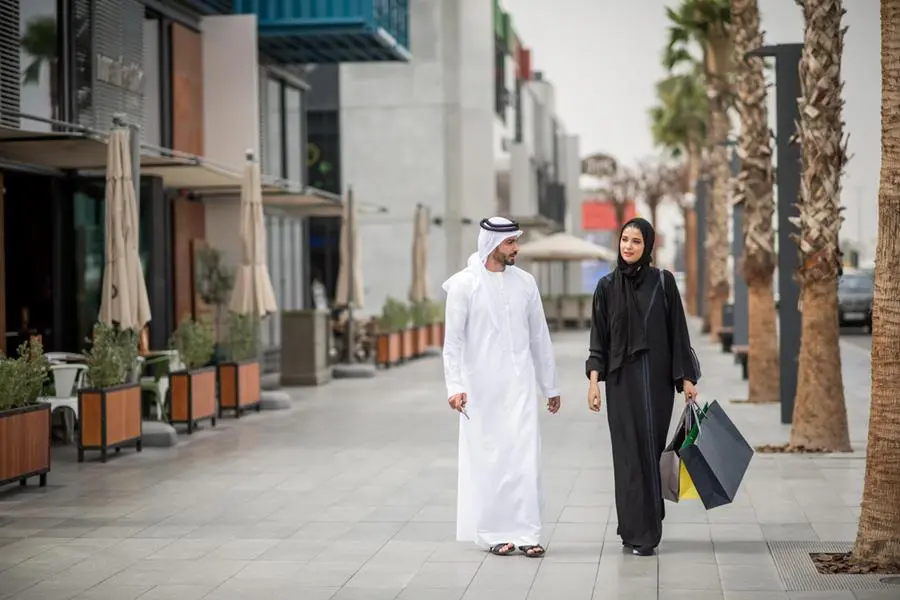
Social connection remains at the heart of the holiday. The study shows that 77% of UAE residents are likely to visit relatives and friends during Eid, making it the most widely planned activity. Retail and leisure are also deeply woven into the celebration, with 75% saying they are likely to visit shopping malls for shopping and 70% for entertainment. Food remains a major part of the season’s appeal: 71% say they are likely to savor delicious and new cuisines, 69% to go to restaurants or fine-dining venues, 67% to host house parties or in-home gatherings, and 63% to explore new restaurants.
Spending Intentions Remain Positive Across Social and Experiential Moments
At the spending level, the picture remains positive. Half of UAE residents, or 50%, say they expect to spend more on shopping than they did in 2025. Another 45% anticipate higher spending on socializing and 41% on entertainment, while 39% expect to spend more on dining out and 36% on ordering food. Taken together, the findings suggest that Eid remains a strong consumption moment in the UAE, particularly where social and experiential spending intersect.
Essentials and Festive Staples Lead Category Growth
That momentum, however, is being channeled most clearly into practical and festive essentials rather than into a broad-based uplift across all categories. Groceries lead spending expectations at 57%, followed by chocolates, dates and sweets at 49%, fashion clothing at 47%, fragrances at 45%, skin care products at 42%, and household cleaning items at 40%.
Lifestyle categories remain active but more moderate, with 37% expecting to spend more on small home appliances, home goods and furniture, and designer accessories, while 36% say the same for cosmetics and beauty products. Higher-ticket purchases appear more measured, with 34% expecting to spend more on gold and diamond jewellery, 34% on technology and electronic gadgets, and 32% on major electronic devices.
Eid Gifting Stays Strong, but Choices Are Becoming More Conservative
Eid gifting remains widespread, but the basket is becoming more conservative. In 2026, 84% of UAE residents say they plan to give gifts for Eid, down from 90% in 2025. The most popular choices are chocolates, dates and sweets at 43%, fragrances at 40%, money at 36%, fashion clothing at 36%, and toys and games at 34%. By contrast, higher-value gift categories have weakened notably. The share planning to give gold and diamond jewellery has fallen to 22% from 29% last year, while technology and electronic gadgets have declined to 17% from 27%, and small home appliances to 15% from 20%.
Immediate Family Remains the Priority for Gift Giving
Gifting also remains centered primarily on the immediate family. Among those planning to give gifts this year, 64% say they will buy for their children, 59% for their spouse, and 47% for their parents. Beyond that inner circle, 40% say they will buy gifts for friends and 35% for themselves. The pattern suggests that consumers are not stepping away from Eid gifting, but they are narrowing the circle and prioritizing where spending feels most meaningful.
Price Sensitivity Is Driving a More Disciplined Festive Budget
That shift is closely tied to price sensitivity. Among UAE residents who expect to spend less on Eid gifts this year, 37% cite higher prices as the main reason, 30% say they want to save money, and 29% say their personal finances have worsened compared with the past year. A further 25% say they will buy for fewer people, while 24% say they are deliberately choosing to spend differently and be less consumerist.
Commenting on the findings, Danny Mandonca, Managing Director for Middle East and Africa at Toluna, said: “Eid remains one of the most important consumer moments of the year in the UAE. What we are seeing in 2026 is not a decline in celebration, but a shift toward more intentional spending. Consumers still want the family, dining and shopping experiences that define the season, but they are placing greater emphasis on value, relevance and prioritization. For brands and retailers, the opportunity lies in meeting that demand with offers and experiences that feel both festive and worthwhile.”
About the Study
Toluna’s 2026 Ramadan Revelations: Unveiling Emerging Consumer Trends examines consumer behavior during Ramadan and Eid across the UAE and Saudi Arabia. The UAE findings are based on an online self-administered survey among 556 residents aged 18 to 60 conducted between 30 January and 3 February 2026.
About Toluna
Toluna is the global research and insights leader that enables businesses to make smarter, data-driven decisions - faster. For 25 years, we have partnered with the world’s leading brands, delivering transformative impact through our advanced technology platform, comprehensive solution portfolio, expansive global first-party panel, and world-class team of leading research experts. Since 2019, we’ve made significant investments in artificial intelligence to enhance automation, accelerate insight delivery, and unlock deeper understanding at scale. With 40+ offices worldwide, Toluna operates in 70+ countries, redefining the future of insights. Learn more at www.tolunacorporate.com.
For media inquiries, please contact:
Rima Termos
Communication Consultant
Email: rima@comtmcc.com