PHOTO
- Marwan Ahmed bin Ghalita: The success of Urban Future Week reflects Dubai’s commitment to strengthening its leadership role in developing sustainable city governance and planning concepts.
- Khalfan Belhoul: Urban Future Week shed light on Dubai’s efforts toward building a global urban model based on innovation and knowledge.
Highlights of Urban Future Week Sessions:
- Lecture on Architecture by Jordanian architect Sahel Al Hiyari, winner of the ‘Great Arab Minds’ award in the Architecture and Design category.
- Session titled “The Engine Room of the City of the Future” with speakers from Dubai Civil Defense, Dubai Municipality, and the Dubai Resilience Center.
- Session on “The Proactive Municipality” discussing ways to use future foresight to develop municipal services and improve urban quality of life.
- Various panel discussions on the role of architecture in urban transformation, the future of urban storytelling and the importance of human-centric urban development.
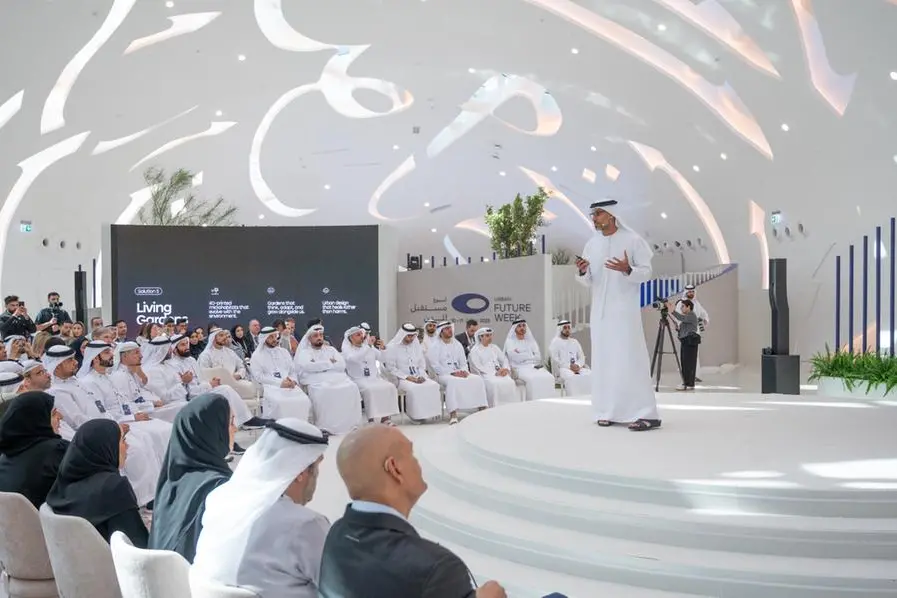
Dubai: Dubai’s Urban Future Week concluded today, spotlighting breakthrough strategies to reshape the cities of tomorrow. The event was organised by the Museum of the Future in partnership with Dubai Municipality, gathering a distinguished group of leaders, experts, and decision-makers from around the world. It aimed to enhance resilient cities and their readiness for the future through technology, anticipatory design and urban innovation.
Held on November 10–11 at the Museum of the Future, the event attracted broad participation from specialists, academics, representatives of local and international government as well as private entities, and numerous professors and students from across UAE universities.
H.E. Eng. Marwan Ahmed bin Ghalita, Director General of Dubai Municipality said: “The success of Urban Future Week reflects Dubai’s ongoing commitment to strengthening its pioneering role in developing new concepts of urban governance and sustainable city planning. This aligns with the strategic vision of our wise leadership to make Dubai a global model for smart cities that place human well-being at their core. This event provided a valuable opportunity to exchange expertise and build effective partnerships that contribute to formulating innovative urban solutions aligned with requirements for the future and the goals of sustainable urban development.”
He added: “At Dubai Municipality, we are keen to translate the outcomes of this exceptional event into practical projects that enhance our municipal system’s readiness for upcoming challenges. This will be achieved by developing predictive policies, adopting advanced digital tools and expanding cooperation between the public and private sectors, further solidifying Dubai’s position as a leading city in future foresight and flexible governance.”
A Global Urban Model
H.E. Khalfan Belhoul, CEO of the Dubai Future Foundation, said: “The future of cities will not be built on traditional solutions, but on bold innovative efforts capable of addressing accelerating global challenges. Our vision is anchored around five strategic priorities: redefining energy efficiency through intelligent, AI-powered grids; addressing thermal inequality with innovative materials that make homes cooler and more sustainable; reconnecting humanity with nature through technologies that simulate natural environments and restore balance between people and their surroundings; tackling water scarcity through autonomous, renewable-energy-based solutions; and finally, preserving biodiversity by transforming cities into living gardens powered by artificial intelligence and 3D printing.”
He added: “Our goal is for Dubai to serve as a global laboratory for these transformations, a place where technology and nature converge to ensure human well-being and the sustainability of life, reinforcing Dubai’s position as a global hub for developing ideas and experiences that redefine the future of cities.”
Belhoul added: “The Museum of the Future is a global centre for designing the future and for anticipating major transformations that will reshape cities and communities. This collaboration with Dubai Municipality to organise Urban Future Week comes as part of our efforts to better integrate among government entities to achieve Dubai’s vision for the future.”
Tangible Results
Majed Al Mansoori, Executive Director of the Museum of the Future, said: “Over the past two days, Urban Future Week has served as an outstanding platform to enhance collaboration and drive joint action to achieve tangible results in redefining how we envision the cities of the future. The next stage will focus on translating the ideas and partnerships that emerged during the event into projects, initiatives, and strategies that can be implemented on the ground, helping improve quality of life, protect the planet and enable cities to meet the challenges of our era.”
He added: “Urban Future Week succeeded in reinforcing Dubai’s position as a global hub for dialogue on the future of digital cities and smart communities, reflecting the commitment of both the Museum of the Future and Dubai Municipality to advance global discussions on governance and urban innovation.”
Designing Future Cities
Urban Future Week activities included a lecture on architecture delivered by Jordanian architect, Sahel Al Hiyari. Sahel also won the ‘Great Arab Minds’ award in the Architecture and Design category. The lecture took place within the “Master Class” series, organised jointly by the Museum of the Future and Great Arab Minds.
The lecture drew wide attendance from architects, designers, students and creative professionals who engaged with Al Hiyari’s ideas on the role of architecture in shaping public spaces and redefining the relationship between people and places. Recognised as one of the most influential Arab architects in modern architectural movements, Al Hiyari’s career has earned broad recognition in global academic circles.
The lecture titled “Observations on Architecture: An Afterlife of Form” explored the deep interaction between form, matter and meaning in architectural practice, seen as the product of interwoven historical, material, and human layers. Al Hiyari explained that meaning in architecture is not pre-formulated but evolves over time and circumstance through continuous dialogue between human and place.
He emphasised that architectural design, when guided by a deeply human and intellectual perspective, can create lively cities connected to both identity and knowledge. He also discussed his concept of “the logic of silent intuition” as the authentic foundation of creative work, asserting that design ideas arise from an instinctive sense preceding analysis and theory, with intuition guiding the creative process and giving it authenticity and balance.
Flexible Governance
Day two focused on the theme of “Digital Cities, Placemaking and Community Futures,” emphasising the design of human-centered cities leveraging digital technologies to improve quality of life.
A session titled “The Engine Room of a Future City” featured: Ali Al Mutawa, Major General Expert, Assistant Director General Fire & Rescue Affairs, Dubai Civil Defense; Eng. Adel Al Marzooqi, CEO Waste & Sewerage Agency, Dubai Municipality; and Ahmed Ateeq Abdulla Bourguiba, CEO of the Dubai Resilience Centre. The participants discussed ways to enhance flexible governance and institutional readiness in managing smart cities.
Another session, “The Proactive Municipality: Shaping the Future Through Foresight-Driven Signals,” featured Badr Al Mulla, Head of Strategic Planning section, Dubai Municipality, and Mohammed Ali, Future Foresight Expert, Dubai Municipality. The session examined mechanisms for employing future foresight in developing municipal services and improving quality of life in cities.
The session “Architecture’s Role in Urban Transformation,” moderated by Engineer May Barber, creative strategist and educator, explored the impact of architectural design on building resilient and healthy cities. Speakers included Christos Passas, Director, Zaha Hadid Architects, III-Sam Park Partner and Architect, Foster and Partners, Peter Stephenson Co-MD, OMNIYAT, and Dr. Kevin Mitchell Professor of Architecture at the American University of Sharjah.
The session “The Future of Urban Storytelling: Making Sustainability Desirable,” moderated by Architect and Designer Al Zaina Lootah, featured Marjan Faraidooni, Chief HR Officer and Head of Education and Culture, Expo City, Ila Colombo, AI Creative Researcher, Artist and CEO at DEOND, as well as Dr. Martina Mazzarello Global Lead MIT Senseable Lab. The discussion showcased creative ideas to inspire communities to adopt sustainable behaviours through design and urban experiences.
In “Communities by Design: Building Inclusive Urban Futures,” moderated by Inzamam Rashid, Senior Correspondent at Monocle magazine, speakers included Majed Al Mansoori, Executive Director at Museum of the Future, Dr. Alamira Reem Al Hashimi, General Manager, M_39, and Natasha Carella, Director, Dubai Design Week. They discussed the importance of cross-sector collaboration to develop cities that place people at the heart of the design process.
Urban Future Week concluded with closing remarks and a ceremony honouring partners and participating entities, reaffirming Dubai’s commitment to continuing to strengthen its position as a global platform for designing the future of cities and societies. The event emphasised enhancing integration among government, private, and academic sectors to accelerate the adoption of innovative solutions and solidifying a distinctive Emirati model of sustainable urban development.