PHOTO
The specialized legal forum, organized by the Abu Dhabi Judicial Department in cooperation with the General Secretariat of the Cabinet, reviews the most prominent legislative transformations in the Civil Procedures Law under Federal Decree-Law No. (22) of 2025. These transformations reflect an evolution in the philosophy of procedural organization of litigation and a shift towards a more flexible and integrated model for managing legal cases, thereby enhancing the effectiveness and competitiveness of the judicial system.
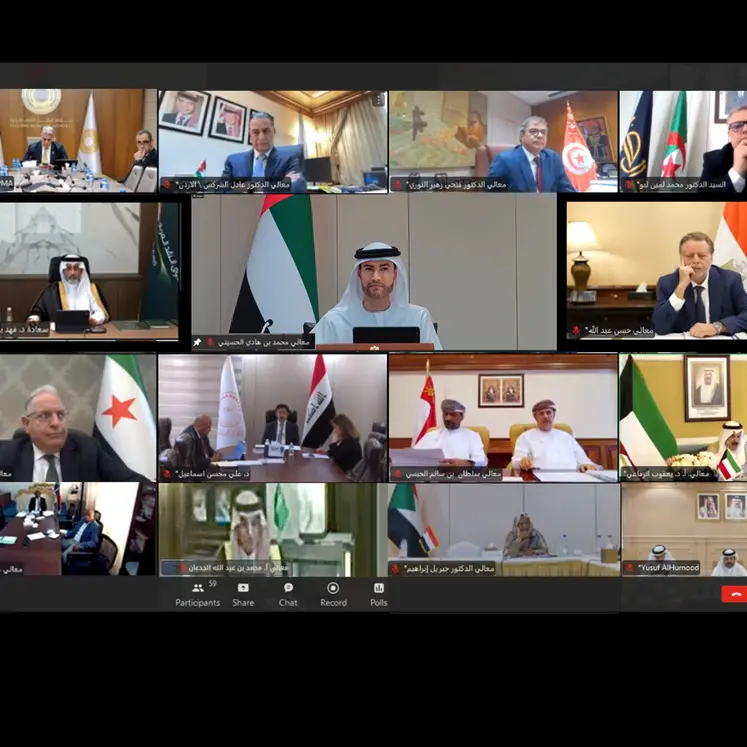
The forum, held virtually through the Abu Dhabi Judicial Academy platform, was attended by approximately 200 participants, including judges, experts, legal professionals, lawyers, and accredited mediators.
This initiative reflects a commitment to keeping pace with legislative developments and enhancing legal awareness of the updates to the Civil Procedures Law, by presenting practical models and specialized perspectives that contribute to a unified practical understanding of the new law provisions and to establish an advanced judicial system that supports the requirements of sustainable development.
During the forum, His Excellency Dr. Obaid Ali Obaid Al Ali, Assistant Secretary-General for Legislative Affairs at the Cabinet, presented a note highlighting the most significant amendments introduced by the decree. He explained how these amendments reflect a qualitative shift in the philosophy of procedural organization of litigation, transforming judicial procedures from mere formal rules for regulating disputes into an integrated system for administering justice. The new system aims to enhance the efficiency of dispute resolution, achieve a balance between the guarantees of due process and the effectiveness of judicial decisions, and strengthen the quality and enforceability of judgments. This, in turn, contributes to streamlining procedural processes and achieving swift justice.
The presentation also addresses the legislative trend towards judicial specialization as a tool for improving the quality of judgments. It highlights its impact on unifying judicial approaches, expediting the resolution of technical and complex disputes, and enabling the judiciary to manage complex, multi-party disputes more efficiently and comprehensively, particularly in light of the establishment and development of the specialized courts stipulated in the law.
The forum reviews the economic and investment impact of restructuring and developing judicial procedures, and their role in supporting and enhancing the attractiveness of the investment environment and raising the country's competitiveness in global indicators related to contract enforcement and dispute resolution. This reflects the close link between developing civil justice and economic development.
It also addresses the role of digital transformation in developing the justice system by facilitating access to judicial services, reducing the time and financial costs of litigation, and promoting procedural equality among litigants, thus supporting the efficient and flexible achievement of justice.
The forum also discusses the most significant amendments introduced by the decree, including developing the jurisdictions of specialized courts for complex disputes, expanding their technical and procedural powers, tightening the requirements for admitting appeals, and expanding the scope of cassation appeals to include certain judicial decisions. Furthermore, it strengthens the Public Prosecution's powers to appeal in the interest of the law, all within a comprehensive legislative vision aimed at raising the efficiency of the judicial system and achieving faster, more specialized, and more effective justice.