PHOTO
- Peji Kanani: Fundraising is a milestone. Not the goal.
- Rosa Piro: When you look at billion-dollar investments, value creation is about consistency and strategic decisions rather than speed
- Karolos Travassaros: By the time the deal closes, you should already have a clear roadmap for how culture, decision-making, and partnership will work.
Sharjah: On the first day of the 9th annual Sharjah Entrepreneurial Festival (SEF), the most valuable lessons weren’t about how to raise capital or chase global headlines. They were about restraint, patience, and the quiet discipline required to build businesses that last.
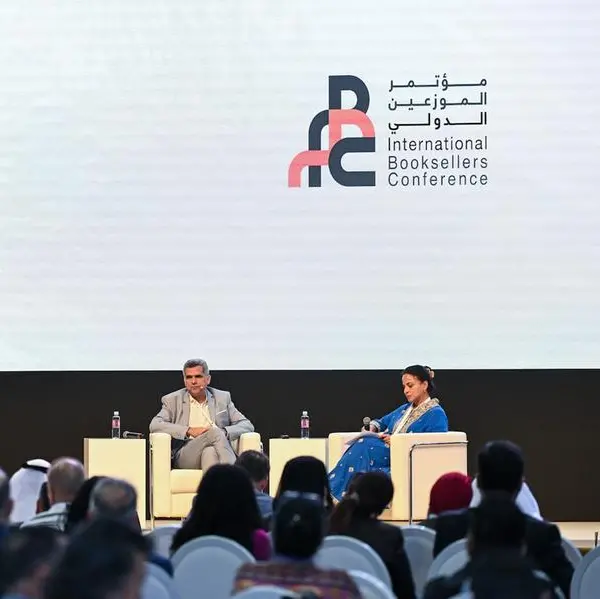
On stage with Anne-Laure Malauzat, managing partner at Bain & Company, Rania Masri El Khatib, chief executive of The Giving Movement, delivered a message that cut against the grain of startup ambition. The five-year-old UAE athleisure label, born during Covid and now worn by celebrities from Los Angeles to Riyadh, is often cited as a regional success story with global appeal. Yet Masri El Khatib’s advice to founders was strikingly local. “The real value addition and expansion is local,” she said. “Stop trying to win New York before you have won your own neighborhood.”
In a session titled, Path to the Top: Leading a Brand Into the Future, she offered a candid look at how a viral, purpose-led startup becomes a durable brand. “A lot of homegrown brands think, ‘I need to make it in the US,’” she said. “But have you really owned your region yet?”
For Masri El Khatib, who has spent 24 years in the UAE across luxury retail, media, and transformation roles, including at Chalhoub Group, geography is no longer a handicap for regional brands but their competitive moat. “It’s never been more powerful to be homegrown,” she said. “No international brand can compete with us on our own turf when it comes to culture.”
“There’s no better place to be an entrepreneur,” she added. “The energy of this place is unbelievable.”
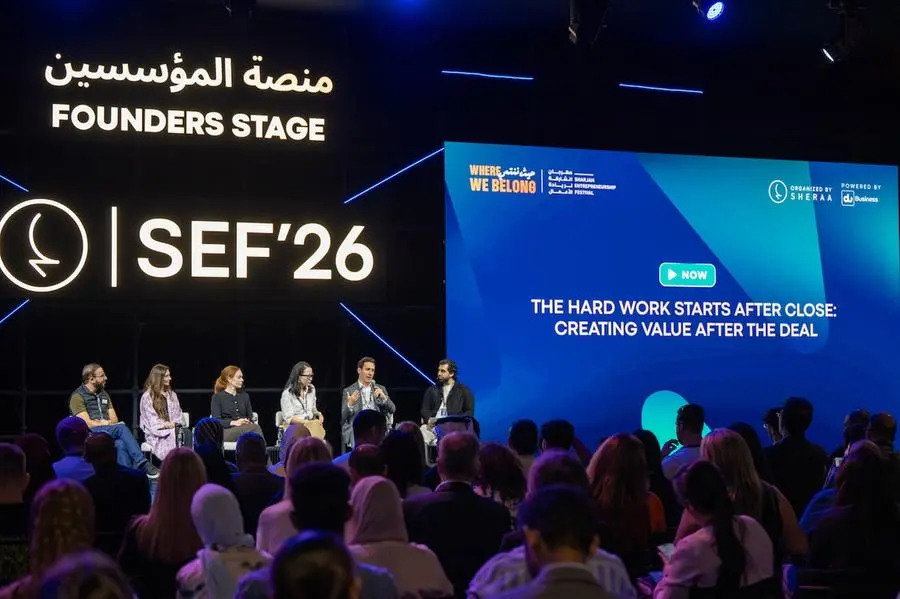
This idea surfaced repeatedly across the festival’s panels. A session titled, “The Hard Work Starts After Close: Creating Value After the Deal”, which brought together founders, investors, and operators to discuss what happens once funding lands, echoed similar sentiments.
“The hard work starts after the close,” said moderator Peji Kanani of Carta. “Fundraising is a milestone. Not the goal.”
Karolos Travassaros of Emirates Growth Fund argued that the industry often misunderstands when value creation begins. “People think value creation is what happens after closing,” he said. “In reality, it’s a mental shift that starts from the first meeting. By the time the deal closes, you should already have a clear roadmap for how culture, decision-making, and partnership will work.”
Investors, he noted, are not backing spreadsheets. They are backing founders with expertise, conviction, and blind spots. “Founders are emotionally attached to their business. There are opportunities they don’t prioritize, or don’t see. We’re not trying to change everything. We’re trying to understand whether we can partner with someone who will listen, and who we will listen to.”
Juliet Zhu, chief executive of Constellation Ventures and a former venture capitalist turned operator, agreed. “When I was a VC, we had a playbook about adding value in the first 90 days,” she said. “Looking back, that was silly. The real value creation happens during the deal process from the first meeting through diligence, because that’s where you align how decisions will be made.”
For founders, that alignment can feel abstract until capital arrives. Brooke Bellamy, founder of dessert brand Brooki, which recently closed a $25 million round with UAE developer Arada, described how the shift plays out in practice.
“They spoke about building communities,” she said of early conversations with investors. “And for us, we’re building a brand people want to belong to, not just a product they want to buy. I walked out and told my husband: "this is it.”
That conversation took place a year before the deal closed, when Brooki ran a pop-up in Abu Dhabi that drew hour-long lines. Three months after the investment, Bellamy’s focus is less on expansion than on discipline.
Rather than rush into permanent stores, the company is experimenting with pop-ups across the UAE. “Lower spend, higher value. We’re learning directly from customers before we scale.”
If there was one warning repeated across the panel, it was that money in the bank can create a dangerous illusion of progress.
Zhu recalled raising $290 million in seven months at a previous company. “Suddenly every department head came to me saying, ‘Finally we have the budget to do everything we wanted to do.’ That’s terrifying,” she said. “Funding gives you confidence to do 99 things when you should be focused on one.”
“Capital amplifies discipline,” she added. “Be very careful with money.”
From the investor’s side, Rosa Piro, chief investment officer at Arada, described how value creation looks when portfolios run into the billions. “When you look at billion-dollar investments, value creation is about consistency and strategic decisions rather than speed,” she said. “It’s about processes, governance, and compounding value over time.”
Arada follows three principles when allocating capital: protect the core cash-generating business; invest in scalable businesses that diversify revenue; and hold back capital for synergistic opportunities. “Don’t invest for the sake of investing,” she said. “Invest in businesses that create synergy with your brand and long-term vision.”
For founders navigating the post-deal relationship, Ahmad Al Saif, founder of Alefredo EdTech, offered a practical rule. “Two golden rules: communication and authenticity,” he said. “Don’t bring only good news to investor meetings while sales are dying. Bring the challenges and suggest solutions.” He cautioned that trust takes time. “Relationships with investors mature over years. Some founders expect that maturity in two days.”
In an era obsessed with speed, faster funding, faster growth, faster exits, the entrepreneurs and investors on stage at SEF 2026 are making the opposite case. Build locally before expanding globally. Align values before signing term sheets. Spend slowly after raising quickly. And above all, remember that capital is not progress.
The Sharjah Entrepreneurial Festival, held January 31 to February 1 at the Sharjah Research Technology and Innovation Park and organized by the Sharjah Entrepreneurship Center (Sheraa), expects more than 14,000 attendees and features over 300 speakers across 250 sessions.