PHOTO
- Collective Defence combines its cyber capabilities with Asterion’s combat-proven counter-UAS systems, validated in operational deployment with Ukrainian forces and in the Gulf.
- The transaction values the combined business at over US$1 billion, establishing Luxembourg’s first defence unicorn.
- A private-sector embodiment of the ReArm Europe Plan / Readiness 2030 in action: combat-validated, European-headquartered, and built across two converging capability domains — cyber and counter-drone.
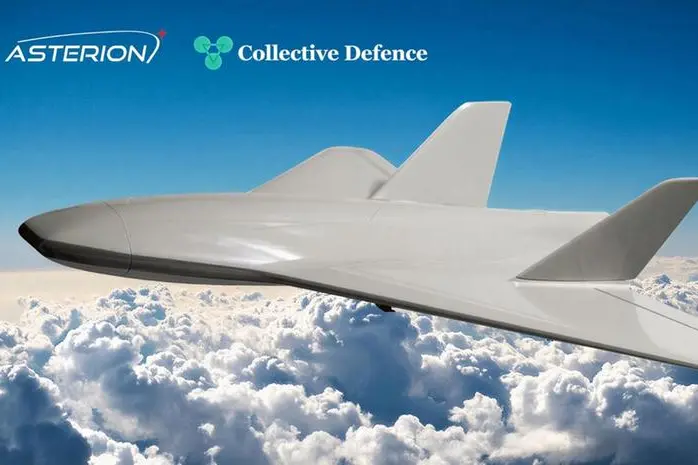
LUXEMBOURG / WASHINGTON DC / LONDON / RIYADH — Collective Defence S.à r.l., the Luxembourg-headquartered multi-domain defence company, today announced the acquisition of Asterion, one of the fastest-growing operationally proven counter-drone companies in Europe and the Middle East. The transaction — led by C5 Capital, the specialist defence and national security investment firm headquartered in Washington DC, and backed by a number of strategic sovereign investors — values the combined business in excess of US$1 billion. It establishes Luxembourg’s first defence unicorn and one of Europe’s largest privately held defence technology platforms.
The acquisition brings together Collective Defence’s network defence, threat intelligence and Security Operations Centre (SOC) capabilities — built on the integration of ITC Secure and IronNet — with Asterion’s portfolio of counter-unmanned aerial systems (C-UAS), spanning radio-frequency detection, AI-enabled tracking, and layered kinetic and non-kinetic effectors.
Combat-Proven in Ukraine and the Gulf
Russia’s use of electronic warfare to disrupt, divert and compromise Ukrainian drones — including UAVs forced off course into allied airspace — underlines why counter-drone defence can no longer be treated as a purely physical air-defence challenge. It must be integrated with cyber, electronic warfare and command-and-control resilience.
Asterion’s scalable C5ISR technology that fuses multi-layered detection and enables the launch of autonomous interceptors has been tested in operational conditions in Ukraine and the Middle East, where it demonstrated effectiveness against Iranian-designed Shahed-series loitering munitions and Russian first-person-view (FPV) drones.
Conducted alongside local armed forces, these deployments validate the system’s ability to detect, classify and neutralize hostile UAS at scale across contested electromagnetic environments.
Ukraine and the Middle East have become the most demanding proving grounds for counter-drone technology in modern warfare. Systems proven in real-world combat carry credibility that no laboratory can confer.
Asterion holds contracts exceeding Euro 100 million with allied governments and has one of the fastest-growing contract pipelines in Europe and the Middle East.
Cyber and Counter-Drone: The Architecture of Contemporary Force Protection
Modern drones are flying computers. They are commanded, navigated and updated through software, communications links and, increasingly, machine-learning models — every one of which is a cyber-attack surface. The convergence of cyber and counter-drone defence is now central to the architecture of contemporary force protection.
The combined company will offer governments, critical national infrastructure operators and enterprise customers a single integrated stack covering:
- Cyber threat detection and incident response across IT, OT and ICS environments
- Detection, classification and tracking of hostile drones and swarms
- Kinetic and electronic effectors, with software-defined targeting and rules of engagement
- A unified command-and-control layer linking cyber defence and physical airspace defence
Luxembourg as a European Defence Hub
The transaction reinforces Luxembourg’s emergence as a European centre of excellence for defence technology and innovation, and aligns with the Grand Duchy’s national defence strategy. Luxembourg is a founding member of NATO, hosts the NATO Support and Procurement Agency (NSPA), and has committed to raising defence spending to 2% of GDP. Its defence guidelines for 2035 prioritise innovation, dual-use technology and integration into allied supply chains. Establishing the combined Collective Defence–Asterion platform in. Luxembourg anchors a combat-validated European defence technology company within a NATO and EU member state, and deepens the country’s role in the integrated defence technology sector.
Advancing Europe’s Rearmament Agenda
The transaction aligns directly with the European Commission’s ReArm Europe Plan / Readiness 2030, which seeks to rebuild European defence capabilities, close critical industrial gaps and mobilise private capital into urgent technology domains — including cyber, artificial intelligence and advanced effector systems. Collective Defence’s acquisition of Asterion is precisely the kind of European-headquartered, combat-validated platform the plan is designed to accelerate, combining cyber and counter-drone capabilities to meet the most immediate operational needs of modern warfare.
With a proven operational record in Ukraine, the combined company demonstrates the link between commercial defence innovation and Europe’s collective security priorities. As governments begin deploying capital through the Security Action for Europe (SAFE) instrument, Collective Defence is positioned as a pan-European platform of scale for cyber and counter-UAS procurement programmes. The transaction is subject to all necessary approvals including regulatory approvals before closing.
Arno Robbertse, Chief Executive Officer of Collective Defence:
“Today’s announcement closes the gap between cyber defence and physical airspace defence. Our customers — governments, energy operators and critical infrastructure owners — face one threat surface, not two. Asterion’s combat record in Ukraine and the Gulf, combined with our cyber capabilities, provides one security architecture, one operating picture and one accountable partner.”
Andre Pienaar, Founder and Chief Executive Officer of C5 Capital:
“We built C5 Capital to back the companies that protect critical infrastructure and the civilians who depend on it. The human cost is rising, not falling — the UN has verified that civilian casualties in Ukraine in the first four months of this year were 21 per cent higher than in the same period last year. In Ukraine, Russian Shahed drones have killed civilians and destroyed the power, heating and water systems that families rely on through winter; across the Gulf, the same Iranian-designed loitering munitions threaten cities, energy facilities and shipping lanes. These are no longer only military targets — they are hospitals, substations and homes.
“That is why we have brought cyber and counter-drone defence together in Collective Defence. Its mission is to defend the people and the systems that cannot defend themselves, because today the threat to a network and the threat to a neighbourhood are one and the same. Building that capability as Luxembourg’s first defence unicorn, anchored in a NATO and EU member state, is exactly what European sovereign capability should look like.”
Edward Newberry, Chairperson of the Advisory Council, Collective Defence:
“This combination delivers exactly the kind of integrated capability that Western governments have said they need but have struggled to field. Bringing cyber and counter- drone defence under one roof, anchored in a NATO and EU member state, gives allies a sovereign European option that is operationally tested and strategically aligned. The Advisory Council is proud to support a company that is setting the standard for what credible national defence technology looks like in Europe.”
General Sir Graeme Lamb KBE CMG DSO, former Director of UK Special Forces and Senior Advisor, Collective Defence:
“The very nature of war may have changed. Autonomous systems, drones, digital networks operating at machine speed, bottomless data, cyber and artificial intelligence are rewriting the economics of attack and defence. What we are seeing in Ukraine confirms a hard truth: the side that fuses electronic, cyber and kinetic effects into a single operating picture owns the initiative. Collective Defence and Asterion together are building precisely that capability – and they are building it now, at the speed the threat demands.”
Andreas Mustert, Founder and Chief Executive of Asterion:
“Joining Collective Defence allows us to deliver our combat-proven systems at the scale that Europe and the Gulf now require. Our vision of an un-jammable AI enabled airborne and terrestrial networked “kill chain” is a perfect match with Collective Defence. Being part of Collective Defence enables us to ramp up production of electric jet interceptors with a range of 200 kms and the roll out of our short-range detection and interception system which provides unmatched and multi-layered protection of critical infrastructure and high-risk personnel against both electronic warfare and kinetic attacks.”
About Collective Defence
Collective Defence is a global multi-domain defence company headquartered in Luxembourg, operating an AI-based defence platform that integrates cybersecurity with
counter-drone defence. It serves governments, financial institutions and critical national infrastructure operators across Europe, the Middle East, Asia and the United States.
About Asterion
Asterion is one of the fastest-growing counter-drone companies in Europe and the Middle East, providing radio-frequency detection, AI-enabled tracking and layered effector solutions to government and critical national infrastructure customers. Its systems have been operationally deployed in Ukraine and the Middle East.
About C5 Capital
C5 Capital is a specialist investment firm with offices in Washington DC, London, Luxembourg and Vienna focused on defence and energy security.
Media Contacts
For further information, please contact:
Collectivedefence@consulum.com