International experts highlight developments in Arab and international markets during the conference on "The Priorities of Arab Capital Markets in Light of Current Economic Developments"
ABU DHABI: The 4th Annual conference of the Securities and Commodities Authority (SCA) which was held Monday here in Abu Dhabi under the patronage of H.E. Engineer Sultan bin Saeed Al-Mansoori, Minister of Economy and SCA Board Chairman, ended successfully. A number of experts and stakeholders in the financial, banking and economic sectors attended the conference which was held under the theme: "The Priorities of Arab Capital Markets in Light of Current Economic Developments".
In his opening address, H.E. Abdullah Al-Turifi, SCA Chief Executive Officer, said the conference aims at reviewing the developments on the local and international financial markets and to highlight these developments to see how best to benefit from them, adding that average trade volume on the local markets has surged by 51% in the first quarter of the year compared to the same year in 2011.
He reviewed the performances of various sectors of the UAE markets. "The year 2011 and the first quarter of this year have been full of economic and financial developments at the regional and international levels, which ha, undoubtedly, reflected on the international and local financial markets. Therefore, this conference aims at highlighting these developments to see how best to benefit from them. It is our hope that recommendations made at the end of the conference would serve as a guideline for stakeholders in the securities industry on the priorities of action, particularly in the area of legislation. We also hope for useful suggestions for the financial markets to be able to catch up with the advanced markets of the world by tapping into common international standards and benefiting from best foreign practices after remolding them to suit local Arab nature," he stated.
"At both the local and the international levels, the latest developments have energized the economic sectors, particularly the financial sector as trading volume surged by about 51% in the first quarter of this year, compared to the same period last year. Records show that trade volume remains solid and keep on rising steadily," he added.
Citing the performance of the various market sectors, he said annual reports show a big surge in profit and distribution of dividend to shareholders, to redeem the hope and confidence in investors. "Perhaps that has contributed to the increasing inflow of liquidity to the market, leading to sharp increase in the general profit of national companies listed on the Abu Dhabi Stock Exchange (ADX) and Dubai Financial Market (DFM) in 2011, which recorded an appreciation of 83% compared to 2010," he said.
"By sector, the real estate sector recorded the highest profit rise of 115%, the transport sector recorded 47%, while the banking sector has 20% to its credit. Generally, 80 out of a total of 104 local companies which have disclosed their financial statements achieved positive profit during the year. The total net profit of those companies was over AED33 billion in 2011", he added.
He pointed out that the SCA remains committed to sustainable improvement of the securities sector in line with the best international practices. To achieve this, the SCA has so far issued 36 regulations and is currently working towards the issuing of more regulations which are expected to make positive impact on the local securities markets and to further revitalize them. Notable among these new regulations are the regulations for market-maker, short-selling, securities lending and borrowing and providing liquidity for stocks of listed companies through the latter's option of entering into contract with industrialists, in addition to regulations for administration of investment funds and portfolios as tools for activating corporate investment.
"And in line with international practices and as a result of the global financial crisis, the SCA is working with its strategic partners to develop the market mechanisms - like its collaboration with the ADX and DFM to develop the Delivery versus Payment (DvP) and developing of the financial brokerage profession by ranking brokers into classes (Executor Only / Executor with authority to practice Clearance and Settlement activities). Furthermore, the SCA is also developing the mechanism of supervision of operations and modern procedures for investor protection", he stated.
Moving to international level, Al-Turifi said the US economy is showing significant improvement as unemployment rate slipped and mortgage market stabilizes significantly. "The European Union, as it appears, is trying to gain control of the financial difficulties being suffered by some of the Southern Europe nations. "What we can observe from all these developments is that the improvement is the result of financial inflow stemming from the government support which, in turn, led to deficit in the budgets of America and a number of European countries. The deficit is highly tipped to inflate as central banks move towards raising interest rates to fight inflation. This will certainly raise the cost of government debt servicing . The question now is will this lead to another global crisis? Should developing countries put in place precautionary measures from now to guard against this problem? Can these countries put in place financial regulations and laws that will help protect its financial systems without hindering their economic growth?" he queried.
Explaining further, he said the regional markets have been impacted by the economic and financial events of the global crisis, including low performance, scant liquidity, and sharp decline in price indicators and weak corporate investment, which led to the closure of markets in some countries as a result of the global crisis. "Therefore, it is natural for this conference to highlight the means of spurring liquidity in extraordinary economic and financial situations and on the use of mechanisms that will help keep liquidity flowing continuously. To support this objective, the conference will also look into the best way to improve corporate investment on the markets and the role of institutions like banks and investment companies in sustainable development and motivation of financial markets, in addition to how best to modernize the existing legislations and to promulgate new legislations that will systematically supply the market with products, services and mechanisms to help develop the markets to the level of the advanced markets of the world, he concluded .
Delivering a keynote address on the topic: "Recent Global and Regional Financial and Economic Developments and Their Effect on The Region", Axel Bertuch-Samuels, Deputy Director of Monetary and Capital Markets Department of the IMF, outlined relations between the economic crisis and legislations that can effectively contain the crisis by means of stringent laws and byelaws. He also cited some statistics about international economic developments, production indicators since the global financial crisis to date to buttress his assertions about the effect of good laws and byelaws in controlling economic crisis. He urged European banks to cut borrowing and to re-invest and cut down general budget.
He made comparison between legislations of some European countries, United States and Japan and emerging markets seeking sustainable economic stability, focusing on economic development in the Gulf region and how the region has been affected by the economic situation in Europe and the Arab Spring. He said statistics show improvement in the 2011 general budget and current accounts of Gulf States despite some degree of slowdown in capital inflow and slide in financial interest.
He admitted that securities markets of Gulf States are yet to regain the level of their strength prior to the global economic crisis. He said elevated issuance in conventional debt markets globally over the next few years suggests that regional sovereigns and corporates could benefit from alternative instruments for investors within the region and outside...There has been a significant pickup in global sukuk issuance recently but GCC issuance remains a small fraction of the total.
On defaulted loans, he said regulators must ensure that banks' financials are true and fair, and harmonize disclosure standards. "GCC issuers are again targeting sukuk, but regulators should continue to strengthen investor protection. Macro-prudential policies, for example, recently tightened limits on borrower debt-to-income ratios will continue to improve overall bank asset performance," he added
In his recommendations for the Gulf countries to sustain their economic stability and growth, Mr. Axel urged them to continue with their economic diversification policies, make debt plans early, saying sukuk model might help in this regard, continue to strengthen underwriting processes, continue progress with macro-prudential policies and speed up recovery processes on defaulted loans
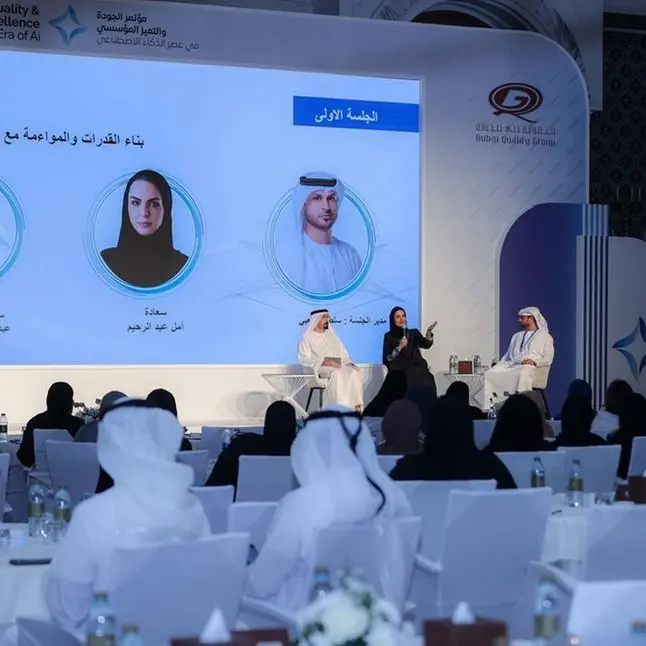
The conference was held in three sessions. The first session, chaired by H.E. Essa Kazim, Chairman of Bourse Dubai and Managing Director & CEO of the Dubai Financial Market, discussed "Mechanisms Of Stimulating Financial Markets", with speakers of the session including Mr. Guillermo Larrain, Chairman of Center for Regulation and Macro-financial Stability, University of Chile, & Former Chairman of the Chilean Regulators on Securities, Insurance and Pensions, & Former Chairman of IOSCO Emerging Markets Committee, who presented a working paper on "Leading International Practices In Stimulating Capital Markets And Enhancing Liquidity".
Mr. Larrain outlined five areas of concern according to the World Bank. They include: Macroeconomic environment, institutional and regulatory framework, demand side, supply side issues and global listing and regionalization,
He cited the experience and achievements of Brazil's Novo Mercado (Financial market) which, he saw as an ideal example of markets in developing nations.
Dr. Henry Azzam, Chairman of Deutsche Bank, MENA, who was the second speaker of the session, spoke on "Road Map For Regional Capital Markets in Order to Meet International Standards",
He said although the region's capital markets have gained added depth and sophistication, they remain relatively underdeveloped, generally disconnected from the private sectors , especially SME's, and none of the region's stock markets has joined the ranks of the emerging markets. However, he added, a country's financial sector should not be judged on its size and sophistication alone but on how well it channels savings into investments, mobilize financial resources and promotes a healthy economy over the long term .
"While world capital markets show on average a balanced capital structure of bank assets , stock market capitalization and debt securities , the capital mix in the region is heavily skewed towards bank assets with a share of 60% , stock markets constitute around 30% while debt markets are still underdeveloped at less than 10% . In comparison , corporates in the US and several other developed countries depend on the bond market for more than 50% of their financing requirements," he explained.
He pointed out that in the region's stock markets value and volume of shares traded still focus on a limited number of large-cap stocks mainly from banking and real estate sectors. "Several large companies in the telecommunications , petrochemicals , minerals , and other sectors listed on the region's stock markets have the state as a major shareholder , limiting the free float of shares available for trading . The largest 10-20 companies in each country are still not listed ( Aramco , Alba , Dubal , Emirates , etc. ) . Most of the larger private enterprises are family owned and have not yet gone public . Among the listed companies the largest 10 companies in each country make up between 50% and 80% of market capitalization in their respective stock markets," he said.
He further explained that SME's constitute around 90% of all companies in the region , only few of them have access to bank financing . Companies in general rely on retained earnings for 75% of their financing requirements with only 12% coming from the banking sector . In Saudi Arabia for example , less than 40% of private sector companies reportedly have overdraft facilities with banks . There are no special stock exchanges in the region for SME's to list on , and accessibility of these firms to the region's stock and bond markets remain limited.
On the demand side, he said, absence of domestic institutional investors ( e.g. private venture funds , mutual funds , insurance companies ) and the limited access that international funds have to the region's stock markets has led to the dominance of retail investors, driven mainly by speculation rather than sophisticated research and equity analysis . In the bond and Sukuk markets, secondary liquidity remains limited reflecting the buy and hold approach of investors. Bonds issued from the GCC constitute less than 1% of global emerging markets turnover, he added.
"As a share of GDP , Gulf fixed income markets ( bonds & Sukuk ) are underrepresented at only 13% , versus 42% for emerging markets and 160% globally . A record total of $40 billion worth of fixed income securities were issued in 2011 , of which $7.3 billion were sukuk , compared with a total of $4.4 billion in 2000 and $14.5 billion in 2005. Most of these bonds and sukuk were dollar denominated issued by governments , public sector companies and banking institutions . The majority of buyers are from outside the region," he explained.
In conclusion, Dr. Azzam painted a bright outlook for the region's capital markets, including the following:
- The countries of the region are back on a solid growth path that is likely to prevail.
- Oil prices maintaining their recent strength.
- Non-oil GDP will benefit from higher government expenditure and a buoyant private sector embarking on a strategy of growth and expansion. Real GDP growth above 4%.
- Successive current account surpluses adding to the region's sizeable foreign reserves and assets.
- Attractive valuation in the region's stock markets, quite competitive compared to other emerging stock markets
- Strong economic growth feeding into higher corporate profitability and supporting higher share prices.
- Enhanced investor sentiments with confidence restored among small investors, and speculation giving way to more long term investments.
- More IPO's and bonds / sukuk issuance going forward enhancing the depth and breadth of the region's capital markets.
The session ended with a presentation on "Mechanisms in Promoting Institutional Investing In The Regional Markets" by Dr. Huseyin Erkan, ex-Chairman and CEO of the Istanbul Stock Exchange, during which he outlined the mechanisms of activating corporate investment on the regional markets. He presented a number of solutions, including the need to implement strictly corporate governance rules, diversifying of investment products on the markets, providing settlement, clearance and custodian regulations, restructuring of pension funds, developing financial and investment awareness, enriching the market with information through disclosure regulations, activating strengthening bond, sukuk and ETF markets, Opening the gate for market-maker and putting in place comprehensive legislations and deterrent penalties against violators.
The second session, which was chaired by H.E. Mubarak Almansouri, CEO of Emirates Investment Authority and SCA Board Member, highlighted "Proposing Priorities for Financial Legislations and Supervision Given the Recent Economic Developments".
The first speakers in this session, Prof. Mahmoud El-Gamal of Rice University of the United States, spoke on "Harnessing Islamic Finance for Financial Development and Inclusive Growth" during which he outlined the problem and potentials of Islamic finance.
He said Arab countries are not lacking in financial resources, and standard financial development and deepening ratios are good. He added that the main problem is concentration of capital, and in particular severe financial constraints on SMEs, complicit in premature deindustrialization and unemployment.
He pointed out that Islamic finance accidentally stumbled upon financial tools identical to leasing and reverse factoring which are ideal for SME finance. He said the problem cannot be addressed by product development or market deepening alone, adding that there is the need to develop appropriate financial institutions.
He said recent experiments suggest that mutuality can increase financial inclusion and build a larger asset base for financial markets, but this requires legal and regulatory development.
The session winds-up with a working paper on "The Proposed Role Of Banks In Stimulating Arab Capital Markets During The Crises", delivered by Michael Tomalin, CEO of National Bank of Abu Dhabi.
He said in the last decade, MENA, GCC, and the UAE, specifically, have been growing at some of the fastest rates in the World. Key to this rapid growth is the complementary growth of capital markets which are crucial for long term finance, adding that MENA makes up about 4% of the World economy and GCC about 2.5%.
"Outstanding domestic debt by all issuers was US$ 69.9 trillion in June 2011 according to data for 54 countries from the Bank for International Settlements (BIS). US issuers (government and others) had the largest domestic debt outstanding at US$ 25.5 trillion accounting for 36% of the World total followed by Japan (20%), France (5%), Italy (5%) or China (4%). Emerging markets accounted for 14%," he said
He pointed out that BIS data on international debt securities for all issuers as of September 2011 put the stock of these at US$ 29.8 trillion of which US$ 25.8 trillion (87%) were issued by entities in mature economies. "Issuance of international debt securities in the MENA outside of the GCC is very minor. Outstanding stock of international debt securities was US$ 97.4 billion in the GCC, accounting for 0.3% of global outstanding with the UAE and then Qatar the largest issuers," he said, adding that world stock market capitalization was US$ 50.2 trillion as of February 6th, 2012. US made up 32.2% of the total, Japan 7.4%, UK 6.6%, China 6.6%, Hong Kong 4.7%, GCC ~1.5%, of which the UAE is 0.4%.
He said the development of capital markets is a gradual process, and requires enabling steps, adding that banks are key to the development of capital markets. He summarized the main changes required as including modern securities law and regulation, a Central Bank discount window, encouraging primary issuance and innovation which helps develop a benchmark yield curve and which encourages participation, improves liquidity, encourages more participation, forces the pace for a better governance, transparency and openness and allows for critical independent research. "The result will be liquid transparent well regulated debt and equity capital markets that meet the needs of both issuers and investors, at home and abroad," he added.
He noted that NBAD through its primary origination team, secondary markets trading desks, buy side and sell side research teams and its third party asset management group is well positioned to play its role in the development of efficient and free flowing GCC capital markets.
The third and final session, which featured a debate, chaired by Paul Koster, CEO of Dubai Financial Services Authority, involved all speakers and session chairmen. During the session the panelists discussed a wide range of issues related to the financial industry and issued recommendations for Arab financial sector in light of recent developments.
-Ends-
© Press Release 2012