PHOTO
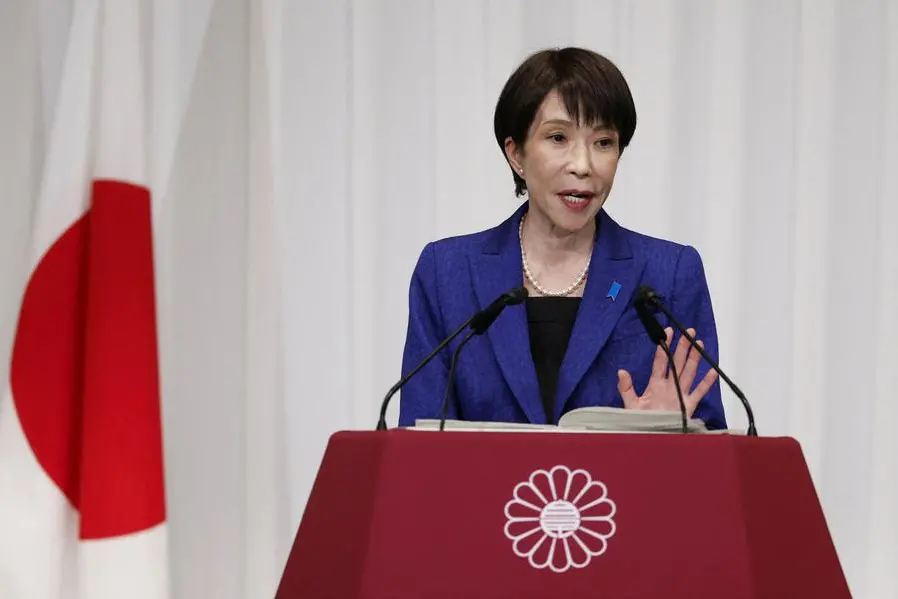
TOKYO - Japanese Prime Minister Sanae Takaichi's landslide election win has given fresh impetus to her economic stimulus agenda but the risk of destabilising yen declines remains one firm check on her push for low interest rates.
The emphatic victory last weekend has emboldened her mandate to boost investment and lower taxes to rev up the economy, all of which could heighten the hurdle for the Bank of Japan to further raise borrowing costs.
The dovish premier may also seek to influence the BOJ's policy debate by filling bank board seats opening this year with like-minded reflationist candidates, some analysts say, in line with her past calls for the BOJ to keep rates low.
Still, the risk that fresh yen selling could fire up imported inflation, reviving political headaches, is now one of the few barriers to her administration getting in the way of BOJ rate hikes, sources and analysts say.
"A weak yen and subsequent inflationary risks would be potential triggers for a faster-than-expected rate hike," said former BOJ executive Akira Otani. He currently expects the BOJ to hike at its July meeting but also sees a good chance of earlier action in April or June.
"If government executives don't give negative comments about rate hikes and instead say they are leaving monetary policy up to the BOJ, that could be a sign the government and BOJ have laid the groundwork for pushing up rates," said Otani, who is currently managing director at Goldman Sachs Japan.
Takaichi is sensitive to how markets react to her decisions, particularly yen and bond yield moves, two sources said.
Stubbornly high food prices, blamed in part on the weak yen, have hit households and the ruling Liberal Democratic Party's approval ratings, costing former premier Shigeru Ishiba his job.
"What's most important for the BOJ is to avoid drawing political heat for causing unwelcome yen declines, which work to accelerate inflation," a third source said.
"Yen moves will be key to how soon the BOJ pulls the trigger," the source said. The sources all spoke on condition of anonymity due to the sensitivity of the matter.
YEN IS CRITICAL TO TIMING OF NEXT BOJ HIKE
Under Japanese law, the BOJ nominally enjoys independence although that has not shielded it from past political pressure to expand monetary support for a moribund economy.
The most extreme intervention came in 2013, when former Prime Minister Shinzo Abe hand-picked Haruhiko Kuroda to overhaul the BOJ's caution over ramping up stimulus.
While the BOJ has left few clues on the next rate-hike timing, markets have priced in roughly an 80% chance of a hike by April.
The BOJ holds its next meeting on March 18-19, around the time Takaichi is expected to visit the U.S. to meet President Donald Trump, who favours a weak dollar. It will review its growth and price forecasts at a subsequent meeting on April 27-28.
"The BOJ probably wants to raise rates again around April, June or July," said Naomi Muguruma, chief bond strategist at Mitsubishi UFJ Morgan Stanley Securities. "The exact timing will depend on how the yen moves."
TAKAICHI'S AVERSION TO MARKET SHOCKS
Armed with a supermajority in the powerful lower house, Takaichi said on Monday she will focus on propping up growth by boosting investment through "proactive" fiscal policy.
But she also said the administration must be mindful of market moves in guiding policy, highlighting its sensitivity to the risk of renewed yen falls that push up import costs.
The BOJ, too, has signalled that yen moves would be key to its rate-hike timing. In January, the BOJ raised its price forecasts and said a weak yen could push up underlying inflation by prodding firms to pass on rising costs.
At their January meeting, BOJ policymakers debated mounting price pressures from a weak yen with some warning of the risk of being "behind the curve" in dealing with too-high inflation, a summary of opinions showed.
Sharp yen declines allowed the BOJ to hike rates to 0.75% in December with little pushback from the government. When Governor Kazuo Ueda pre-announced the move, the finance minister said she had no problem with his comments.
To be sure, there is uncertainty on how much Takaichi is clinging to her initial enthusiasm for low interest rates, and to what extent she could meddle in monetary policy.
The first test would come in her choice of nominees to fill two seats opening in the BOJ board this year. One succeeds Asahi Noguchi, whose term ends in March. Once known as a dove, he voted for the BOJ's past two rate hikes. Another joins when Junko Nakagawa sees her five-year term expire in June.
A choice of doves could complicate the BOJ's efforts to lift still-low rates by shifting the balance in the nine-member board, which is divided between those who see conditions ripe for steady rate hikes, and others who want to tread cautiously.
It would also send a message to markets that Takaichi may tap reflationist candidates to fill two more board seats opening in 2027, and then Ueda's post when his term ends in 2028.
"If the yen stabilises, there are few reasons for the BOJ to rush," Muguruma said. "With the personnel appointments looming, the BOJ may not push too hard in getting a hike done early."
(Reporting by Leika Kihara; additional reporting by Tokyo policy team; Editing by Sam Holmes)