PHOTO
(The opinions expressed here are those of the author, a columnist for Reuters)
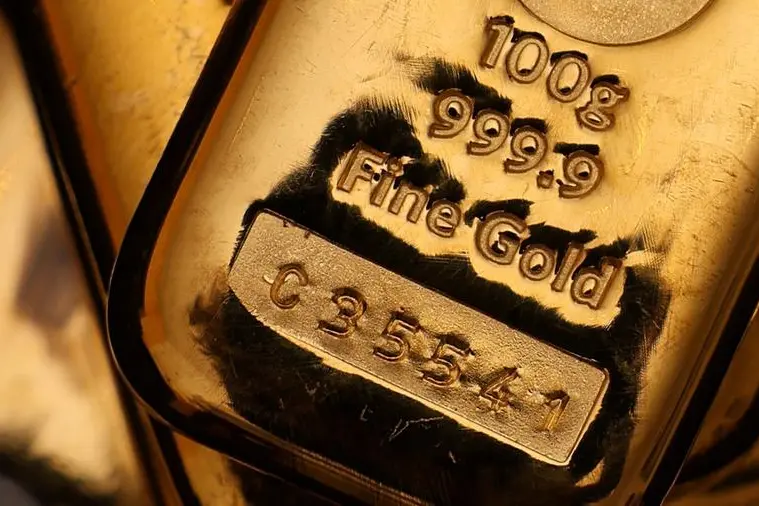
ORLANDO, Florida - Gold and other precious metals recorded eye-watering price spikes in 2025, so it's difficult to imagine them delivering similar returns in 2026. But solid central bank appetite and safe-haven demand could keep their relentless rise on track.
With the first month of the year barely at the halfway point, gold and silver have already jumped to new records, up 7% and 20%, respectively, so far in 2026. Platinum is up 15% year to date, and is also close to hitting a fresh high.
These moves are all the more remarkable given that gold, platinum, and silver clocked annual gains of 65%, 125% and 145%, respectively, last year.
Any notion of investors taking profits - and a breather – evaporated with a blizzard of political, economic, and geopolitical news out of Washington. It brings to mind Vladimir Lenin's apocryphal quote "There are decades where nothing happens; and there are weeks where decades happen."
Just last week alone, U.S. President Donald Trump ordered the purchase of $200 billion of mortgage-backed securities, directed U.S. oil giants' activities in Venezuela, attempted to ban defense firms' share buybacks and dividend payments, and put a one-year cap on credit card interest rates, while his Department of Justice threatened to indict Fed Chair Jerome Powell.
This is all fuel for gold. The "dollar debasement trade" may be overstated - the greenback has been remarkably stable for months - but the strength of gold and other precious metals suggests there may be some substance to it.
This "flight to quality" and inflation-hedging among private investors is complementing central banks' highly inelastic demand for bullion. Reserve managers continue to buy for strategic reasons and diversification, regardless of price.
PEDAL TO THE YELLOW METAL
To track the phenomenon, look at China. People's Bank of China data last week showed that the central bank bought gold for a 14th consecutive month in December, increasing its holdings over the year by some 28.5 metric tons.
That's less than the 44 tons purchased the year before, but still substantial, especially coming amid spot gold's biggest annual price rise since 1979. It helped raise the value of China's gold reserves to $319.45 billion from $191.34 billion the year before.
Other central banks are buying too. International Monetary Fund data shows Brazil, Finland, and Turkey were among the biggest buyers late last year, lifting official sector buying above the long-run average.
"Clearly, elevated gold prices are not yet detracting from reserve managers' inclination to accumulate gold," Deutsche Bank analysts wrote on Monday.
Analysts at State Street agree. Official sector buying is providing a "sticky" source of demand, underscoring a "durable shift" in official sector reserve management away from U.S. Treasuries and toward the yellow metal.
This is effectively raising gold's price floor, which State Street suggests is $4,000 an ounce, some way off the record $4,630 per ounce struck on Monday. The ceiling is also climbing, and a test of $5,000 now seems likely.
DIRECTION OF TRAVEL NOT IN DOUBT
Gold is not included in the IMF's Currency Composition of Official Foreign Exchange Reserves, or COFER data, the global benchmark for FX reserves. Instead, it is found in wider measures of central banks' assets.
For that reason, and others such as data reporting transparency, estimating gold's place in official reserves relative to currencies, or other assets like Treasuries, should be done with a fair degree of caution.
According to the World Gold Council, gold's share of global FX reserves in October was 25.9%. That compares with the euro's 20% share of reported IMF COFER reserves data, and some analysts also believe that gold's share of reserves overtook Treasuries' portion last year for the first time since 1996.
Whatever the accuracy of these claims, there's little doubt about central banks' direction of travel. And in an increasingly volatile world, they won't be reversing course any time soon.
(The opinions expressed here are those of the author, a columnist for Reuters)
Enjoying this column? Check out Reuters Open Interest (ROI), your essential source for global financial commentary. ROI delivers thought-provoking, data-driven analysis of everything from swap rates to soybeans. Markets are moving faster than ever. ROI can help you keep up. Follow ROI on LinkedIn and X.
(By Jamie McGeever; Editing by Marguerita Choy)
Reuters