PHOTO
(The opinions expressed here are those of the author, a columnist for Reuters)
LONDON - The stop-start shipping traffic through the Strait of Hormuz underscores the profound uncertainty hanging over the world’s most critical oil and gas chokepoint. But one thing is already clear: even if the guns fall silent, flows through the narrow waterway will take months – and possibly years – to recover to pre-war levels.
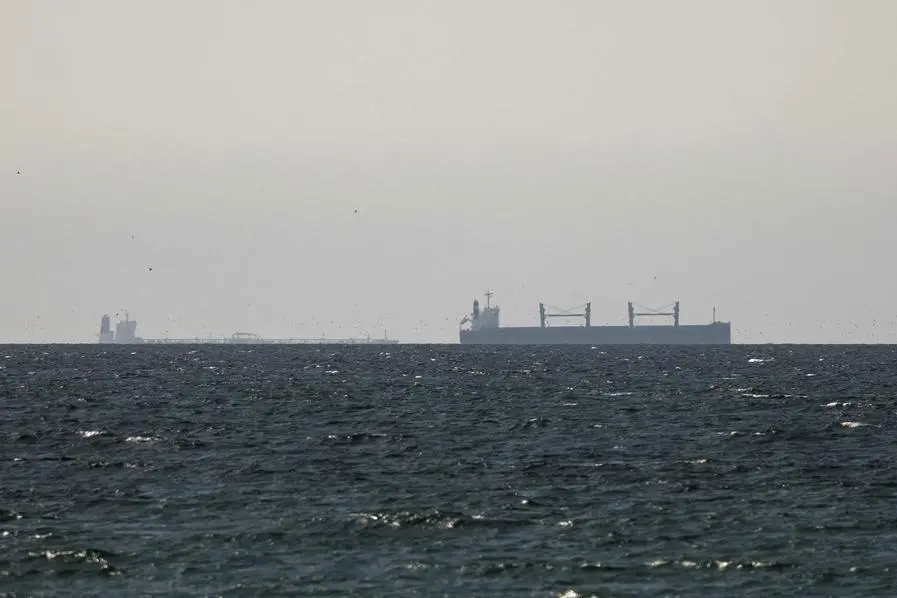
Iran said on Saturday that it was tightening control over the strait in response to a U.S. blockade on Iranian tankers, firing at several vessels and warning mariners that the strait was closed. This was only hours after Tehran announced a temporary reopening amid a 10-day ceasefire. U.S. President Donald Trump said negotiations were ongoing, while threatening to resume military action if shipping was disrupted again.
Tehran effectively shut down the strait after the joint U.S.-Israeli aerial bombing campaign on Iranbegan on February 28. Since then, traffic through the strait – a passage that normally carries around a fifth of global oil and gas supplies – has slowed to a trickle.
The immediate impact has been severe. Around 13 million barrels per day (bpd) of oil supply and roughly 300 million cubic metres per day of liquefied natural gas (LNG) have been trapped inside the Gulf, forcing producers to shut in oil fields, refineries and LNG plants and battering economies from Asia to Europe. The fighting has also caused lasting damage to energy infrastructure – and diplomatic relationships – across the region.
So how will a recovery play out, and when can the industry reasonably expect to approach pre-war operating levels?
THE RELIEF RUSH
The pace of recovery will depend not just on diplomacy between Washington and Tehran, but also on logistics, tanker insurance availability, freight rates and the willingness of shipowners to risk the passage.
The first tankers to leave the Middle East will be the roughly 260 vessels already floating inside the Gulf, laden with about 170 million barrels of oil and 1.2 million metric tons of LNG, according to analytics firm Kpler.
Most of these initial cargoes are likely to be directed to Asia, which normally takes about 80% of Gulf oil exports and 90% of LNG shipments.
As these vessels exit, more than 300 empty tankers idling in the Gulf of Oman will gradually move into the Gulf and head to loading terminals such as Saudi Arabia’s Ras Tanura and Iraq’s Basrah Oil Terminal.
Their first task will be relieving onshore storage facilities that filled rapidly during the Hormuz shutdown. Commercial crude storage in the Gulf currently stands at about 262 million barrels, the equivalent of 20 days of disrupted production, according to the International Energy Agency - leaving little room for further production until exports resume.
But tanker logistics will still slow any full-scale recovery of energy flows. A round trip from the Middle East to India’s west coast, for example, typically takes around 20 days. Longer-haul routes to China, Japan and South Korea can take two months or more.
And sourcing sufficient tankers may be challenging. Many have been tied up shipping oil and LNG from the Americas to Asia on voyages that can take up to 40 days.
A full rebalancing of the global tanker fleet and a return of Gulf loading operations to pre-war rhythms will be uneven and likely take at least eight to 12 weeks, even under benign conditions.
CHICKEN-AND-EGG PROBLEM
As tanker loadings gradually resume, producers such as Saudi Aramco and the United Arab Emirates' ADNOC will have to restart oil and gas output at fields and refineries shuttered during the fighting.
That will require careful coordination, including the return of thousands of skilled workers and contractors who were evacuated during the conflict. The pace of production recovery will also be dictated by available storage at coastal terminals, creating a feedback loop between shipping and upstream activity.
The IEA estimates that around half of Gulf oil and gas fields retain sufficient reservoir pressure to return to pre-war output within roughly two weeks. Another 30% could take up to six weeks, assuming a stable security environment and the restoration of disrupted supply chains.
The remaining 20% – equivalent to roughly 2.5 to 3 million bpd – face far tougher technical challenges. Low reservoir pressure, damaged equipment and power supply constraints mean some fields will take months to recover. Damage to major energy assets, including Qatar’s giant Ras Laffan LNG hub - where about 17% of capacity was hit - could take up to five years to repair. Some ageing and complex wells, particularly in Iraq and Kuwait, may never return to their previous output levels.
Any persistent supply losses could eventually be offset by drilling new wells across the region, but that process would likely take at least a year and require a sustained improvement in security conditions.
Once the tanker backlog clears and oilfields return to steady output, Iraq and Kuwait will begin lifting force majeure declarations – contractual clauses that allow exporters to suspend deliveries during uncontrollable events such as war.
Even in the most optimistic scenario - peace talks succeed, no new conflicts erupt and infrastructure damage proves no worse than feared - a full return to pre-war operations looks unlikely for years.
(The opinions expressed here are those of Ron Bousso, a columnist for Reuters.)
Enjoying this column? Check out Reuters Open Interest (ROI), your essential new source for global financial commentary. Follow ROI on LinkedIn, and X. And listen to the Morning Bid daily podcast on Apple, Spotify, or the Reuters app. Subscribe to hear Reuters journalists discuss the biggest news in markets and finance seven days a week.
(Ron Bousso; Editing by Marguerita Choy)