PHOTO
(The views expressed here are those of the author, the founder and CEO of Emmer Capital Partners Ltd)
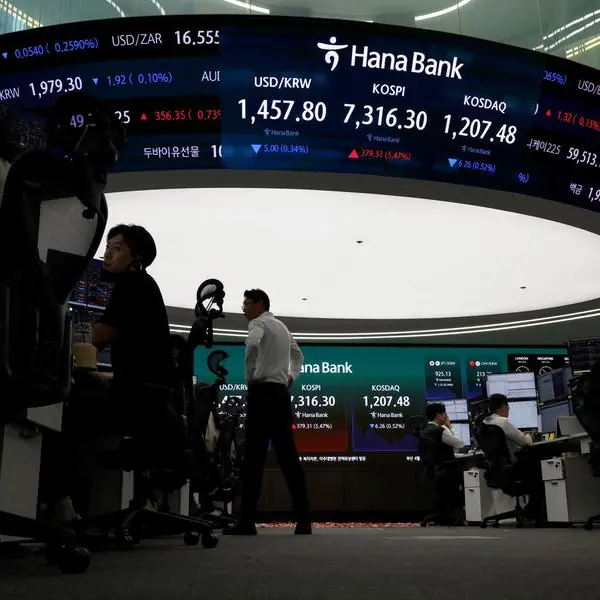
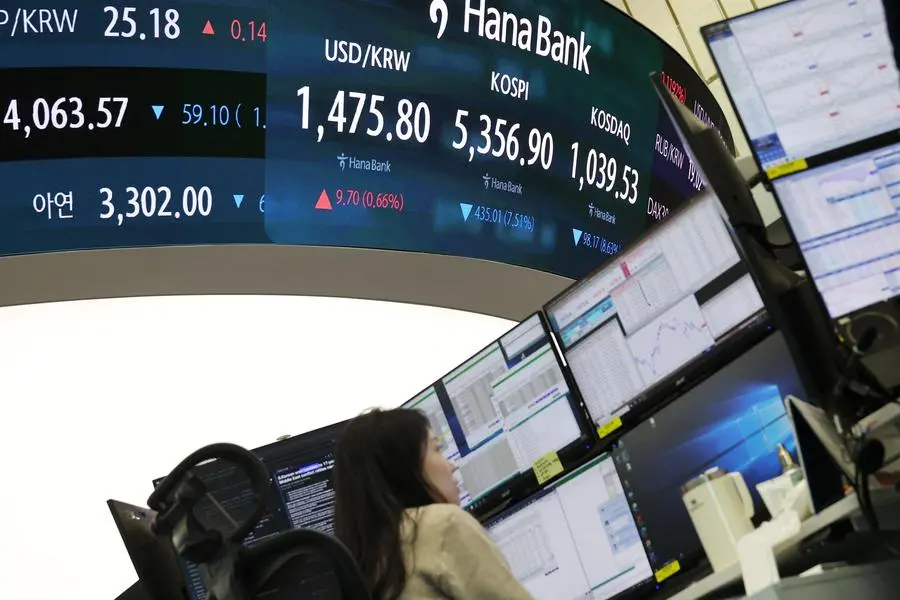
HONG KONG - The Iran war has turned South Korea into Asia's most volatile stock market. The panic is real, but any fears about massive value destruction probably are not. In the two trading days after the conflict began on February 28, the benchmark KOSPI stock index fell over 18%, posting its worst-ever daily selloff. It then rebounded almost 10% the next day. More than three weeks later, the market is still struggling with volatility.
The KOSPI is partly a victim of its own success, as it had rallied sharply before the onset of the conflict, soaring more than 100% over the previous year. Investors facing uncertainty – and often the need to raise cash – sold what they had made money on.
Unsurprisingly, the most liquid Korean stocks in technology, industrials, chemicals and consumer discretionary were hit hardest. The conflict also made the earnings outlook for some Korean companies appear vulnerable, especially after Iran mostly closed the Strait of Hormuz – the narrow waterway through which roughly 20% of the world’s energy previously travelled.
Korea received 70% of its crude and 30% of its gas from the Middle East in 2025, all of it transiting through the strait, Korea International Trade Association data shows. The country’s energy mix remains heavily skewed toward fossil fuels: 37% oil, 22% coal and 20% natural gas, according to the International Energy Agency.
South Korean President Lee Jae Myung on Tuesday called for a nationwide energy-saving campaign, asking the top 50 oil-consuming businesses to cut use.
The broad risk is hard to dismiss. A prolonged energy disruption would push up the country’s input costs, stoke inflation and squeeze corporate margins. The Korean won has compounded the pressure, weakening sharply since the war began, which threatens to trigger capital outflows if the slide continues.
Yet despite all these risks, several of the underlying strengths that boosted Korean equities before the war remain unchanged and could re-emerge in investors’ consciousness once the conflict subsides.
EARNINGS BOOM ENDURES
The earnings outlook for Korean equities remains strong despite the wartime anxieties.
Korea has seen the sharpest rise in consensus earnings-per-share (EPS) estimates among major Asian markets over the last year. Importantly, these have continued to climb even with the outbreak of the Middle East conflict, suggesting analysts remain bullish on the main drivers of profit growth despite energy shortage concerns.
The technology sector has driven the bulk of the upgrades, most notably semiconductors, as the artificial intelligence revolution shows no signs of slowing. But utilities, financials and energy have also contributed meaningfully, as have defence exporters. Geopolitical conflict should continue to support the latter.
What is more striking is that, even after a 40% rally in Korean equities since late October, the KOSPI's 12-month forward price-to-earnings (P/E) multiple has actually declined by 28%, based on FactSet consensus estimates.
Earnings-per-share forecasts have risen 80%, while share prices have lagged behind. The result is a market that looks cheaper on forward earnings even after a strong run. This debunks the common myth that Korean equities have become more expensive since last year's rally. They have not.
UNPACKING MISCONCEPTIONS A second common myth about Korean stocks is that they have become a "crowded trade." While Samsung Electronics and SK Hynix, two dominant players in the global memory market, did appear somewhat overbought until the recent selloff, the broader market tells a different story. Foreign investors sold a net $36 billion of Korean equities from November through March 25, with the selling starting well before the latest conflict began. Moreover, since January 2020, foreigners have cumulatively sold $48 billion of Korean equities, leaving them underweight.
A third misconception about this market is that investing in Korea is simply a bet on the semiconductor giants.
But even though AI infrastructure hardware stocks remain the obvious leaders, Korean prowess is also well established in defence equipment, shipbuilding, heavy engineering, base metals, automobiles, cosmetics, retail, e-commerce and entertainment. Most of these sectors are forecast to grow earnings by more than 20% over the next two years, according to FactSet consensus.
They are also, in many cases, attractively valued, with P/E multiples significantly lower than their forecast earnings growth.
There is one caveat here. Energy-intensive sectors such as chemicals, heavy engineering and base metals – which have also enjoyed upgrades – face a serious risk of earnings deterioration if war-related disruptions persist.
GOVERNANCE AND VOLATILITY
Alongside the earnings outlook boom, Korea’s strong equity performance over the past year has also been propelled by corporate governance reform, most notably Seoul’s “Value Up” programme to help boost shareholder rights. While progress on that front remains positive, the government may also need to curb retail speculation if volatility is to come down. Retail traders account for roughly a third of Korea Exchange daily turnover and often use leveraged derivatives, magnifying swings in both directions. Regulators have taken steps to restrain speculative activity and certain controversial trading practices, including illegal short selling. However, the recent surge in technology stocks, where leveraged positioning was heaviest, shows more remains to be done.
The war's trajectory is uncertain, and a prolonged energy shock could upend Korea’s economic outlook. But when zooming in on Korean equities’ current fundamentals – and foreign owners’ low exposure – there is plenty of reason to believe the war may turn out to be a mere pause in Korea’s rally.
(The views expressed here are those of Manishi Raychaudhuri, the founder and CEO of Emmer Capital Partners Ltd and the former head of Asia-Pacific Equity Research at BNP Paribas Securities.)
Enjoying this column? Check out Reuters Open Interest (ROI), your essential new source for global financial commentary. Follow ROI on LinkedIn and X. And listen to the Morning Bid daily podcast on Apple, Spotify, or the Reuters app. Subscribe to hear Reuters journalists discuss the biggest news in markets and finance seven days a week.
(Writing by Manishi Raychaudhuri; Editing by Marguerita Choy)