PHOTO
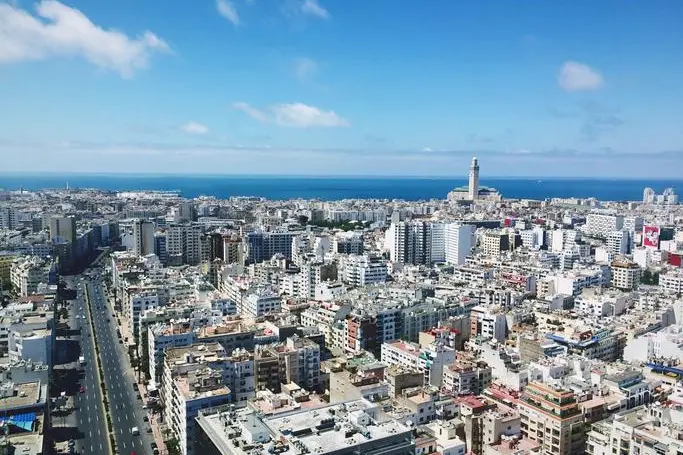
Despite a widening budget deficit and a high debt-to-GDP ratio, Morocco’s economic outlook seems reassuring given the government’s commitment to structural reforms, Capital Economics said.
“On the face of it, Morocco’s public finances are starting to look alarming,” the London-based think tank said in a briefing released on Wednesday. “But a deeper dive suggests that there isn’t cause for concern.”
Earlier this month, the Moroccan government announced that the budget deficit from January till July has reached nearly $3 billion, recording an annual increase of 14.5%. Like most emerging markets, the Moroccan economy has been grappling with the compounded impact of the global pandemic and the Russian invasion of Ukraine. Not only that, but the North African country has been hit by the worst drought in 40 years, which dealt a blow to its agricultural production and put more strains on food supply.
In 2022, the inflation rate reached 6.6%, hitting the highest level since 1992, and the economy registered a 1.3% growth rate compared to 8% in 2021.
As to the public debt-to-GDP ratio, it jumped from 69.5% in 2021 to 71.5% in 2022, with foreign debt and domestic debt constituting 17.2% and 54.3% of GDP, according to 2022 annual report released last month by Morocco’s central bank. The trade deficit in goods also jumped from 14% of the GPD in 2021 to 20% in 2022, according to the IMF.
“The composition of Morocco’s public debt suggests that fiscal risks are smaller than they appear at first sight,” Capital Economics said. “For one thing, only around a quarter of the total outstanding central government debt is denominated in foreign currency. And most of the government’s upcoming debt repayments are in local currency.”
Additionally, the average maturity of public debt is 6.5 years, which is long enough to shield the country’s finances against sudden changes in interest rates, the briefing added.
The think tank expects the public debt-to-GDP ratio to fall to 67% by 2027 if the Moroccan government adopts a fiscal squeeze of only 1.5% over the next few years.
“The willingness and ability of officials to undertake fiscal reform is there and, unlike some its neighbour Tunisia, they are unlikely to face political stumbling blocks,” the briefing read.
Capital economics listed several reform policies that the Moroccan government announced it would soon embark upon to reduce the budget deficit including: the consolidation of VAT rates, the introduction of a carbon tax, the revocation of tax exemptions on real estate and state-owned enterprises (SOEs), the squeezing of the public wage bill and cuts on capital transfers to SOEs.
“Putting all of this together, we think that the recent increase in Morocco’s government debt-to-GDP ratio and the budget deficit will turn the corner,” Capital Economics concluded.
In April, Morocco secured an IMF two-year assistance program under the Flexible Credit Line of $5 billion, which required policymakers to implement further structural reforms. The Moroccan government expects the economy to grow at 3.6% in 2024 from a forecast 3.3% this year assuming a recovery of its agricultural output and export rebound.
(Reporting by Noha El Hennawy, Editing by Brinda Darasha)