PHOTO
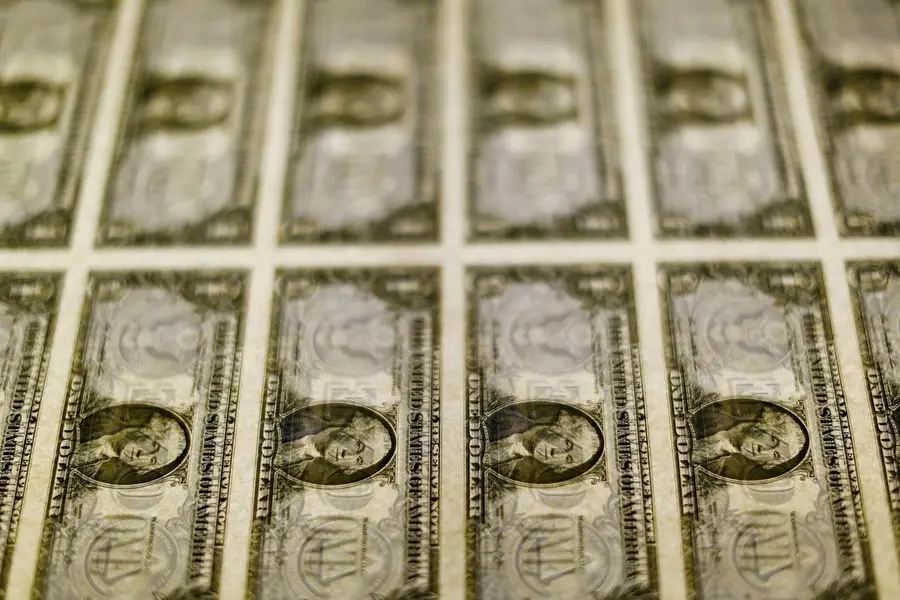
The U.S. dollar held on to overnight gains against major peers on Thursday after President Donald Trump withdrew a threat to impose tariffs on a number of European NATO nations, trumpeting the framework of a deal with NATO over control of Greenland. The Australian dollar rose to a 15-month high, buoyed both by improvement in risk sentiment and by data showing an unexpected decline in the jobless rate. The yen remained under pressure, matching last week's record low versus the euro, after Japanese Prime Minister Sanae Takaichi this week called a snap election and pledged measures to loosen fiscal policy. The Bank of Japan kicks off a two-day policy meeting on Thursday, but market participants expect no change as the central bank raised its policy interest rate at its previous meeting last month.
Trump's threat to levy tariffs on allied nations opposed to his ambition to control Greenland spooked markets and triggered a broad selloff of U.S. assets, but his comment in Davos on Wednesday that he had ruled out military action offered relief.
The U.S. president said he had reached a framework for a deal with NATO over Greenland, but he did not offer any details in a post to his Truth Social platform about what that would entail. As a result, though, he said he would not impose tariffs.
US DATA BACK IN FOCUS
Gold prices were softer and stocks rebounded on Thursday after Trump dropped his tariff threats and ruled out seizing Greenland from an ally by force.
The dollar held steady at $1.1690 per euro, following a 0.35% rebound in the prior session. It weakened slightly to 0.7942 Swiss francs, after leaping 0.7% overnight.
"From a European perspective, it is too early to rejoice," said Volkmar Baur, forex strategist at Commerzbank, arguing that details of the framework deal are not yet known.
However, "the most likely outcome is still that the next wave of excitement will pass us by after a brief period of volatility and that the market will refocus on central banks and interest rate differentials," he added.
Economists are only finally clearing the data haze left by the U.S. lockdown last autumn, and a key missing piece should fall into place later in the session when October and November PCE inflation estimates -- the Federal Reserve's favourite gauge of inflation -- are released.
AUSSIE SET FOR FOURTH STRAIGHT DAILY RISE
The Aussie jumped as much as 0.6% to $0.6802, touching its strongest level since October 2024, and headed for a fourth straight daily gain, outperforming even as risk assets came under pressure earlier this week. With December’s jobless rate hitting a seven-month low and employment surging past expectations, markets now see the chances of a rate hike next month exceeding 50%, compared with 29% before the release.
"The strength of both the Australian and the New Zealand dollar is the latest example that speculation about moves in short-term interest rates in relation to central bank policy remains alive and well," said Jane Foley, senior forex strategist at Rabobank.
The Aussie also vaulted as much as 1% to the highest since July 2024 at 108.03 yen.
YEN STILL IN INTERVENTION TERRITORY
The yen slipped 0.3% to touch 185.56 per euro, matching the record low touched on Wednesday of last week.
The Japanese currency weakened 0.2% to change hands at 158.68 per U.S. dollar, near last week's 18-month trough of 159.45.
Analysts anticipate a hawkish tilt from the Bank of Japan at Friday’s policy meeting to help stabilise the yen, which is trading uncomfortably close to the 159-160 levels which are seen as intervention territory.
Japan's super-long-dated government bonds extended gains on Thursday on expectation that the finance ministry could take some measures to contain further rises in yields.