PHOTO
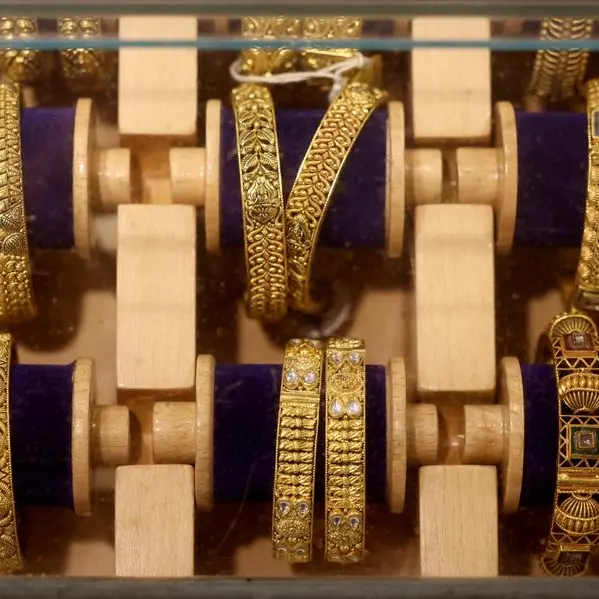
Gold prices held steady on Thursday after hitting a one-month high in the previous session.
Spot gold was little changed at $4,785.57 per ounce as of 1:36 p.m. ET (1736 GMT). U.S. gold futures settled 0.3% lower at $4,808.30.
The precious metal sank in March after the U.S. and Israel launched a war on Iran in late February, as investors grew concerned about rising inflation and market liquidity. As a zero-yielding asset, gold tends to lose appeal when interest rates are high.
Hopes that the U.S. and Iran will reach a lasting peace and end the war - thus bringing down energy prices and reducing expectations for higher rates - have helped gold rebound. The two nations are expected to resume peace talks after previous discussions broke down over the weekend. U.S. President Donald Trump said in a social media post that a ceasefire would start at 5 p.m. EST (2100 GMT), aiming to halt a conflict between Israel and the Iran-aligned Lebanese group Hezbollah that was reignited by the U.S.-Israeli war against Iran.
"If we do see some type of easing of U.S.-Iran tensions or an end to the war, there will be a stronger likelihood of Federal Reserve rate cuts down the road... And that could support the precious metals complex," said David Meger, director of metals trading at High Ridge Futures.
Currently, traders see a 32% chance of a U.S. interest rate cut this year. New applications for U.S. unemployment benefits fell last week, suggesting labor-market conditions remain stable, though employers are cautious about hiring as the war with Iran casts a shadow over the economy. Spot silver fell 1% to $78.29 per ounce Thursday. The silver market is heading for a sixth year of structural deficit, with 762 million troy ounces drawn from stocks since 2021, raising the risk of a renewed liquidity squeeze despite weaker demand expectations, the Silver Institute and consultancy Metals Focus said on Wednesday.
Platinum lost 0.6% to $2,096.20 and palladium fell 0.7% to $1,561.50.