PHOTO
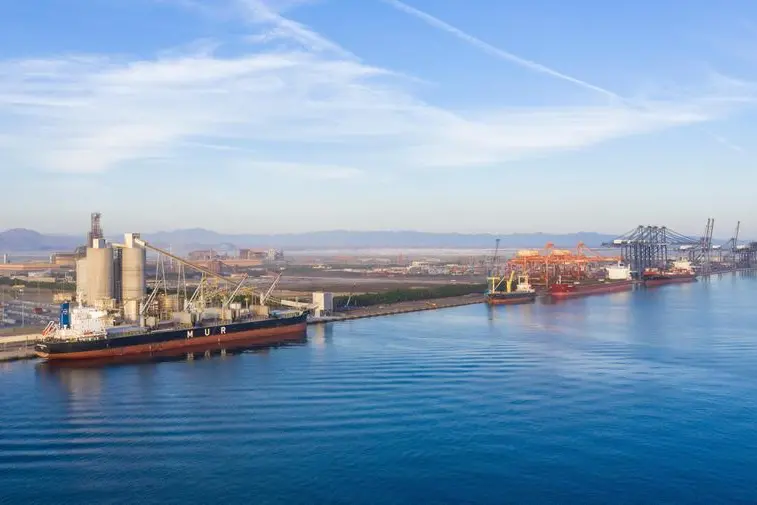
MUSCAT - Sohar Port and Freezone (SOHAR) has announced the signing of a Letter of Intent with Empa, the Swiss Federal Laboratories for Materials Science and Technology, to explore the feasibility of establishing a synthetic fuels facility in the freezone.
In a post, SOHAR said the goal is to assess the potential for Stage 1 of a Renewable Fuels of Non-Biological Origin (RFNBOs) facility — likely the first of its kind in the Sultanate of Oman.
RFNBOs are synthetic, low-carbon fuels—such as green hydrogen, green ammonia, e-methanol, e-kerosene, and synthetic methane—produced using renewable electricity and non-biological inputs like water and captured CO₂. Unlike biofuels, they rely solely on electrolysis and chemical synthesis powered by solar, wind, or other renewables and must meet strict EU sustainability and traceability rules under RED II/III. These facilities are essential for decarbonising hard-to-abate sectors such as aviation, shipping, steel, and chemicals by providing clean, storable, and transportable fuels made entirely without biomass.
Dr Abdullah Al Abri, Vice President – Sustainability, signed the Letter of Intent on behalf of SOHAR on the sidelines of the recently concluded Green Hydrogen Summit Oman (GHSO).
“This step supports Oman’s energy transition and strengthens global collaboration on low-carbon fuel technologies. Both parties will assess land, infrastructure, and resource needs as part of the prefeasibility study, with SOHAR considered a potential site. The agreement also includes participation in high-level engagements with investors and government partners throughout 2026,” the port said in the post.
“This partnership highlights our commitment to sustainable industrial solutions and reinforces SOHAR’s position as a regional hub for future clean-energy systems,” it added.
Joining hands from the Swiss side is Empa, a global research leader in sustainable energy systems, with long-running programmes dedicated to developing low-carbon and carbon-neutral fuels. Through its mobility demonstrators and energy-transition platforms, Empa conducts applied research on hydrogen, synthetic methane, Power-to-X pathways, and advanced biofuels, integrating production, storage, and end-use technologies. Empa also advances cutting-edge science in CO₂ capture, conversion, and circular-carbon processes, enabling the production of synthetic hydrocarbons and e-fuels derived from renewable electricity.
For SOHAR, the pact with Empa is the latest in a series of initiatives aimed at supporting its decarbonisation and energy-transition goals. In addition to the use of biofuels for its tugboats, the port is moving deeper into the hydrogen economy under agreements with local and international partners. It is evaluating and planning the development of green and low-carbon hydrogen value chains, including electrolyser-based hydrogen production (potentially up to 350 MW) to supply industry, steel production, and other heavy-duty applications inside the freezone.
SOHAR has further strengthened its low-carbon strategy by joining the Alliance for Industry Decarbonization (AFID), reflecting its commitment to integrating renewable energy—particularly solar and green hydrogen—and circular-economy practices across its industrial and logistics ecosystem.
Most recently, in September, SOHAR signed an agreement with investors and technical partners for a major “shore power” infrastructure project at its container-terminal quay. Once completed, docked vessels will be able to plug into the on-shore electricity grid instead of relying on their own auxiliary engines — a move expected to significantly reduce fuel consumption, greenhouse-gas and air-pollutant emissions, and noise around the port.
2025 © All right reserved for Oman Establishment for Press, Publication and Advertising (OEPPA) Provided by SyndiGate Media Inc. (Syndigate.info).