PHOTO
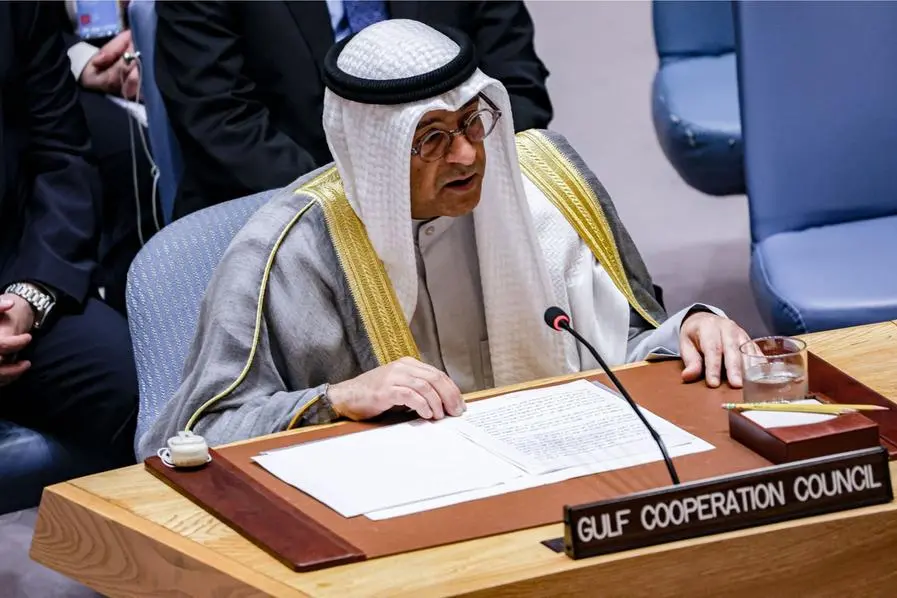
NEW YORK: Jasem Mohamed Albudaiwi, Secretary General of the Cooperation Council for the Arab States of the Gulf (GCC), has called on the Security Council to take all necessary measures to ensure an immediate end to Iran's unprovoked attacks on GCC states. He further urged the Council to protect waterways, guarantee the continuity of international navigation in all maritime straits, and include GCC countries in any talks or agreements with Iran to enhance regional security and prevent future recurrences.
During a high-level briefing at the UN headquarters in New York today regarding cooperation between the United Nations and the GCC, Albudaiwi stated: "We are not facing a fleeting crisis, but a true test of the international system's credibility. Either collective security is upheld in practice, or it is left to the equations of power alone. We in the GCC are advocates for stability and partners in responsibility; we extend our hand for peace, but we do not accept compromises on our security or infringements upon our territorial sovereignty. We refuse to let our region’s stability be held hostage to chaos, or the global economy to become a prisoner of threats to maritime lanes. Despite all challenges, the Arabian Gulf must remain a zone of stability rather than an arena for conflict—a proactive partner in security, not a burden upon it."
He added that since 28 February 2026, GCC states have been subjected to sinful Iranian aggression involving ballistic missiles and armed drones. These attacks have targeted civilian and vital infrastructure, including airports, oil facilities, desalination plants, ports, fuel reservoirs, residential areas, and diplomatic missions. This has resulted in civilian and military casualties, significant material damage, and a direct threat to the lives of citizens and residents.
The Secretary General renewed the GCC's condemnation of these unprovoked attacks in the strongest terms, describing them as a flagrant violation of sovereignty, the principles of good neighbourliness, international law, and the UN Charter. He emphasised that the targeting of civilians and civilian objects constitutes a grave breach of international humanitarian law.
Albudaiwi concluded by noting that the GCC has never been a party to crises, but rather a partner in solutions based on dialogue and diplomacy. He highlighted the Council's ongoing coordination with the UN to address regional conflicts and promote international peace, embodying a model of regional cooperation based on integration.