PHOTO
US foreign policy will undoubtedly shift under President-elect Joe Biden. In Washington, many foreign policy professionals are hoping to influence the new administration, but there is some increased recognition of the importance of including a broader range of American views in foreign policy.
There has long been a communication challenge between foreign policy professionals and other Americans. For example, many foreign policy professionals would struggle to quickly and effectively explain to many Americans why NATO is important to US security or how foreign aid benefits them. This challenge partly reflects the reality that foreign policy professionals spend years studying geopolitics, global economics, history, and more; within their professional sphere, they have a shared language and assumptions that do not require basic explanations. Most Americans are busy managing their jobs and lives and cannot devote significant time to understanding complex global issues. However, the communication challenge also reflects a disconnect between foreign policy professionals and many other Americans.
As trust in institutions and bureaucratic “elites” has declined, many Americans are less likely than in the past to trust foreign policy professionals and government agencies to defend their interests. More than ever, it is important for the foreign policy community to be able to effectively communicate with other Americans — including listening to them.
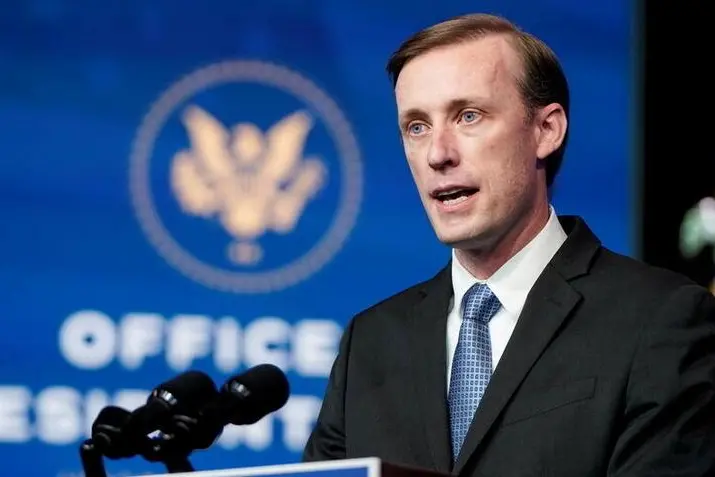
The Carnegie Endowment for International Peace released a report in September that drew on two years of research and interviews with middle class participants in Colorado, Nebraska and Ohio. “Making US Foreign Policy Work Better for the Middle Class” presents the project’s findings and recommendations for shifting foreign policy to more directly address middle class concerns. The project’s task force includes Jake Sullivan, who Biden has named as his national security adviser.
The report highlights that many Americans are worried about the future of the middle class. US income growth in the middle class has stalled — a trend that long predates the pandemic and subsequent economic crisis — while costs in key areas such as healthcare and education have increased. Many middle class Americans feel that they are struggling, and they tend to prioritize economic and security issues that they know directly affect them.
On foreign policy, the report found important differences among middle class Americans. In communities where manufacturing has declined, people tend to be skeptical of free trade and want changes in US trade policy that emphasize labor concerns. Other Americans who see themselves as benefiting from trade are concerned that policies like tariffs could damage their own economic interests. The report notes that a majority of the middle class today rely on the service sector, which has benefited more from trade than the manufacturing sector. There are partisan differences on topics such as climate change and relations with Russia, and there are generational differences on climate change and human rights.
There are, however, areas of general agreement. Many middle class Americans want the US to be a global leader that promotes American values. Americans tend to want a strong national defense but are concerned about long-term military interventions in places such as Iraq and Afghanistan. Americans in localities that rely on defense spending want that spending to continue, even as they question military interventions abroad.
The report offers numerous recommendations, ranging from practical policy tweaks to ambitious structural revisions of foreign policy. The report recognizes that addressing concerns around trade alone will not help the middle class, given that many Americans benefit from trade and are more focused on other economic and security concerns. Addressing issues with trade’s impact on the middle class is important, but is only part of reshaping foreign policy to better serve middle class Americans. It is also important to recognize that globalization has exacerbated income inequality in the US. The report includes several recommendations designed to mitigate this effect, including a national competitiveness strategy to enhance the ability of small and medium-sized enterprises and workers to compete globally.
The task force also recommends breaking down the traditional bureaucratic walls between domestic and foreign policy. The report highlights the need to better integrate domestic policies to strengthen the middle class with foreign policy formulation.
The report calls for moving beyond typical foreign policy worldviews, noting that the middle class would not benefit from a US-versus-China new Cold War lens, US isolationism, military overextension, or other common approaches. Rather, a nuanced perspective that tries to ensure that foreign policy serves most Americans would include multiple components, such as avoiding major defense spending cuts, while gradually shifting some spending to other priority areas like research and development and cybersecurity.
One of the most challenging recommendations is to “build a new political consensus” around foreign policy. The Carnegie report offers one of the best options for building bipartisan support for foreign policy goals, as many members of Congress must consider the interests of their middle class constituents. However, in the current era of high polarization and intensive political competition between the parties, this is a particularly ambitious goal.
The Carnegie report is an important step by members of the Washington foreign policy community to reach out to Americans far from the center of US political power. The report offers many useful recommendations for better integrating middle class Americans’ interests with US foreign policy objectives. Hopefully, it will be only the first step in a broader Washington effort to diversify perspectives in US foreign policymaking and to rethink how to shape foreign policy in a way that reflects Americans’ core concerns.
- Kerry Boyd Anderson is a writer and political risk consultant with more than 16 years of experience as a professional analyst of international security issues and Middle East political and business risk. Her previous positions include deputy director for advisory with Oxford Analytica and managing editor of Arms Control Today. Twitter: @KBAresearch
Copyright: Arab News © 2020 All rights reserved. Provided by SyndiGate Media Inc. (Syndigate.info).