PHOTO
The struggle over sea access in East Africa is usually presented as a quarrel over tariffs, port fees and corridors. In fact, it is a contest over political authority in a corridor where constrained states, restless societies and ambitious external powers depend on the same narrow maritime space.
For much of African history, the easiest check on abusive power was the ability of people to move beyond its reach. Colonial conquest and the post-independence settlement closed that exit.
European empires drew borders across older political and ecological zones. After independence, African leaders could either reopen frontiers in search of a fairer map and risk war, or accept inherited borders.
The result was a territorial order in which states gained recognition without the extractive capacity, coercive reach or dense social bargains that had underpinned state formation elsewhere.
A few ports, thin road and rail networks and overstretched customs posts became the main channels for trade, taxation and external influence. Many states survived more through the legal shelter of sovereignty and outside support than through authority rooted in their own societies.
Their main trade and energy routes cross other states’ and they know that a border closure, a port disruption or a neighbour’s political gamble can choke off fuel, food or exports in a matter of days.
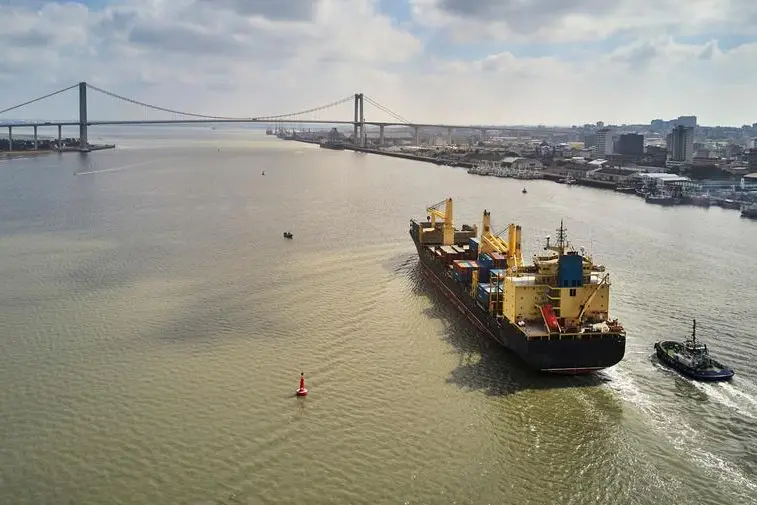
Kenya, Tanzania, Somalia, Eritrea, Djibouti and Sudan hold the shoreline that links East Africa to the Red Sea, the Gulf of Aden and the wider Indian Ocean, which gives their leaders real leverage over regional trade, energy flows and the region’s ability to withstand external shocks.
It also places on them a duty to treat those coasts as shared lifelines, not as assets to be used carelessly, captured by private interests or traded away under pressure.
This inherited geography embeds a hierarchy of exposure and leverage. Landlocked states must negotiate lifelines they cannot directly protect. Coastal states must govern gateways that attract external interest and often exceed their administrative and security capacity.
The United Nations Convention on the Law of the Sea (Unclos) and Africa’s decision to accept inherited borders were meant to discipline this environment. Unclos defines territorial waters and exclusive economic zones, protects freedom of navigation and recognises landlocked states’ rights of access and transit.
These are functional rights—they concern corridors and predictable treatment, not political authority over another state’s coastline, and they do not legitimise binding deals with subnational actors behind the back of a recognised government.
The African norm of fixed borders points in the same direction. Security and development are supposed to be pursued within settled territorial frames, not by reopening frontiers whenever a government feels cornered.
Holding to that discipline is difficult for states with narrow revenue bases and weak institutions. Ethiopia is the clearest case. It has no coastline but considerable demographic and military weight, and since Eritrea’s independence has relied almost entirely on Djibouti for sea access.
On paper, this respects both Unclos and the African border norm. In practice, both capitals feel exposed. Ethiopia fears that any serious disruption in Djibouti’s internal politics could compromise its access to the sea.
Djibouti knows its revenue and strategic relevance depend on Ethiopian cargo, and that it sits beside a neighbour whose demographic and military weight far exceeds its own.
These structural anxieties help explain recurrent Ethiopian rhetoric that presents sea access as a question of survival and historical redress. The narrative resonates domestically because it draws on memories of imperial loss and partition. For neighbours it signals that the border settlement long treated as a protective equilibrium is under strain from domestic politics and regional competition.
Uganda’s President Yoweri Museveni has added his voice to this drift, telling Ugandans that their country is unfairly denied access to the Indian Ocean and that future wars may follow if landlocked states are blocked from the sea. By invoking war, he turns an access problem into a political grievance and raises expectations that cannot easily be lowered.
Other landlocked states have taken a more cautious course. South Sudan looks for alternatives to Sudan’s pipelines, while Rwanda and Burundi move their trade through Tanzanian and Kenyan corridors. All three behave with the restraint of governments that must protect vital routes they do not control.
In Libya, the Emirates built up Khalifa Haftar’s Libyan National Army, giving an eastern command enough resources to control oil facilities and bases without broad international legitimacy.
In Sudan, Abu Dhabi built parallel relationships with the military council in Khartoum and with powerful paramilitary commanders. Each relationship pushed Sudan further away from the difficult work of rebuilding a single centre of authority that could answer to its own citizens rather than to foreign patrons.
Across these theatres, the logic is consistent. UAE gravitates toward actors who control territory, resources or strategic infrastructure, whether or not they sit at the apex of a recognised state. The offer is capital, arms and diplomatic cover.
The return is leverage, loyalty on selected questions and local partners who anchor a wider maritime network. Fragmented authority becomes an opening rather than a problem to be repaired.
From the vantage point of a small but wealthy external power, this method is efficient. From the perspective of East African governments, the effects are more troubling. Authority drifts from central institutions to regional actors and armed men.
Coastal access, airports and borderlands become instruments in a political marketplace rather than public goods under national oversight.
This pattern interacts with the landlocked dilemma in dangerous ways. Leaders who want to reduce dependence on existing corridors know that alternative routes are likely to pass through territories where external patrons already have clients and where central control is weak.
They face a temptation to treat border communities, coastal regions and even militias as bargaining tools in negotiations over access. Once that logic takes hold, the norm that borders are fixed and that sea access is handled between sovereign states begins to fray.
The region has already shown that cooperation at sea is possible. The campaign against Somali piracy brought together East African governments, the African Union and external partners. Hijackings fell sharply. That effort showed that the maritime space can be treated as a shared responsibility when incentives converge.
The current trajectory points in the opposite direction. Heightened rhetoric over sea access, the spread of Emirati style strategic connectivity and the routine use of subnational clients all weaken the habits and norms that kept territorial conflict within bounds.
It also requires governments to treat external capital and security assistance as resources to be channelled through accountable institutions rather than as shortcuts for incumbents under pressure.
Access for landlocked states should be governed by clear bilateral agreements, with major port and corridor concessions subjected to parliamentary oversight and regional security review.
The new maritime question is about whether the region can hold together a workable order under strain, or whether that order will be reshaped by external actors who will not bear the cost if it fails.
© Copyright 2022 Nation Media Group. All Rights Reserved. Provided by SyndiGate Media Inc. (Syndigate.info).