PHOTO
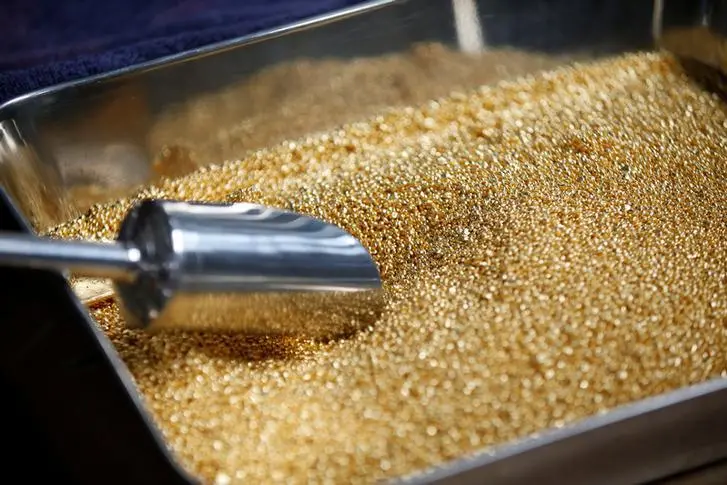
Africa is sitting on more than $1 trillion in untapped gold reserves, a resource that could transform its economic fortunes, a new report suggests.
And as central banks worldwide boost their holdings of the precious metal to hedge against inflation and reduce reliance on the volatile US dollar, the continent’s vast deposits present a rare opportunity to strengthen external buffers and accelerate growth.
The report by the Africa Finance Corporation (AFC) reveals that Africa hosts over $5 trillion in gold at mine-site value, including more than $1 trillion in untapped deposits.
The AFC says this resource offers a uniquely realistic opportunity for foreign currency-constrained African economies to strengthen external buffers while accelerating economic activity.
“Unlike most minerals, gold combines deep liquidity, transparent pricing, and rapid monetisation, enabling countries to convert domestic production directly into reserves rather than relying on volatile external inflows,” the report notes.
The study, Compendium of Africa’s Strategic Minerals, 2026, says while Africa hosts vast gold deposits, the metal accounts for only about $70 billion of Africa’s external reserves – roughly 15 percent of total forex holdings. It calls for an institutional approach to unlock multiple benefits simultaneously.“The strategic value of Africa’s minerals lies in how they can be leveraged to deepen domestic value addition, support regional integration, and anchor industrial ecosystems, rather than being viewed primarily through the lens of external export demand,” the report adds.
Ghana’s recent experience illustrates this potential. In 2025, Ghana established its Gold Board (GoldBod), the sole legally authorised body to license traders in gold, diamonds, and other precious ores.
By formalising artisanal and small-scale production, the board reduced smuggling, strengthened fiscal oversight, and boosted reserves. Ghana now holds the largest official gold reserves in sub-Saharan Africa, rebuilt from near depletion in 2022. Gross international reserves exceed $10 billion, and the currency appreciated by 41 percent in 2025 – the strongest global performance.“These dynamics are becoming increasingly relevant as central banks re-anchor reserves in gold,” the AFC observes.
Central banks in advanced economies continue to hold the lion’s share of gold in foreign reserves, with most recent purchases coming from emerging markets and developing economies.
The price of gold has risen by two-thirds in the past year, peaking above $5,000 an ounce, underscoring its role as a safe-haven asset amid geopolitical uncertainty and political turmoil in Washington, according to the Brookings Institution.
African official gold holdings rose from 605 tonnes in 2014 to over 738 tonnes in 2025, alongside rapid expansion in refining capacity. More than 14 African countries now host formal gold refineries.“Where traceable artisanal and small-scale production and accredited refining are in place, gold purchases reinforce monetary policy transmission, enhance reserve credibility, and retain value onshore,” the AFC states.
Countries with ties to China and Russia have sharply increased gold holdings since late 2021, with the trend accelerating after the G7 froze Russia’s foreign exchange reserves following its invasion of Ukraine. Moscow responded by ramping up purchases, while China has emerged as one of the largest buyers in recent months.
Africa’s mineral wealth extends far beyond gold. The continent holds about 30 percent of the world’s known reserves, including platinum group elements, industrial diamonds, cobalt, manganese, phosphate rocks, bauxite, iron ore, heavy mineral sands, potash, and uranium.
The AFC stresses that reliance on taxes and royalties alone has delivered limited and volatile gains, particularly where governance frameworks are weak.
Instead, Africa’s mineral endowment should be seen as a foundation for industrial development, investment mobilisation, and participation in higher-value global and regional value chains.
In East Africa, gold remains central to the mining sector, anchored by Tanzania’s Lake Victoria Goldfields. The country, already among Africa’s top 10 producers, is set to strengthen its position with large-scale projects such as the Nyanzaga Gold Mine, expected to begin production in 2027.
Gold production now feeds directly into Tanzania’s macroeconomic strategy, following the Bank of Tanzania’s gold purchasing programme launched in 2023.
© Copyright 2026 Nation Media Group. All Rights Reserved. Provided by SyndiGate Media Inc. (Syndigate.info).