PHOTO
Standard Chartered Bank Ni- geria has instigated a major turnaround in its operational strategy in the country – it has trimmed down its branches and closed the accounts of its less well-off customers. It seems to have embarked on a course of providing quality service but only to the more affluent. Dulue Mbachu has the details.
By the end of February, barring any regulatory intervention, all Standard Chartered Bank Nigeria accounts hold- ing less than N7.5m ($5,488.55), including investments, will be closed, according to a notice issued by the bank to its customers last November.
The British bank, whose slogan is ‘Here for good’, is making it clear that it is also in Nigeria for the rich, by moving into a niche market that serves them exclusive- ly. Under the new policy, customers will be filtered on the basis of ‘assets under management’, which must not consist of less than the new threshold.
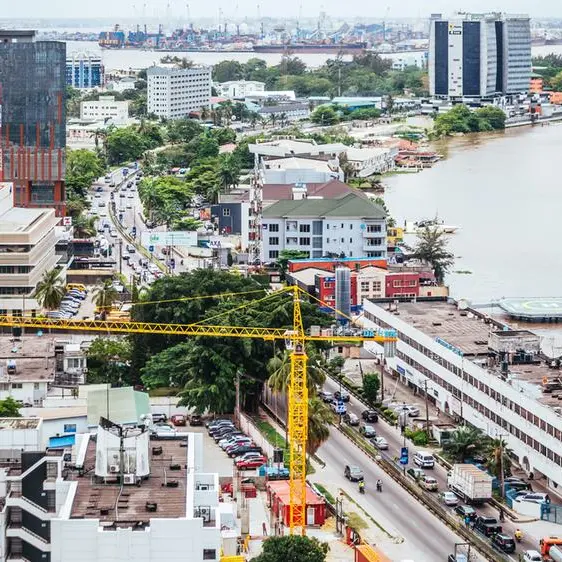
Even the geographical spread of the bank’s services has shrunk dramatically. Standard Chartered now operates only in Lagos, the economic capital; Abuja, the political capital; and Port Harcourt, the oil industry hub. These three form a triangle of the country’s richest cities.
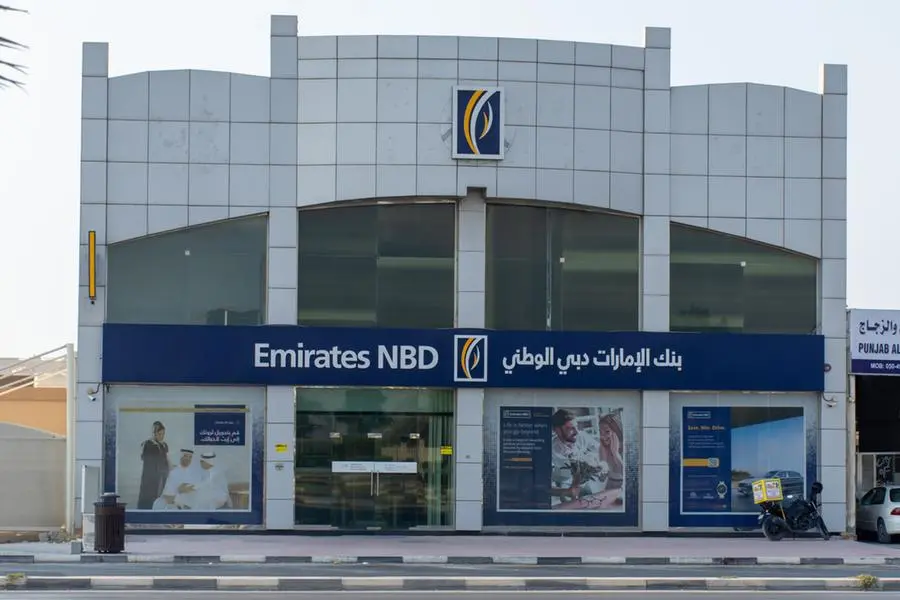
A January notice to customers, signed by the CEO Dalu Ajene (opposite) and Lan- re Olajide, the head of wealth and retail banking, outlined the latest state of its withdrawal from the wider market. There are now three branches in Lagos, one each in Abuja and Port Harcourt; a total of five branches in all of Nigeria for a bank with a national licence.
“Standard Chartered is a global bank connecting corporate, institutional and affluent clients to a network that offers unique access to sustainable growth op- portunities across Asia, Africa and the
Middle East,” the bank said in a joint statement by Ajene and Olajide. “Our strategy is designed to deliver our pur- pose.”
A decade and a half ago, Standard Chartered Bank Nigeria could boast of more than 30 branches spread across the country, which has more than 220m peo- ple. At that time it was chasing an eco- nomic boom that had spawned a middle class with sizeable disposable income and keen to express its newfound spending power.
All that changed as two recessions in four years, 2016 and 2020, left that emerging middle class reeling. Many international banks chose to emigrate rather than slip down the ladder; and in the face of persisting dire straits, Stand- ard Chartered was forced to reconsider its Nigeria strategy.
Nor did the bank just halt the expan- sion, it retreated. Branches that had been set up in regional economic centres, such as Ibadan, Aba, Onitsha, Enugu and Kano were culled. Even in the major centres of Lagos, Abuja and Port Harcourt, the branches were trimmed by as much as two-thirds between 2015 and 2023 as digitalisation provided another reason to further cut the workforce.
Privileges for the rich
Even for customers who meet the new requirements, there is still another bar to scale. One of the bank’s top products is the ‘Priority Banking’ service that requires a customer to have a mini- mum balance valued at N50m across all currency holdings. In return, the account holder gets priority access to its services, including personalised ad- vice on its products. The new threshold represents a 233% increase from the previous minimum of N15m.
For the bank’s elite customers, ser- vices include the opportunity to invest in the international financial mar- kets, the ease of managing accounts located in multiple jurisdictions as well as international payments – including school fees for the rich whose children are studying abroad. Such customers also have access to ‘a world of curren- cies’ that includes competitive rates, expert advice and ‘swift processing in major global currencies’ to benefi- ciaries.
Priority customers are promised access to international financial cen- tres such as London, Jersey, Singapore, Hong Kong and the UAE, with advice on wealth transfer and inheritance. Those interested in acquiring properties in the UAE and the UK have access to mortgage facilities.
A popular service at Standard Chartered is its foreign currency or domiciliary ac- counts denominated in dollars, pounds and euros, which also enable holders to invest in global financial markets. The emphasis is on wealth planning via customers taking advantage of the power of compounding returns, starting with as little as $50.
Customers are frequently pitched Standard Chartered’s Signature Chief In- vestment Officer (CIO) funds. Incorporating dollar, pound and euro investments, they include the growth fund ‘for those with a high risk tolerance’, the balanced fund for those with medium risk tolerance and the conservative fund for the risk averse.
While the growth fund might have an asset allocation of 72% to equity, 17.50% to fixed income and 5% as cash, the bal- anced fund could aim for 52.50% equity, 37.50% for fixed income and 5% cash. A conservative portfolio, on the contrary, may allocate 65% to fixed income and spread the rest among money market in- struments and cash.
Some of the best returns have come from equity funds such as the Ninety One Global Natural Resources Fund that re- turned 48.32% in a year, the Allianz GIF Oriental Income Fund that gained 43.61%, the Jupiter Asia-Pacific Income Fund that gained 38.44% and the Schroder ISF China account that returned 37.68%. Other port- folios exist that either take advantage of sustainable investments or emerging and frontier markets.
Next to equity in profitability, are multi-asset funds that try to take in a bit of the different segments. Alliance Bern- stein SICAV Emerging Markets Multi-Asset portfolio priced in dollars gained 28.38% within the same period of a year. Another version of the same fund priced in euros gained 25.08%, followed by Blackrock BGF Asian Multi-Asset Income Fund that rose 20.75% in the past year.
Fixed income funds have also shown strong performance with Templeton Emerging Market Bond Funds in dollars, pounds and euros gaining between 26% and 27% yearly. Schroder ISF Emerging Markets fund also put in a strong show- ing with 23%, with other funds lingering in the 9% to 15% range.
“For me, the ability to make these foreign currency investments and hedge against local currency devaluation and fluctuations is the major attraction of Standard Chartered,” says customer Benja- min Nati. “There’s a certain peace of mind that comes with that.”
Nati first opened an account at the bank because he wanted to pay the fees of his son attending university in the UK easily. He now finds the international investment opportunity a bonus.
Another customer, Augustine Edoh, says he felt slighted by the bank’s stance and decided to close his accounts with the bank ahead of the deadline. “It’s like spitting in the face of the less fortunate customers, telling them they don’t matter,” he said. “That’s another form of discrimination.”
There has been speculation about whether Standard Chartered’s new policy of officially excluding the less affluent in Nigeria from its client base conflicts with the Central Bank of Nige- ria’s policy of financial inclusion.
Standard Chartered was among the early birds to fulfil the Central Bank of Nigeria’s revised capital require- ments over having N200bn in paid-up capital. This has been interpreted as a clear commitment to Nigeria and it now appears set to play a role in redefining a banking system it helped to create.
Long-established contact
Standard Chartered’s relationship with Nigeria goes back to 1894, through its stake in the Bank of West Africa, which
was bought in 1965 by Standard Bank of South Africa. The successor entity became Standard Bank in 1969 and transformed to First Bank a decade later when Nigeria’s indigenisation law whittled down Standard Chartered’s stake.
Standard Bank sold its First Bank stake in 1996 and exited Nigeria. It returned three years later in 1999, setting up a fully owned Nigerian subsidiary.
In January, its CEO for Nigerian opera- tions, Dalu Ajene, was promoted to Stand- ard Chartered’s Head of Africa Operations, an indication the bank’s Nigerian strategy may get a wider application across Africa.
Over the past five years, Standard Char- tered ended its operations in Angola, Sierra Leone, Cameroon, The Gambia and Zim- babwe. It also made partial withdrawals from Tanzania, Uganda and Zambia.
Standard Chartered, in line with its affluent-banking strategy, remains fully operational in the richer African coun- tries. These include Nigeria, South Africa, Ghana, Kenya, Mauritius and Egypt. n
Standard Chartered is a global bank connecting corporate, institutional and affluent clients to a network that offers unique access to sustainable growth opportunities across Asia and the MEA region.
© Copyright IC Publications 2026 Provided by SyndiGate Media Inc. (Syndigate.info).