PHOTO
After decades of dependence on oil and fragmented taxation, Nigeria now stands at a historic crossroads—one where fiscal fairness, discipline, and national trust are being painstakingly rebuilt. In this special report, CHIMA NWOKOJI unpacks the sweeping redesign of the nation’s tax architecture, drawing from the lived tensions of businesses, the structural cracks exposed by policy, and the fierce debates surrounding VAT, Free Zone incentives, and Capital Gains Tax. As Nigeria redefines how it collects, spends, and shares prosperity, one truth becomes clear: reform is an economic necessity, but also a psychological battle.
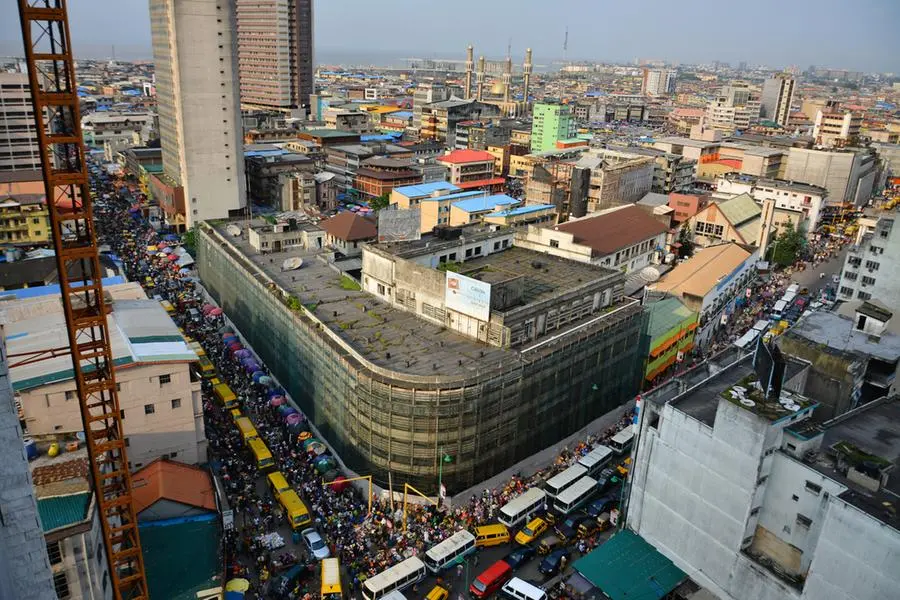
At the edge of Lagos Apapa Port—where humidity clings to the skin and the roads rumble with container-laden trucks—Adaeze Okonkwo has built a modest empire. Her logistics firm, operating from within a Free Trade Zone, survived the last decade through grit, long nights, and the protective shell of zero corporate tax and duty-free imports.
But earlier this year, a simple phone call shook her world.
“Madam, some of our exemptions may no longer hold,” her accountant said carefully. “Government says Free Zone incentives will be reviewed.”
The message hung in the air like a verdict. For Adaeze, incentives were not privileges—they were the difference between solvency and collapse. Inflation had battered operational costs; the naira’s volatility made planning impossible; port delays turned two-day jobs into two-week ordeals. Removing incentives felt like uprooting the pillars on which her business stood.
Later that night, scrolling through social media updates from the Presidential Committee on Fiscal Policy and Tax Reforms, her anxiety began to morph into a reluctant curiosity. Perhaps, she considered, the reforms were painful but necessary. Perhaps the country could no longer survive on fiscal illusions.
For decades, Nigeria built a tax structure that was wide but shallow, complex but unproductive. Oil wealth insulated government from accountability. Tax incentives proliferated without justification. Agencies duplicated roles. And confidence steadily eroded.
The government’s response was to empanel a technical committee led by Taiwo Oyedele, a globally respected fiscal expert, tasked with confronting what many economists quietly described as Nigeria’s most broken institution—the tax system.
Their assignment was as massive as it was urgent: redesign VAT; reform Free Zones; modernise capital gains taxation; consolidate more than 60 taxes; reduce leakages; rebuild trust. But like every deep reform, the process demanded sacrifice.
As Adaeze would later reflect: “Reform is like renovating your house. You can’t fix the roof while still sleeping under it.”
Her story mirrors a national question: Can Nigeria reform without hurting the fragile economy that feeds it?
Nigeria’s tax frustration did not appear overnight. It was the slow decay of decades—of politics, neglect, and oil dependency.
During the oil booms of the 1970s and early 2000s, petroleum revenues lulled the nation into complacency. Government budgets floated comfortably on crude exports, making taxation seem optional. Compliance dwindled. Enforcement deteriorated and outside Lagos, the economy drifted further from federal oversight.
A former senior director at FIRS described the dysfunction: “There was a time you could travel from Abuja to Port Harcourt and pay five different taxes on the same truck—federal, state, and local. Everyone wanted a slice, but nobody took responsibility.”
By the 2010s, the chaos had intensified. Nigeria had more tax types than active refineries. Some were legal; many were not. Agencies operated like independent fiefdoms. Businesses faced multiple collectors but saw no improvement in public services.
Other African countries were evolving. Kenya pushed its tax-to-GDP ratio to 17 percent. South Africa exceeded 25 percent. Nigeria remained stuck around 10.8 percent.
The 2020 oil crash exposed the fragility. Debt servicing swallowed nearly all federal revenue. Subsidy payments drained trillions. The public finance structure was nearing collapse.
It was clear Nigeria needed a fiscal reset—not cosmetic tweaks but structural reconstruction.
The committee that stirred the hornet’s nest
When President Bola Ahmed Tinubu announced the Presidential Committee on Fiscal Policy and Tax Reforms in July 2023, public reactions were mixed. Some applauded the decision; many dismissed it as another bureaucratic promise.
But the chairman, Taiwo Oyedele, set a tone that surprised even skeptics.
“We cannot keep taxing poverty. Our goal is simple: fairness, efficiency, and growth,” he salid.
Inside the committee’s deliberations, the extent of dysfunction became clearer. Over 60 taxes existed; fewer than 10 generated meaningful revenue. Incentives lacked either logic or oversight. Free Zones leaked billions in lost customs duties. Capital Gains Tax was a ghost in the statute books.
Resistance emerged from all corners. States feared losing power. Agencies resisted consolidation. Businesses worried about higher costs. Yet the committee pushed ahead, determined to establish a system where incentives rewarded performance, digital tools replaced paperwork, and taxation became not just compulsory, but trustworthy.
VAT reform: equity vs evasion
Value Added Tax (VAT), introduced in 1993 as Nigeria’s most efficient indirect tax, slowly became a battleground of confusion, politics, and evasion.
A major flashpoint erupted in 2021 when Rivers and Lagos states challenged the federal government’s authority to collect VAT. The legal fight exposed deeper structural weaknesses: multiple collection points created duplication; compliance hovered below 40 percent; informal traders—who dominate the economy—barely paid; large corporations exploited loopholes.
The committee’s response was a single digital VAT engine on TaxPro Max, centralising and simplifying remittances. The focus was on broadening the tax base—not raising rates.
Critics feared price increases. Businesses complained of administrative burden. But economists insisted the reform was essential.
Johnson Chukwu, CEO of Cowry Asset Management, put it plainly: “Nigeria doesn’t need higher taxes—it needs higher trust.”
Early results proved the committee right. By 2025, VAT collection rose sharply even without rate increases, driven entirely by better coordination and compliance.
Free zones: When incentives become entitlements
Nigeria’s Free Zones were conceived to catalyse industrialisation and export-led growth. Instead, many became conduits for revenue leakage.
Goods meant for export found their way into domestic markets. Imports were mislabeled. Incentives became permanent gifts rather than performance motivators. Government estimated losses approaching ₦2 trillion annually.
So when the committee recommended rationalisation, the backlash was swift.
At a public hearing in Lagos, Adaeze spoke for many legitimate operators: “If others abused the system, enforce the rules. Don’t punish those who followed them.”
The committee adopted a nuanced approach: Firms earning at least 75 percent of revenue from exports would retain full incentives;Domestic-facing firms would return gradually to the tax net; Customs and FIRS would integrate data to stop diversion; Economist Tilewa Adebajo defended the reform:
“This isn’t punishment. It’s detox. Incentives must buy productivity, not privilege.”
For Adaeze, the balanced policy was a relief. Her firm remained eligible for exemptions due to its export ratio, allowing her to remain in business while adjusting gradually to Nigeria’s new fiscal realities.
Capital gains tax
Capital Gains Tax (CGT), introduced in 1967, became one of Nigeria’s most ignored taxes. Loopholes made enforcement nearly impossible; asset transfers went undocumented; the wealthy escaped taxation while wage earners and consumers carried disproportionate burdens.
The committee proposed a modern CGT regime including:Digital asset registries; Automated collection on securities; Valuation protocols;Thresholds to protect low-income earners; Taxation of certain offshore transactions; The fiercest debate erupted here.
Capital market analyst Sola Oni publicly criticised the proposed 30% CGT rate.
He argued: “Investor confidence is not a luxury; it is the lifeblood of capital markets. Poorly timed reforms risk triggering capital flight.”
He cited models in Singapore, Switzerland, and Kenya, which minimized or eliminated CGT on listed securities. He advocated phased implementation and progressive taxation that rewarded long-term investors.
Taiwo Oyedele delivered a detailed rebuttal, noting: 80 percent of investors at stakeholder engagements rated the process 9 or 10 out of 10; exemptions for low-income earners reflect global norms.; FPIs already pay taxes in home jurisdictions—Nigeria taking its share does not scare them away; media misinterpreted proposals, inflaming unnecessary panic; Nigeria’s equity market had gained over 100 percent in USD terms since 2023.
His central argument is that “Tax equity is not anti-investment. Misreporting reform to generate panic is the real threat.”
The week leading up to November 7 sent shockwaves across the Nigerian capital market. Nearly ₦4.6 trillion in market value evaporated within days.
Some blamed CGT fears. Others blamed wider policy uncertainties—nicknamed “Trump.” But the fundamental question lingered: What truly caused the bloodbath?
On Drinks and Mics, hosts Ugodre and Arnold convened experts Folagbade Adeyemi of Anchoria Securities and Femi Ademola of Aiico Capital. Together they diagnosed the panic: Uncertainty over CGT implementation created hesitation; Misinterpretations by media triggered a chain reaction;Some investors repositioned assets due to global volatility.
Companies rushed capital raising through public offers and debt issuance to stabilize balance sheets weakened by devaluation.
The analysts also examined the NGX’s strategy to revive IPOs, the rise of private credit funds, and the surprising revival of consumer giants like Nestlé and Guinness.
Their conclusion: fear—not fundamentals—triggered the crash.
Rebuilding the psychology of taxation
At a town hall in Abuja, a shop owner captured the nation’s mood:“You want me to pay more taxes. Can you show me what you did with the ones I already paid?”
This is Nigeria’s core challenge: a trust deficit. The committee recognised that reforms would fail without a new social contract.
Early steps include:FIRS publishing annual transparency reports; TaxPro Max enabling taxpayers to track obligations;States exploring participatory budgeting; Civil society groups launching citizen audits.
But as Oyedele often says:“The tax receipt should be a badge of participation, not persecution.”
Trust is not a line item in a budget. It is a lived experience.
To clarify new CGT provisions, a senior market stakeholder presented five expectations using the acronym TAIWO:
T — Threshold Exemptions meaning that Small retail investors remain protected; gains below designated annual thresholds are exempt.
A — Administration which refers to Filing and Compliance. Structured filing ensures transparency and modernizes documentation.
I — Investor Transaction Costs. He says Brokerage fees and charges are now deductible before calculating CGT—ensuring tax applies only to real economic gains.
W — Waiver for Reinvestment. By this, he meart that Gains reinvested in Nigerian companies within the same year enjoy relief, encouraging market liquidity.
And finally, O — Offshore Transfers, referring to the fact that Nigeria can now tax gains from foreign holding companies whose value is tied to Nigerian assets—closing loopholes.
These reforms aim to deepen the market, protect investors, and advance fairness.
Toward a new social contract
As dusk settles over Apapa, Adaeze closes her ledger. She remains wary, but no longer fearful. Her VAT filings are now automated. Her Free Zone incentives remain intact due to her export ratio. Her staff now sees tax compliance as a civic duty.
“I still worry,” she admits. “But maybe this time, we’re building something that will last.”
Her sentiment reflects a national awakening. For the first time in decades: Taxes are being simplified; Incentives are becoming performance-based;VAT is transparent and digital; CGT is modern, fair, and enforceable;Trust—slowly and painfully—is being rebuilt.
Reform is never painless. Legislative battles lie ahead. Misreporting will persist. Interests will resist. But something fundamental has changed. Nigeria is no longer managing dysfunction—it is confronting it.
And in the end, fiscal reform is not about percentages or statutes. It is about people like Adaeze—navigating uncertainty, embracing fairness, and discovering that perhaps equity is the only sustainable foundation for national prosperity.
Copyright © 2022 Nigerian Tribune Provided by SyndiGate Media Inc. (Syndigate.info).