Saturday, Aug 27, 2011
   (From THE WALL STREET JOURNAL)
   By Charles Levinson
TRIPOLI -- Libyan rebels pushed Col. Moammar Gadhafi's forces out of the last residential neighborhood in Tripoli overnight Friday, but the rebel military gains were overshadowed by rapidly deteriorating living conditions in the capital of about two million people.
The challenges of restoring life to Tripoli grow more daunting by the day. Streets are buried under a mix of trash, waste and, in several places, corpses. Water and electricity have been cut throughout much of the city.
But the rebels' victory in the Abu Salim neighborhood has made the area safe enough for city residents and journalists to visit its notorious Abu Salim prison for the first time.
A 1996 inmate massacre at the prison has fired up Libya's opposition for years. A protest on Feb. 15 in Benghazi by families of victims of that massacre, and their lawyers, kicked off the countrywide protests that launched six months of fighting that this week unseated Col. Gadhafi.
The rebels' national governing body, the National Transitional Council, is just beginning to relocate from its eastern base in Benghazi to Tripoli. Opposition leader Mustafa Abdul Jalil will remain in Benghazi until the capital is deemed secure.
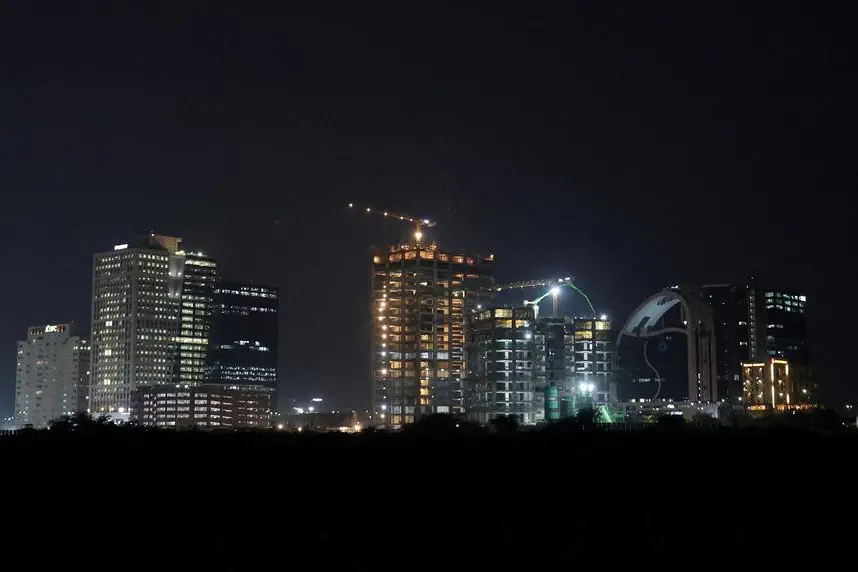
Tripoli was cloaked in darkness Friday night, the first time it has been largely without power since rebels stormed into the capital Sunday. City faucets were dry for a second straight day.
In hospital morgues, bodies are piled on top of each other on available floor space. As rebels claim corpses of their own ranks, bodies of what appear to be pro-Gadhafi fighters are left on the streets in the summer heat. In some places, the smell suffocates whole blocks.
Many are still trying to deal with the reports of mass executions by pro-Gadhafi forces that continue to circulate. A physician and a nurse at the Tripoli Medical Hospital said they treated two patients who claimed to have survived a massacre by pro-Gadhafi forces of more than 100 inmates at a military camp in southwest Tripoli, as rebels were advancing through the capital earlier this week.
London-based rights group Amnesty International said it is investigating that incident, and another alleged mass killing of prisoners by regime loyalists.
The situation is an immediate challenge to Tripoli's new municipal leadership. On Thursday, a group of elders and technocrats, who led the underground resistance movement in the capital, announced a transitional city council.
Abdul Razaq Abu Hajar, president of the Tripoli council, said Friday that water in the city had been cut off because a key control plant that governs water flow in the city is 300 miles east of Tripoli in territory still contested by pro-Gadhafi forces. All the plant workers have fled, he said. Rebel leaders hope to dispatch an emergency force to secure the plant in coming days to restore water to the city, he added.
Tripoli residents appeared willing, for now, to forgive the collapsed public services.
"Gadhafi is not here. That's all that matters," said Fatuma al-Raiby, a housewife in the city's Zawiyat Dahmani neighborhood, as her husband lugged water cans up the stairs to their third-floor apartment. "As long as we don't have Gadhafi, I don't care if we don't have water, electricity or anything."
Such tolerance may not last. In Baghdad, the postwar failure to restore services, particularly electricity, was seen as a symbol of U.S. failure in the country. It helped dissolve what goodwill the U.S. may have initially enjoyed.
Still, much of Tripoli continues to celebrate its newfound freedom from Col. Gadhafi's reign of nearly 42 years.
Violence in the city has decreased each day this week, as rebels ousted pro-Gadhafi forces. They largely completed their task in the capital overnight Thursday, securing the city's Abu Salim neighborhood, a sprawling slum that had been one of the last refuges of Col. Gadhafi's fighters in the city.
"All the city is now considered safe," one fighter declared.
Rebel fighters relaxed Friday afternoon amid still-smoldering stalls in the Abu Salim market. They said they were heading to the city's southern suburbs toward the airport, where remnants of pro-Gadhafi fighters were still doing battle.
At the nearby prison, former inmates visited the site and recounted what they had endured there -- some during the recent fighting. One said he was sent there after taking down a picture of Col. Gadhafi in his office.
The prison guards had fled earlier in the week, after Col. Gadhafi's nearby Bab al-Aziziya fortress compound fell Tuesday. Neighbors rushed in to free an estimated 1,500 prisoners, said Amr Mabrouk, a 28-year-old Abu Salim resident who helped free the prisoners -- many of whom are political dissidents, Islamists or other noncriminal detainees, rebels and local residents said.
Ali Matouk, 41, was among the visitors. He said he spent 10 years in this prison from 1991 to 2001. His recollections couldn't be independently corroborated.
He lay down in the corner of the cell he had long occupied, turned on his side, and tucked his arms into his chest to demonstrate how he and fellow prisoners had slept packed together.
"This is where I lay for 10 years," he said. "I never thought I'd be back here as a free man. This place has been in my nightmares for years, and now it feels like a dream."
---
Margaret Cokercontributed to this article.
(END) Dow Jones Newswires
27-08-11 0818GMT