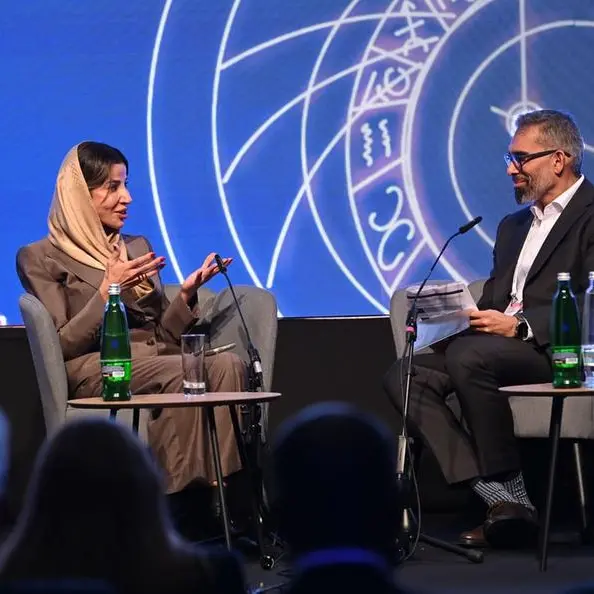
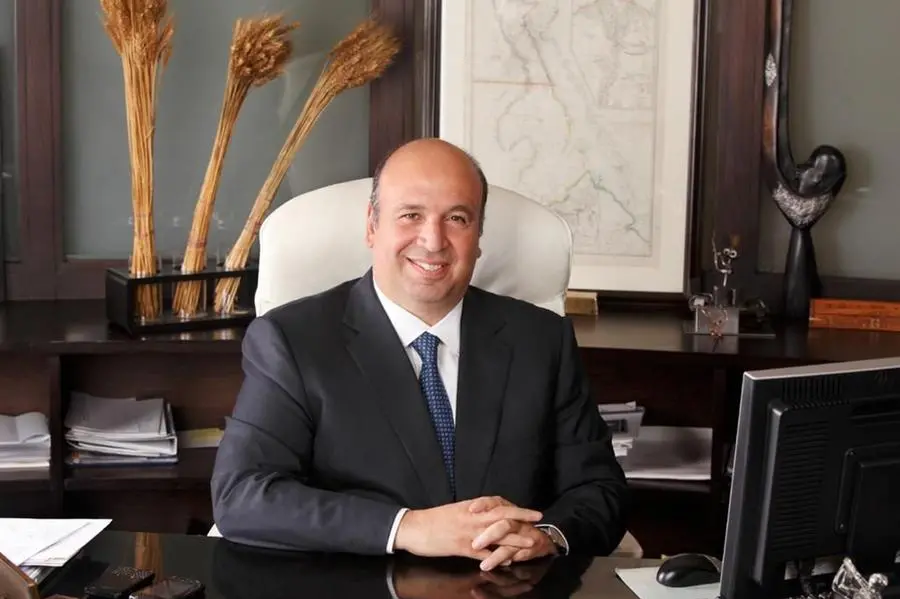
H.E. Abdul Aziz Abdulla Al Ghurair, Chief Executive Officer of Mashreq has now won two of Banker Middle East's individual awards
H.E. Abdul Aziz Abdulla Al Ghurair received the Outstanding Contribution to the Industry Award at the Banker Middle East Industry Awards 2011. This is the second time he has won one of the key 'individual' awards voted for by the readers of Banker Middle East - in 2009, he won the Lifetime Achievement Award.
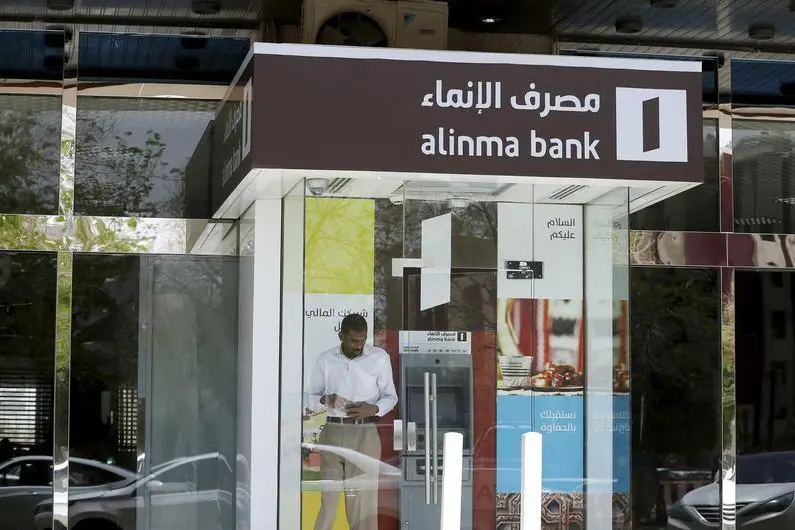
What's behind these achievements - in a word, Mashreq! It is a leading national financial institution in the United Arab Emirates (UAE) with a network of 54 domestic branches. Within the MENA region, the bank also has a network of 10 branches in Egypt, four in Qatar, one in Bahrain and one in Kuwait. In addition, there are four overseas branches in Hong Kong, India, London (UK), and New York (US) and four representative offices, in Bangladesh, Pakistan, Sudan and Nepal.
Mashreq was the first bank in the UAE to launch ATM machines; debit and credit cards; travellers' cheques; consumer loans; point of sale terminals; bancassurance products; mortgages, digital chip enabled credit cards; and the highly popular MashreqMillionaire rewards-based savings programme. The bank also operates an Islamic banking subsidiary Mashreq Al-Islami.
Al Ghurair joined the bank in 1977 and worked in various roles until 1988, taking over responsibility for the bank's international operations. He was appointed Executive Director in 1989 and became CEO in the following year. Al Ghurair was last interviewed by Banker Middle East on receiving his award in 2009 (BME 109, July-Aug 2009). In the wake of receiving the award this year, Robin Amlôt asked him how the banking environment in the UAE has changed over the past two years.
"In 2009 the UAE economy was set for a recession and slowdown. All that is behind us now and we are looking for stable growth for the next two-three years. Liquidity in the banks has significantly improved, industry generally is more optimistic.
"We are not going to grow by pre-2008 profit numbers but I think we have stabilised. We have made most of the provisions that banks need. Every year banks make more provisions but the big heavy provisioning requirement is behind us. So I think we are cautiously optimistic. We are also lucky to work in the second largest economy in the Arab world and in the largest banking sector in the Arab world. I am optimistic about the future. We are continuing to look at growth not only in the UAE but elsewhere in the GCC, Qatar holds potential for us and, of course, we are looking at growing our Egypt operation once the situation there settles down."
What's been the biggest change in Mashreq itself in the last couple of years?
"Prior to 2009 the banking sector was only running after growth and all that we cared about was to achieve that. The market looked only at how fast you grew vis-a-vis your competitor. We used to grow at 20-30 per cent a year - such growth is no longer possible. Now we are looking at putting the customer as a priority. We are moving from being a growth-orientated organisation to a more customer-centric approach. Service has become a key focus for us. We used to deliver products and services on a silo basis. Now we look at the customer holistically, aiming to offer a package deal that fulfils all his requirements.
"Mashreq's liquidity has also improved. Our advance to deposit ratio is now 74 per cent. This is too conservative, we need to get back to lending and increase this ratio. This is not a sustainable number, it is too low.
"Our capital adequacy ratio (CAR) has reached 22.6 per cent. The higher the capital you have the better off you are from a rating agency's perspective. But I believe above 20 per cent is unsustainable - active shareholders would say it is too much capital. Banks are regulated and need to have good capital adequacy but we have Basel III coming up and I believe 15-16 per cent should be sufficient. Right now our Tier 1 capital alone is 16.4 per cent."
What's your view on bancassurance in the UAE?
"I think banks should offer bancassurance but the question is how to make the business profitable. From a customer point of view it is very convenient and helps the bank to be a one-stop financial centre but it will never be a huge money maker for a bank.
Which sector/demographic is most attractive/most profitable for you?
The higher the customer income, the more potential there is to make money from them, so we are always going to look for higher income customers. However, it is also a challenge for banks to deliver a high quality service to low income customers. We need to be innovative, delivering more of our services through the internet and through ATMs, reducing the cost to the bank of lower income customers coming to branches for service.
"On the corporate side, there is a gap in the SME market-place that banks are struggling with. Many SMEs are not large enough to allocate a relationship manager to them and yet not small enough to have them just bank through the branch network. We believe it is critical for the UAE economy and for the banking system to nurture SMEs."
Do you know how to profit from the SME sector and help small businesses grow?
"I think we have found the formula. There is a range of SMEs: businesses with turnovers up to AED 15 million ($4 million), AED 15-50 million ($4-13.6 million) and AED 50-100 million ($13.6-27.2 million). Their requirements are different and our service changes, depending on which SME sector you are in."
Shortly after this interview took place, Mashreq unveiled its new package of financial offerings under the Majestic brand, including Majestic SME Finance, which offers business solutions through a Business Loan or Trade Finance. Both offer flexible financing with competitive interest rates, a free business current account with no minimum balance, free business credit card, platinum business debit card and free access to MashreqBusinessOnline. The bundle also provides discounted charges on remittances, 50 per cent off on one's choice of insurance package and a dedicated relationship manager.
There have been changes in the UAE banking environment with new regulations from the Central Bank of the UAE (CBUAE) and the prospect of more to come; how have the new rules affected Mashreq?
"We believe some regulation is good for both the banks and their customers. It is also good that the CBUAE is not regulating pricing. The UAE economy is a free market and banks should be allowed to compete on pricing and services. Elsewhere in the Arab world we can see evidence of too much regulation, which suffocates both the banking sector and the economy. The UAE is striking a balance with adequate regulation that offers protection for all."
You say you want to lend more - what's the outlook for credit expansion and debt issuance over the next 12 months?
"Today the dilemma for banks is growth. Here in the UAE banks have lots of liquidity but are struggling to find customers who want to borrow. There are customers we want to lend to but they are deleveraging and there are customers who want to borrow but they are already over-borrowed! We need to see growth in the economy. If the economy grows by just one per cent, the banking sector is only going to grow by one per cent. Without overall growth, banks cannot grow. We cannot lead proportionately more than GDP growth."
How do you see the commercial loan market evolving?
"In the last couple of years it slowed down. It will come back but not to what it used to be. For a time the banking sector as a whole was blindly chasing after big deals and doing deals with big 'names'. Now a name is not enough. We need to see a good balance sheet, a good source of repayment.
"A few years ago banks encouraged bullet repayment but this kills both sides, customers and banks: you pay me back the entire loan in five years' time. Where is the money going to come from overnight? Some banks encouraged bad practices and should be accountable for them."
Where are the markets you are most excited about? Which has the most potential?
"In the UAE we are participating in Abu Dhabi and we are growing aggressively there, focusing not only on the corporate side but also on retail. We have decided we need to represent Abu Dhabi almost as a country so we will have a CEO specifically for the business in Abu Dhabi, giving a lot more importance, power and decision-making ability to Mashreq in Abu Dhabi.
"Outside the UAE, as I mentioned the second largest economy in the Arab world, we can only look up! Saudi Arabia is the key economy we want to participate in. Qatar is also a focus and we are active in Egypt. As the country stabilises we believe political change and economic change will be reflected in a better business environment."
Banking is more and more online and mobile - are you concerned about security? What should banks be doing to ensure customer security?
"We do everything possible to ensure our systems are foolproof and we have internet security guards who monitor potential hackers and online attackers. Every organisation goes through this. We do our part to protect our systems but customers also have a role to protect themselves. We continue to try to educate and raise awareness among customers of the importance of not being casual about banking. For example, you should never do a banking transaction in an internet cafe but only through a secure route. Customers have as much of a role as the bank in protecting their money and their accounts."
What are your views on the outlook for the economy and for the Middle East as a whole?
"I am optimistic! For the UAE trade has picked up, the tourist business has picked up. The UAE has become more of a dominant player against the backdrop of the Arab spring. The UAE has proven itself as a very stable country. Multinationals looking to set up business in the region, see more potential in the UAE than elsewhere. Only the equity market has yet to respond. Quoted companies are trading below book value - this is unheard of - I think there is a great buying opportunity now for people looking at equities; even real estate offers great opportunities if you have a three-year plus time horizon. Setting up a business can now be done on a reasonable cost basis. We discovered economies can also slow down! I think there are a lot of opportunities but you need to patient and selective about what you invest in."
How much impact is the turmoil surrounding the dollar and the euro going to have on banks in the MENA region - will the euro's problems impact the GCC single currency plan?
"What has happened to the euro is a great gift to the GCC! We were rushing blindly to a common currency but now it is clear before a common currency you need to standardise financial systems and fiscal policies. What is happening in Europe shows what can go wrong if you don't get your tax system right, your budget right, your debt ratio right and you just do the currency first. It is very painful for the European economies. So I think we are fortunate to be able to learn from these mistakes. The economies of the GCC are not the same, each economy is different.
"I don't think the dollar is an issue. Banks here have excess liquidity and generally they invest in Europe and the US - they may be getting a smaller return now but it is not going to have a great impact."
Watch online
See edited highlights of Banker Middle East's interview with H.E. Abdul Aziz Abdulla Al Ghurair online at www.cpifinancial.net.
© Banker Middle East 2011