The road named after Shaikh Zayed Bin Sultan Al Nahyan takes us on a unique journey to the city that bears his name.
Here, in the south-western region of the UAE, the highway is marked with palm trees hanging like eyebrows over the desert. We are already far beyond Abu Dhabi City, having turned on to a narrow road with trundling trucks.
It brings us past the great oil fields in the outer reaches of the emirate of Abu Dhabi, where our only human contact is at the petrol stations. So what else is on this road and what are we likely to find if we continue along it? At the moment, it seems we are bound to encounter only trucks and cars and a restaurant.
We spoke to a Jordanian service attendant at the petrol station to find out more about this region developed from virtually nothing in the last ten years.
Short and stocky, he continues to wipe away dirt from the windscreen. He is one of thousands attracted by the opportunities of Zayed City (Madinat Zayed), which sprang from the vision of the late leader.
The desertscape alters subtly with hills and bumps, and the flat pastel yellows turn into the dramatic orange of the rolling dunes.
We reach another oasis of petrol. Ahmad Hajji Abdi, a 53-year-old Somali, stands greeting customers with a smile. Well-educated in his own land, Abdi says his skills and those of other people were useless without effective leadership ready to bring order to his country.
"May God bless Shaikh Zayed's soul. He was everything to the people of the UAE and the Arab world. There were no Arab leaders like him. He was generous, benevolent, wise, fair, loving and caring."
Abdi arrived in Abu Dhabi in 1985. He moved to Zayed City in the early 1990s. "I had the chance to see this place grow and develop. The late president has established this city and made it a wonderful place. We have four banks, a police station, immigration offices, a municipality headquarters, a civil defence post, healthcare centres, business centres and all sorts of social service departments."
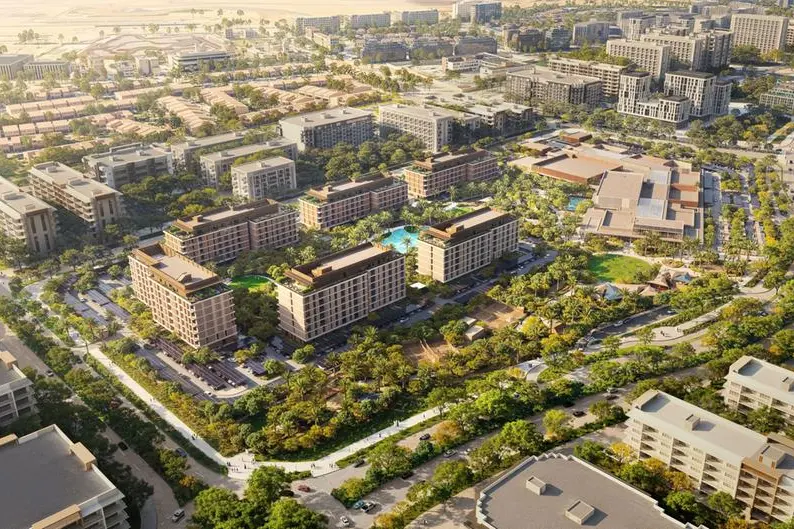
Entering Madinat Zayed, we drive through modern suburbia, reaching a small mosque within walking distance of boxed homes clumped together.
Near by, a bearded old man, Gerran Bin Noubi Mazeina, relaxes in a tent outside his home. He is 96 years old and in the noon-day heat he talks about his memories of the late president, whom he met as a youngster.
"Over the years, I worked with him in different places and in various fields. We used to go hunting in the desert on camels before cars were even brought to the UAE. Shaikh Zayed and a group of nationals, including myself, went on several trips to Saudi Arabia ... He was a great desert man.
"Shaikh Zayed's death is a tragedy. He is a great loss for the people in the Arab and Islamic world. It was a huge blow for us."
Under the shade of a tree, Sudanese Ebrahim Al Dallal Mohammad Ahmad awaits the call to prayer.
"During Shaikh Zayed's era, the UAE became one of the leading countries in the region and the most developed. That encouraged me to come and earn a living here," he said. The call for prayers echoes between the houses. "May God bless his soul," Ahmad says. "He was a great president."
Obaid Mohammad Obaid Al Ameri, a UAE national, said the late president loved everybody. "I visited him many times in Abu Dhabi and Liwa, he was outstandingly down to earth."
Remarking on the modernisation and development of Zayed City, Obaid says: "If the lands and trees in this place could speak, they would talk about Shaikh Zayed. Everybody loves him. His actions in the country were full of meaning."
In the mosque, an old UAE national, Ali Abdullah sits, flanked by his two sons. "Zayed raised a nation, in the same way as I raised these two."
Gulf News