A brief history of labor in Egypt reveals a grand design that unions have in store to advance their rights
One year after a unique revolution and alongside the numerous disappointments, the waves of pessimism and hope and the ongoing struggle in the streets, there is a parallel revolution that could realize its main objective: syndical liberties.
A wave of workers' demonstrations, sit-ins and strikes that amounted to more than 3,000 events in which hundreds of thousands of workers participated, began in 2006 an went on until 2011 while mere tens or maybe hundreds of Egyptian intellectuals and young people demonstrated in Cairo, mainly on the staircase of the Journalists' Syndicate. While those intellectuals were calling for the fall of the regime, workers had simpler and more basic demands.
The problems had accumulated over decades: lack of planning, mismanagement and, above all, unfair laws pushed the Egyptian working class to its limit.
Over the last few decades, Egypt's 1976 Syndicates' Law 35 has generated heavy international criticism of the government, especially from 2008 to 2010, and Egypt was labeled as "disrespectful" of syndical rights.
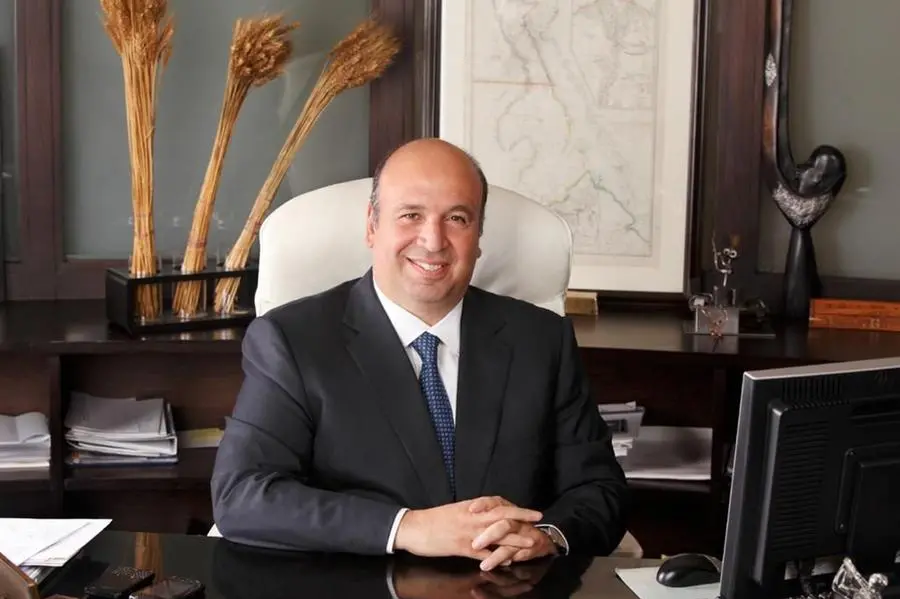
"Egypt has been on that blacklist since the 1960s, so as soon as I took office I had to take legislative steps to change that," says Ahmed El-Boraie, Egypt's former Minister of Manpower from March to November 2011.
Egypt was the first Arab country to sign the International Labor Organization's (ILO) 1948 agreement giving any group of workers the right to form a syndicate. In theory, the Egyptian Syndicates' law should derive from the agreement's Conventions 87 and 98.
"On the contrary, the Syndicates' Law imposes membership of syndical unit on workers, gives the state the right to dominate workers' syndicates and the right to intervene in the choice of syndicates' leaders and enables the management to dissolve the syndical unit. All of this is against the international syndical rights acknowledged by Egypt," adds El-Boraie.
The former minister, who has since returned to head Cairo University's Faculty of Law Social Legislation Department, has always championed syndical rights. Upon coming to office, he took great strides in reinstituting syndical liberties. On March 12, he issued the Declaration of Syndical Liberties calling on independent syndicates formed after the revolution to file their foundation paperwork with the ministry.
"This move was based on two grounds: The International Convention 87, giving workers the right to establish syndicates with no preconditions or limitations and get an official status by notification. And secondly, building upon a 1987 Supreme State Security court ruling in the case against rail-road workers who had gone on strike, that stated that "Egypt has signed the international agreement on social and economic rights therefore the agreement is an integral part of the Egyptian law." This dictates the annulment of any article in the Egyptian law condemning strikes," he explains.
But this was not his only accomplishment. During his short tenure, El-Boraie executed a 2006 court ruling rendering the 2006 Egyptian Trade Unions Federation (ETUF) elections fraudulent and therefore validating the dismantling of the ETUF board. Though this may seem an applaudable act, El-Boraie was criticized for appointing a new board which, nevertheless, included some of the old ETUF board members.
"I had to do [that]. The ETUF handles many portfolios linked to workers' interests, above all, the fellowship funds. I couldn't make drastic changes for fear of affecting those interests, and I have to say that the old members are more aware of how to handle such issues," says El-Boraie.
Kamal Abbas, the general coordinator of the Center for Trade Unions and Workers Services (CTUWS) points out that El-Boraie had met with this very board eight times to draft a new syndicates' law which was shelved by the ruling Supreme Council of the Armed Forces (SCAF). "Luckily, MP Abul-Ezz El-Hariri has asked parliament's Complaints and Suggestions Committee to discuss the draft and hopefully they will," he says.
Now, the nation boasts two major independent workers unions, the Egyptian Federation of Independent Unions (EFIU) and the Egyptian Democratic Labor Conference (EDLC).
The first was founded by Member of Parliament and president of the independent union of Real Estate Tax Authority employees Kamal Abu-Eita. The EFIU boasts two million members including the independent syndicates of the real estate taxes, health and education sector employees. The EDLC was formed by the CTUWS and includes 220 independent syndicates mostly representing employees of business sector companies.
STILL FAR FROM ROSY
In a small room adjacent to Abbas' office at the CTUWS headquarters in downtown Cairo, four workers waited to meet their lawyer. These were factory workers in the industrial city of the Tenth of Ramadan whose ages ranged from late twenties to early thirties, with the same complaint: they had all been beleaguered then fired for being outspoken about workers' rights and establishing syndical committees at their companies.
"Investors of the Tenth of Ramadan city are totally against any syndical activity. Their association is headed by Mahmoud Soliman, chairman of the Egyptian Italian Company for Advanced Packing (Europack), and my former employer," says Mandour El-Sayed, an accountant fired from Europack. "[Soliman] was a member of the former National Democratic Party (NDP) and used to transport workers in buses for compulsory voting in constituencies other than their own."
El-Sayed headed an independent syndical committee established on May 29, 2011 and claims that management started to impose pressures on him ever since, transferring him within the department, cutting his bonuses and finally forcing him to apply for a leave of absence. He was fired shortly after that.
When El-Sayed was forced to take a leave of absence, Europack workers went on strike, calling for better medical care (other than that provided by the state), training on operating the machinery, and an on-call ambulance to be stationed at the factory to handle daily injuries caused by the work of manufacturing tin containers.
Consequently, the management filed a number of police reports claiming the striking workers had destroyed property and machinery and incited other workers. The reports were shelved.
"I have great faith and I'm optimistic about the law suit I filed against the company, but we know that cases filed by workers take years in the court system according to Law 120 / 2003 while court rulings have to be issued in 45 days in case businessmen file lawsuits against workers," says El-Sayed.
Ahmed Mahdi established a syndical committee at the textile company where he was workers' supervisor in April. Soon after, he was framed in the theft of a colleague's salary. "I was proven innocent and the attempt to terrorize me failed, so the management started trying to buy me off. However, we went on with the struggle and organized a demonstration. I managed the negotiations and the manager refused to fulfill our demands for salary raises and annual vacations," Mahdi says. "But later, and after exerting more pressure, he gave in to the demands but insisted on sending me away."
Khaled Abu-Bakr, former workers' supervisor at pipes and plastic products manufacturer Misr El-Hegaz and deputy head of the syndical committee, tells another tale.
"The company is headed by a former NDP member and the current chairman of the Tenth of Ramadan Businessmen Association, Mohamed Helmy. Our first sit-in was back in 2008 and was triggered by the unfair conditions that workers lived in. We were deprived of bonuses and weekend vacations, and we used to work up to 12 hours a day with no overtime," he explains. "Moreover, safety measures for workers are nonexistent though the factory is ISO certified, and this is only part of a long list of financial and legal violations that the management has committed."
Abu Bakr went on to explain that the management tried to buy off workers' leaders, and those who resisted became the subject of false accusations and lawsuits. Following the sit-in, almost two thirds of the workers were either fired or transferred to a farm in Wadi El-Natroun owned by the same company.
"In August 2008, we established and registered the committee. In 2011 we started a sit-in and notified the police and the army to protect us, but it was ended by inviting the labor bureau to mediate. This was not an acceptable solution for us, because the management bribes the bureau employees," says Abu Bakr.
WHY IT STILL GOES ON
Abbas, who has became one of the major figures pushing for workers rights over the last decade, says that El-Boraie made a tremendous effort, but he left the cabinet before the Syndicates Law could see the light of day. "All articles of the current Syndicates Law contradict International Conventions 87 and 98. Work relations should be managed around negotiation tables, but due to the absence of real syndical organization and real business organizations, there are no means for negotiations," said Abbas.
As for the draft Syndicates Law, Abbas points out that objection to the draft comes from members of the dismantled ETUF who have reservations on an article forbidding union members over the age of 60 from running in elections. This article applies to most, if not all, of them.
"That's why we want the law issued before April 28, the due date for candidacy for the ETUF board. People of the old union have been there for sixty years. They were Socialist Union members, then NDP members. They are totally against the revolution and are supporters of the old regime and its inheritance plans," Abbas exclaims.
From El-Boraie's point of view, the draft law is quite straight forward and simple. "It abides by the International Conventions, gives liberties to both workers and employers to form syndicates and to choose which of the syndicates to join. It stresses the administrative and financial independence of syndicates and states that only court rulings or general assembly decisions can dissolve them," he explains.
El-Boraie said that the draft law also allows the syndicates to form unions and join any international unions, and he believes that when the law is issued the old union will have to readjust its situation accordingly.
On the other hand, Abbas spoke sadly of how SCAF has treated the workers' movement, noting that in April 2011 they issued a decree criminalizing worker's strikes. But for someone who has been an integral part of the workers' struggle, such obstacles will disappear into thin air.
CTUWS has had its share of fierce battles with the former regime, especially after their monitoring of the 2006 ETUF elections that revealed major fraud. Consequently, CTUWS offices were shut down by state security on the charge that "although CTUWS is registered as a civil company, it operates as an NGO." The center was able to resume its operations with the help and support of numerous Egyptian NGOs and international organizations.
The late labor lawyer and political activist Youssef Darwish established CTUWS in 1990 as an independent alternative to the government-controlled ETUF. The center provides legal services to workers, counsels them about their rights, organizes educational workshops and reports on labor-rights violations. It also publishes the only workers' magazine in the country Kalam Sanaieya or Workers' Talk, providing a unique focus on labor issues.
© Business Today Egypt 2012