PHOTO
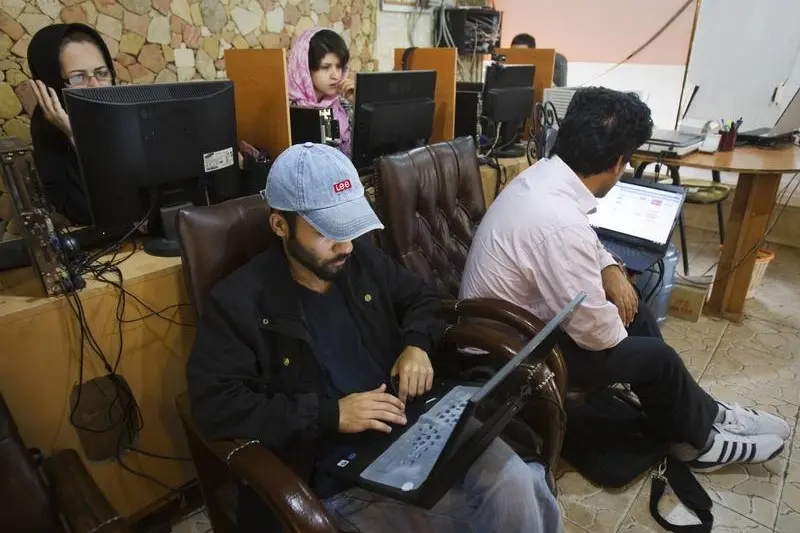
Nawaf Felemban, CEO and Founder of Kasra and Mona Ataya, CEO of Mumzworld address the lack of Arabic content online and how that is likely to change quite quickly
By 2017, over half of the Arab world, nearly 366 million, will have access to the internet; an increase from the 32 per cent that were online in 2012, according to Digital Arabic Content: an industry brief, a report created by both Jamil Wyne, Head of the Wamda Research Lab (WRL) and Teeb Assaf, research analyst at WRL with support from Google and Taghreedat, an Arabic Digital Content (ADC) initiative aiming at increasing the quality and quantity of Arabic content on the web.
The report added that there is more online content, and more and more people are searching the internet in Arabic their mother tongue; with Arabic being available for several internet apps and services, most of which are under the umbrella of the internet giant Google or in partnership with it, such as YouTube.
While new initiatives are finding their ways to the internet offering users more space to browse, watch and engage in Arabic, the growth of internet penetration has not translated into equal growth for digital Arabic content, the report concluded.
"Lack of Arabic content was a big issue faced early on with the development of Mumzworld. Arabic-speaking customers, particularly in markets like Qatar, Saudi Arabia or Oman were stuck. The packaging didn't have comprehensive Arabic information, so mothers couldn't make informed decisions," said Mona Ataya, CEO of Mumzworld, one of the largest online baby and children's shopping sites in the GCC.
As to the reason behind this lack of content, disproportionate to the number of Arabic-speaking internet users, she said it comes down to one, two, or ten people going out there to create content.
Nawaf Felemban, CEO and Founder of Kasra-an Arabic site he developed in response to a lack of online engagement by Arab-speaking youth-said the problem comes down to a lack of skilled Arabic writers, a theme he has heard echoed by others in the industry.
"The underlying drivers we believe are related to education and career opportunities. The Arabic language curriculum is not taught at a consistent quality throughout the Middle East. Then, when students graduate, there are few attractive careers for aspiring Arabic writers," he said.
Meanwhile, there are challenges facing digital Arabic content, which include few opportunities to generate revenue through advertising, bureaucracy and legal costs associated with combating piracy and lack of talent, according to the Digital Arabic Content report.
"[In terms of investing in Arabic sites], regional investors are very interested in the space, but cautious. On one hand, the Arabic online population is half the size of the US, which means the supply-demand gap presents a tremendous opportunity. On the other, there is low awareness of trends from abroad, such as rise of media-tech and native ads. This means investors see the potential, but are not always certain how to monetise," said Felmban.
Both Ataya and Felemban agreed that the answer to tackling the problem of the dearth of Arabic content lies in growing use of social media, owing to organic content that is starting to be developed by Arabic speakers.
Felemban focuses on talent, not experience when hiring writers, choosing writers who tend to be professionals from outside the media industry, such as former nurses and engineers who want to pursue their original passion for writing.
"One of our strategies to accommodate Arabic speakers was the division of the company Instagram into two accounts. In terms of marketing, this would be considered a no-no, but it was necessary. The Arabic account, which was started at the beginning of 2016, has 71,500 followers, which shows tremendous levels of engagement. The English account, which is older, has a mere 23,000 followers, which shows a big difference between the two and how hungry the Arabic-speaking consumer is," said Ataya.
Felmban added that there are exciting developments on social media and online video, as Arabic-speaking youth are starting to engage with each other by posting content on Instagram and tweeting in Arabic, creating a rich archive of pop culture and conversation.
He added that successful Arabic YouTube channels are starting to produce good video content, a sign that the status quo on the Arabic internet is about to change for the better.
"If you look at Arabic content being generated on Youtube, it is more dialogue-type or community-type content that shows you what is likely to take over this year," said Ataya.
Users rank Arabic social media
39% Preferred social media channel
84% Have access to Facebook
87% Current Facebook users
89% Access to Facebook daily
Whatsapp
41% Preferred social media channel
83% Have access to WhatsApp
84% Current WhatsApp users
96% Access WhatsApp daily
4% Preferred social media channel
25% Have access to Twitter
32% Current Twitter users
39% Access Twitter daily
6% Preferred social media channel
32% Have access to Instagram
34% Current Instagram users
82% Access Instagram daily
Youtube
5% Preferred social media channel
30% Have access to YouTube
39% Current YouTube users
66% Access YouTube daily
Google+
2% Preferred social media channel
16% Have access to Google+
29% Current Google+ users
59% Access Google+ daily
1% Preferred social media channel
6% Have access to LinkedIn
9% Current LinkedIn users
44% Access LinkedIn daily
Source: Arab Social Media Report 2015
© FinanceME 2016




















