Monday, Nov 11, 2013
   (FROM THE WALL STREET JOURNAL ASIA 11/11/13)
   By Ellen Knickmeyer
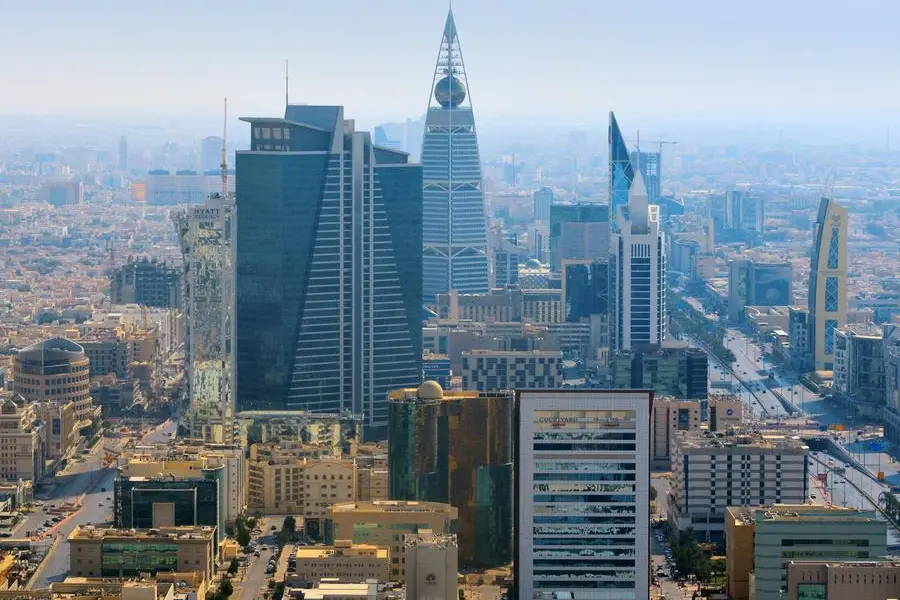
RIYADH -- Two people died and dozens were wounded in clashes that pitted Saudi security officials and civilians against foreign workers, a rare eruption of violence in the tightly policed Saudi capital amid a nationwide crackdown on undocumented foreign laborers.
A 32-year-old Saudi man hit by hurled stones and an unidentified man believed to be a foreign worker died in the clashes in Riyadh's Manfouah district of African migrant workers, Riyadh police spokesman Fawaz al Maiman said. At least 68 people were wounded. Police arrested 561 workers.
Sunday's violence marks the most fraught moment so far for the oil kingdom as it pushes a more-than two-year campaign to restructure its labor market and private sector, which economists say are unsustainably dependent on millions of low-paid Asian and African workers.
Authorities have arrested thousands of laborers since it began its crackdown Nov. 4. Saudi officials say 4 million foreign workers regularized their status during a seven-month grace period leading up to a Nov. 3 deadline. A million other foreign workers left Saudi Arabia, officials say. It isn't clear how many illegal workers remain.
Saudi newspapers and social media recently have featured photos of Saudi business owners sweeping streets and picking up garbage, and articles with consumers complaining of higher produce costs because of fewer pickers.
After the overnight violence Sunday, hundreds of brown-uniformed Saudi security officers blocked main intersections in the Manfouah neighborhood. African migrants clustered on side streets among closed shops, watching and waiting, or made their way to the police and a long line of waiting white buses, for removal to what authorities said would be temporary holding points.
"Everybody has to leave -- everyone, everyone," an Ethiopian man with a garbage bag full of his possessions slung over each shoulder said Sunday morning as he made his way to the main street to surrender. "We have no choice."
Authorities and residents of the district gave different accounts of the clashes.
Mr. Maiman, the police spokesman, said Ethiopian migrant workers began gathering Saturday night, throwing stones at passersby and cars without provocation. Security forces hadn't been patrolling the neighborhood at the time, he said.
In Manfouah, however, several residents said that Saudi security forces had come to the neighborhood the night before to declare that all illegal African migrants had to leave Manfouah -- and Saudi Arabia -- immediately. Pakistani laborers began trying to help police by catching African workers, and clashes began, Manfouah residents said.
After decades of halfheartedly enforced programs to increase employment of Saudi citizens, Saudi Arabia's Labor Ministry since 2011 has been actively pursuing what economists say are essential structural overhauls in the oil-reliant Saudi economy.
Saudi Arabia is the world's largest oil exporter and holds the world's fourth-largest foreign reserves. But Saudi Arabia also has a fast-growing population in which two-thirds of the citizens are under age 30, a Saudi labor force that grows by 3.5% each year, and a government that depends on oil for 90% of budget revenues.
After a decadeslong reliance on low-wage, low-skilled foreign workers, only 6.5% of working-age Saudis hold jobs in the private sector as of 2010, according to Steffen Hertog, a professor of comparative politics at the London School of Economics.
Despite the kingdom's wealth, the fast-growing population and government subsidies of fuel and other staples means that Saudi Arabia is on track to become an oil importer by 2030, Citibank researchers and other analysts say.
Labor Minister Adel Fakeih has enforced programs requiring businesses to hire more Saudis and requiring foreign workers and their families -- who made up almost a third of Saudi Arabia's population of 30 million -- to remedy any irregularities in their papers or leave Saudi Arabia.
Many African workers in particular who entered the country by land without visas have no chance of regularizing their documents. Many workers overall say Saudi bosses demand bribes to give their needed approval on paperwork.
(END) Dow Jones Newswires
11-11-13 0428GMT