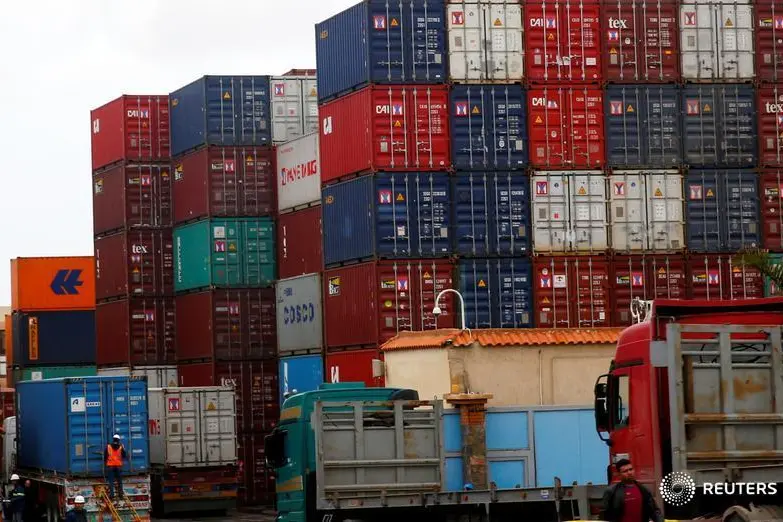
With the recent government increase in fuel and oil prices, and a cement shortage in Jordan, Nisreen El-Shamayleh looks at the impact this is having on the country's booming construction industry.
Increased domestic oil prices implemented by the government on April 8 in an attempt to trim down its subsidies on oil derivatives led to yet another increase in domestic cement prices that had already gone through a period of volatile and acute increases in late March, pushing up the prices of real estate and construction projects by an average 10% to 15% so far.
As demand outstrips supply, and with only two domestic cement factories, both owned by Jordan Cement Factories Company (JCFC), prices increased a further 25% in early April to cover the escalating cost in fuelling the two plants in Fuheis and Rashidiyah. As a result, a ton of cement at ex-factory level price, including sales tax, jumped from JD68 to JD71.8. And white cement prices rose from JD116.3 to JD125.30 per ton, keeping in mind that the government lifted oil subsidies from 12% to 43% for different types of oil derivatives.
Despite the price hike, cement prices stabilized after the government went ahead with its strategy to cut its subsidies on oil derivatives. The move showed signs of promise in comparison to the cement crisis of March 2006, when company supply dropped by about 40% after JCFC executed essential maintenance work on its production lines.
Exacerbating the existing problem, some cement traders, waiting for the pending rise in fuel costs to come into effect, hoarded cement in anticipation of making additional profits once the price rise took effect. Other traders forced contractors, desperate for cement to complete construction projects on time, into paying higher prices. Contractors who do fail to meet their deadline because of a shortage of a variety of construction materials are losing out and are often given penalties as a result. The government's relaxation of import restrictions on cement, while welcome, may have a too little too late effect with prices at record highs.
In an attempt to discipline the market and alleviate the cement problem, the Ministry of Industry and Trade (MIT) asked JCFC to provide it with daily lists of cement traders buying the material to ensure traders were not hoarding cement to manipulate the price.
MIT official spokesperson Bahaa Eddin Al-Armouti said the ministry deployed inspection groups to ensure against black market profiteering or overpricing by cement traders. "We've issued more than 150 tickets to cement traders and we've made special arrangements with the Cement Traders Union and JCFC to impose additional fines and sanctions on any kind of circumvention practiced by local traders," Mr. Al-Armouti said.
Violating traders found to overprice the ton of cement are denied access to it from the factory for one month. Depending on the violation, fines could reach JD1,000.
According to the MIT, there are between 600 to 700 registered cement traders, almost half of whom buy cement all year round. To ease the shortage, the ministry allowed the factory to import 4,000 tons of Egyptian cement daily to push up supply and bring domestic cement prices down. Mr. Al-Armouti said imports are expected to continue until supply is increased, possibly through a new factory, now that JCFC monopoly has ended.
In 1998, JCFC was one of the first Jordanian institutions to be privatized when French company Lefarge bought a 33% stake. This was then increased to 48.1% in 2002, making the French firm the major shareholder. The Jordanian government also prohibits JCFC from exporting its cement unless domestic supply is met first, in keeping with practice in many other countries, especially with construction materials being in short supply across the wider region.
In addition to that, MIT continues to announce cement prices per ton at ex-factory level in daily newspapers to dissuade traders who are overcharging. Mr. Al-Armouti added that the ministry is looking into diversifying importing from other countries by facilitating imports through removing all sorts of technical barriers and custom duty fees. He believes this will encourage traders and contractors to import their own cement. MIT's goal is to "furnish appropriate policies to enhance competitiveness," which also include the government importing European cement at competitive prices through the Civic Consumers' Corporation. Mr. Al-Armouti believes that introducing additional cement imports into the local market will increase competition and force domestic prices down.The steps taken so far are certainly stop-gap measures. Market demand has reached around 17,000 tons per day, while only 14,000 to 15,000 tons of cement per day are being fed into this thirsty market. Demand is expected to grow as foreign investments in the sector increase. Leading contractor and President of Jordanian Contractors Association Sahel Majali said that some contractors are studying the prospect and viability of importing cement for their own projects. However, he pointed out that, at least for now, the cement shortage of last month is more or less resolved, with JCFC releasing amounts of cement that meet the daily needs of contractors.
Mr. Majali added that MIT's measures and legislative amendments to control the crisis of March made the concept of importing more feasible, but explained that imported cement will still cost more than domestic cement, an issue that will likely dissuade contractors from importing at this point in time.
With most cement factories in neighboring Arab countries operating at full capacity, the next best option would be importing cement from Europe, an alternative Mr. Majali said may be too expensive. Last month the Ministry of Industry and Trade decreased customs tax on cement imports from non-Arab countries from 25% to 10%. Arab products are exempt.
It is therefore safe to say that the long term solution to the cement problem in the Kingdom would be an increase in production by JCFC and imports as well as other investments in local production. The company has announced that it is planning to incr4.4 million tons to 5.5 million tons per year by 2008. To address the cost issue, several options are being discussed. Prices would fall if JCFC starts operating on the less expensive oil shale. According to the JCFC, the company is experimenting with oil shale in the Rashidiyah factory to assess its feasibility. The government has opposed allowing the company to use pet coke so far, used as a fuel for cement production in many plants worldwide. The government refused on environmental grounds, although scientists are divided on the impact. Another viable option is gas-fired cement factories, which address cost and environmental concerns.
Despite shortages and increasing cost of construction materials, in addition to rising fuel prices, the pace of construction in Jordan has been steadily increasing over the last five years and shows no signs of subsiding.
As with every boom, there is a downside, as contractors pay more for materials, consumers pay higher prices for properties, often with shoddy workmanship as the labor pool is being stretched. Some contractors are also facing trouble coping with rising costs incurred by higher fuel cost as they are unable to renegotiate their prices with customers.
Jordan Housing Developers Association Chairman Mahmoud Saoudi said that since the government raised fuel prices, overall real estate prices rose by five to 10%. He explained there was a 10% increase in the price of apartments made out of costly domestic construction materials, versus a 5% increase in the price of luxurious apartments that depend more heavily on imported construction materials.
However, Mr. Saoudi saw that many in the construction material market are hiking up their prices using the rise in oil derivatives as an excuse, even though their product costs are not related to the price of oil. But fuel hikes have definitely increased transportation costs affecting overall prices.
Mr. Saoudi points to the increase in the price of electric cables used in construction, although the price of electricity has not increased.
But the real problem lies in the ballooning prices of construction materials in general fueled by rising oil prices. The prices of iron also went up as a result of April's hike in fuel costs, to cover the higher costs of iron production and transportation. The price of a ton of iron rose to about JD440 and JD450 now, up from a JD423 per ton before April. Some steel traders, however, point to the fact that the rise in iron prices came as a result of an increase in iron costs worldwide.
Going strong
The increase in the value of investments in real estate is believed to be caused by the surge in housing and apartment prices and lands since last year. This swell was represented in figures ranging between 15% and 100% making it more difficult for Jordanians to own houses.
The Iraqi factor should also be taken into consideration. With figures ranging from 200,000 to 500,000 Iraqis now residing in Jordan, many of these have invested both in houses and commercial property in the transitional period before Iraq's security situation settles. With Gulf Arabs looking for holiday apartments and villas and expatriate Jordanians setting up second homes, demand has never been higher.
Mr. Saoudi pointed out that although investments in real estate and construction have increased, production in that sector had fallen due to the unavailability of land, very expensive construction materials, and intense demand. It is for all these reasons together that Mr. Saoudi predicted the supply of real estate units falling behind the robust demand for them, which will further raise housing and real estate prices. However, despite the recent price increases on housing and real estate, people still run to seize that last apartment, considering it a good deal knowing that real estate prices will be even more expensive in the coming years, Mr. Saoudi said.The problem is not only local, but regional. In 2005, shortages across the region created bottlenecks and expanding prices, partially due to unremitting market demand from an array of developments and construction projects and partially due to government dominance over national cement industries in some countries.
The disparity between the supply and demand of the region seriously widened in the past two years, as Arab countries entered a high-growth cycle of real estate development. According to industry studies, total demand for cement in the Gulf region grew three times faster than global demand.
Despite the interim measures taken by the government, cement shortages, an upward trend in prices and further market misalignments are certain to continue in the short-term.
© Jordan Business 2006