Thursday, Sep 03, 2009
Gulf News
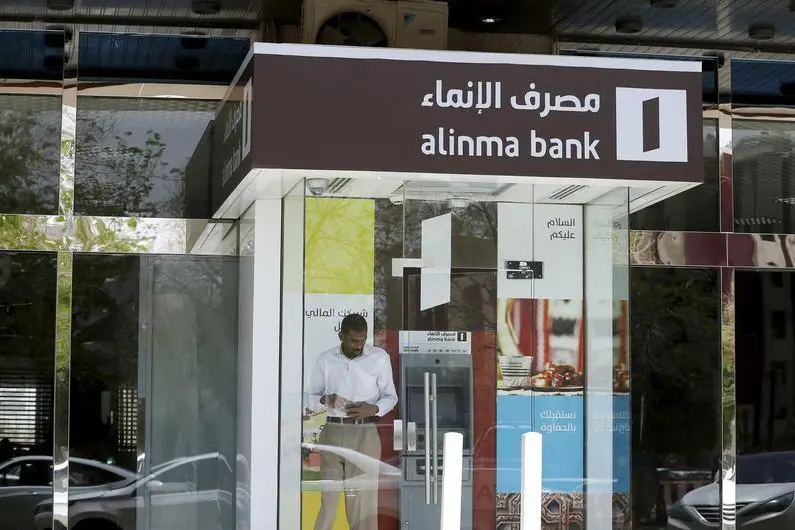
Dubai: An Iraqi court has sentenced four members of Iraq's security forces to death for their roles in a Baghdad bank heist that left eight bank guards dead.
The four were convicted of robbery and murder and sentenced yesterday. The court says they have a month to appeal the sentence.
Gunmen broke into the state-run Rafidain Bank before dawn on July 28, killing eight guards and taking off with about $4.8 million (Dh17.6 million). Investigators said most of the money was later recovered in the office of a newspaper owned by an Iraqi vice-president.
The swift sentencing reflects the authorities' determination to deal with a case that has potential political fallout.
A fifth defendant, who worked at the newspaper, was acquitted for lack of evidence.
Meanwhile, Tuesday Amnesty International (AI) published a report criticising Iraq for their opaque policies on the death penalty, listing Iraq as having one of the highest execution rates in the world.
Prior to March 2003, no one in Iraq and abroad was able to establish precisely how many people were sentenced to death and executed in the country, but after the resumption of the death sentence in Iraq in August 2004 the number of people sentenced to death and executed has placed Iraq among the top countries sentencing its people to death on a variety of crimes.
Nicole Choueiry, Press Officer - Middle East and North Africa - at Amnesty International told Gulf News the use of the death penalty in Iraq lacks transparency and in some incidents the government has carried out executions secretly.
For example, she said, some 19 people, including one woman, were executed last June 10 without announcing the incident in the media.
The executions were leaked later to the public, which indicates that the proceedings of those cases did not meet the international standards for a fair trial. She said the current Iraqi government which was elected in December 2005 and took office in May 2006 argues that the death penalty is needed to reduce the widespread violence in the country.
"AI believes this is [a] wrong argument because such violence has continued unabated since the death penalty was restored in Iraq following a 14-month suspension at the beginning of the US invasion in 2003," Choueiry said.
She said armed groups have continued to carry out suicide bomb attacks killing large numbers of civilians. "By the very nature of the crime suicide bombers are unlikely to be deterred by the prospect of the death penalty," she said.
In spite of the presidential opposition to the death penalty, she said Jalal Al Talabani, the President of Iraq, has delegated his power of ratification of death sentences to his two deputies so that the executions continue be carried out.
Prime Minister Nuri Al Maliki continues to defend the use of the death penalty and called publicly for the execution of senior members of the Ba'ath Party under Saddam Hussain's regime.
She said the government stance towards execution has hardened in recent months with the Human Rights Minister, Dr Wajdan Mikhail Salam, publicly defending executions carried out by the government.
"Such sentences fall short of minimum safeguards required under international law. In most cases courts issued death sentences based on confessions extracted from suspects under torture. Such confessions have no value under international law," Choueiry stressed.
She said least 1,000 people are believed to be under sentence of death, 150 of whom have exhausted all means of legal redress.
Choueiry stressed that the death penalty is definitely not the solution to violence in Iraq because it is carried out on one side while crimes and violence are growing on the other side.
"The Iraqi government should do something other than hanging & criminals for their crimes," Choueiry advised.
By Duraid Al Baik, Associate Editor
Gulf News 2009. All rights reserved.