Monday, Jan 03, 2011
Gulf News
Independence by avoiding stifling rules is key to success for mideast airlines
Dubai: In the highly charged atmosphere that is the global aviation industry now, Middle East carriers may be finding themselves less inclined to change their go it alone status.
But the point is moot as to whether they had any such inclination in the first place.
Leading regional carriers have made a point of operating and successfully at that on their own and of not being part of industry groupings such as oneworld and Star Alliance.
The carriers in the GCC want to do a lot and they want to do it fast and differently, and be the first to innovate and create value for their customers, said Antoine Medawar, vice-president for the Middle East and North Africa at Amadeus, the travel services company.
Entering into an alliance involves the introduction of rules and I feel that the success of the GCC airlines has a lot to do with strong independence and free behaviour, Medawar added, in a report released recently and which looks at the Middle East aviation industry in some depth.
Independence
But the very same resoluteness over maintaining their independence has led to repeated sniping from rival North American and European carriers, which in recent months have reached a new pitch.
The charges range from the extent of proximity these airlines enjoy with the governments that own them and how this translates into an unfair advantage, to getting favourable credit terms from lending multilateral agencies in new aircraft acquisitions.
But will the leading regional carriers be able to maintain their stance on not joining global alliances? Today, global alliances remain under-represented in the Middle East, but that is expected to change in the next few years as the regions airlines, and particularly the second-tier full service airlines, increasingly embrace alliances as part of their restructuring and development plans, said the report by Amadeus.
As of now, of Etihads 19 current code-share partners, 16 are non-aligned carriers. Emirates has 16 airline code-share partners, although only seven belong to a global alliance, according to the report.
As it is, Middle Eastern carriers generated the fastest growth in passenger traffic at the end of 2009, with a 19.1 per cent increase in December (and 11.2 p er cent growth for the entire year), according to data from IATA.
Despite a 13 per cent drop in tourist arrivals into the region during the year, the likes of the UAE were able to show a high degree of resilience in attracting visitors. In turn, this played well with its carriers.
Emirates and Etihad Airways, in particular, have been able to gain marketshare thanks to competitive pricing, high service standards and a dense route network, said the Amadeus report.
At the same time, strong traffic growth rates are prompting the global alliances to actively court partners in the Middle East, the report said.
It is likely that an active development period for alliances in the region will emerge in the near future.
But, according to other industry sources, such a transition, if it does take place at all, is not going to happen in a tearing hurry.
More pertinently, regional carriers will have to be convinced theres something tangible in it for them.
Status quo
And expect nothing more than the status quo to prevail when it comes to the regions stance on open skies. Again a lot of hot air has been created on this issue, on lines similar to what Western carriers have been saying about preferential treatments for regional carriers.
But there is a lot the region can still do on its own to clear away legacy concerns that cloud its aerospace sector.
Governmental, legal and regulatory issues which must be resolved include the regulation or elimination of no-flight zones, the report said.
It seems unlikely that anything as comprehensive as the Open Skies initiative between the US and Europe will be established, since Middle East governments often have a significant stake in aviation projects and may hamper the progress of the market with tight regulations and restricted traffic rights.
Visas, security, air control and many other issues, which differ from country to country and are off-putting for international travellers, need to be better regulated between states in the region, so that the visitors experience of immigration or transfer is as straightforward and swift as possible.
Forecast
On the last point, the sector could do with a little urgency as the number of tourists into the region, including domestic travellers, has been forecast to soar to 136 million by the end of the decade, compared to 54 million in 2008.
Away from the skies, the regions aviation sector will need to keep close tabs on whats happening on the ground as well.
A staggering $86 billion is being spent on regional airports in the medium-term, most of which is going into building swank new facilities.
Its also an affirmation, if one was needed at all, that regional governments are making a play to ensure the Middle East becomes the worlds dominant travel hub by 2025.
The major challenge to the Middle East airport infrastructure market is the scarcity of land, said John Siddharth, Frost and Sullivans industry analyst for the aerospace and defence practice, South Asia and Middle East.
This restricts large-scale expansion and calls for building new airports instead of expanding existing ones, Siddharth said.
Also, The economic slowdown across the globe had led to a rise in construction costs in the Middle East and this poses a challenge to the airport infrastructure development market, Siddharth added.
Another would be the Lack of meeting deadlines on airport infrastructure development.
The Amadeus report takes a different perspective on the airport infrastructure issue.
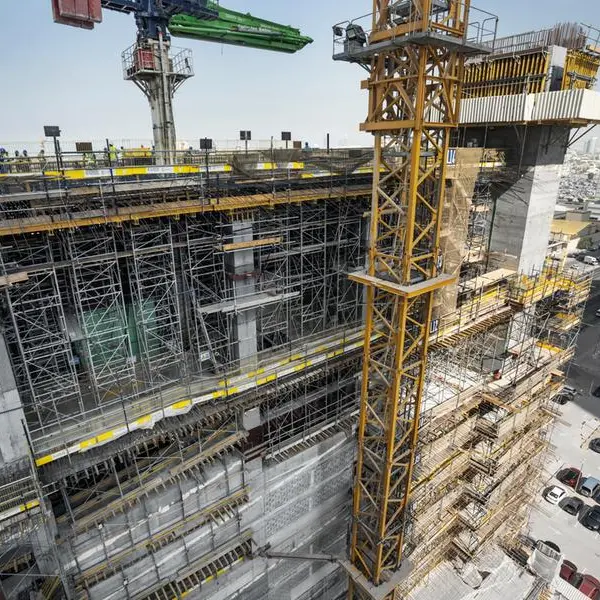
The completion of mega construction projects will rein in business travel to some extent, and this cannot be compensated for by increasing tourism in the short-term, the report said.
Pitching for business
The regions pre-eminent destination for religious tourism, Saudi Arabia, is making a pitch for the business traveller as well.
A surging economy and global oil prices steadily north-bound have combined to make sure the kingdom will get its way.
Business travel is a growing area thanks to the countrys position as the worlds largest oil exporter, with other large industries such as oil and gas and defence helping to drive demand, said the report by Amadeus.
In the long term, business travel is expected to become even more important as the Saudi government plans to focus on economic diversification.
By Manoj Nair, Associate Editor
Gulf News 2011. All rights reserved.