22 March 2013
DUBAI: Clad in ball caps and oversized sneakers, a crew of young men are dancing hip-hop. They whirl and pose acrobatically, gloating good-naturedly, goading each other on.
A cosmopolitan-looking group of men and women of various vintages encircles the dancers, smartphones and tablets held aloft to document the incongruous tableau.
It’s not that hip-hop or break dance is unheard of in the Emirati port city – though it may be less common on the grounds of the Madinat Jumeirah conference center. More eccentric, the kids aren’t performing to the thumping beats of a rap tune, but to traditional Emirati percussion and mizmar – and, as it happens, the troupe of thobe-clad dancers these musicians ordinarily accompany.
These traditional dancers stand in line in a manner familiar to anyone who’s tuned-in to Gulf television’s cultural programming. Every few minutes, though, one of the barefoot men steps forward to improvize for a few seconds, in a dialogue of movement with the percussionists.
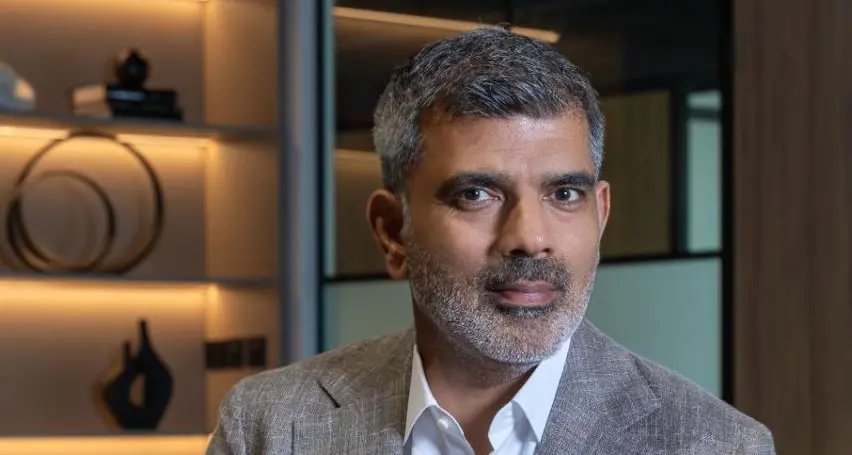
Smiling from the sidelines is the silent MC behind “Half Step,” as this performance piece is called, Lebanese artist Joe Namy, who has spent the last couple of months in Dubai participating in an art residency program.
Now in its third year, these residencies are co-sponsored by ArtDubai, the emirate’s yearly art fair (which is also hosting Namy’s Wednesday evening performance), and a cluster of local and international organizations – the U.K.’s Delfina Foundation, Tashkeel, an Emirati resource center for cultural production, and Dubai Culture.
“This is my first residency,” says Namy, who is in his 20s. “There are six artists – three internationals and three Emiratis, and a curator. I’m not established. I didn’t know any Emiratis before coming here but I was curious to see what Dubai is about.”
“Half Step” is one of two projects Namy created during this residency. The other is a three-part audiovisual work for Sikka, which is a second, artist-led, art fair held parallel to ArtDubai in the neighborhood formerly known as Bastakiyya.
“My work generally revolves around music,” Namy says, “the political and economic aspects of music, not necessarily the music itself.
“I knew when I came here that I wanted to do performance,” he continues. “This is an art fair based on objects. So to do a performance in a space like this is an act of defiance. I [am not represented by] a gallery.
“As an artist you have no choice but to interact with and navigate this world but it’s not something I’m a part of.”
“Half Step” is an installation-performance. The former is comprised of an iPad-borne video featuring his Emirati break dancers at work.
“It’s a brief loop of a rehearsal that we did with one of the break dancers, showing the traditional dancers how it would look,” Namy says. “There’s commentary layered into the mix, talking about the role of dance and how dance vanishes as soon as it’s performed.”
When the work isn’t being performed, the iPad sits on the ground, atop an old-fashioned dance-o-gram, with footprints outlining a basic hip-hip two-step.
ArtDubai’s Wednesday evening dance-off – a hybrid of contemporary urban street dance and traditional practices – is the culmination of weeks of research.
“The project took many different shapes as I went along,” he recalls. “Originally I wanted to start with a different dance, called the nuba. It’s more about healing, similar to zaar music but specific to Dubai. There’s only one troupe that still knows the dance.
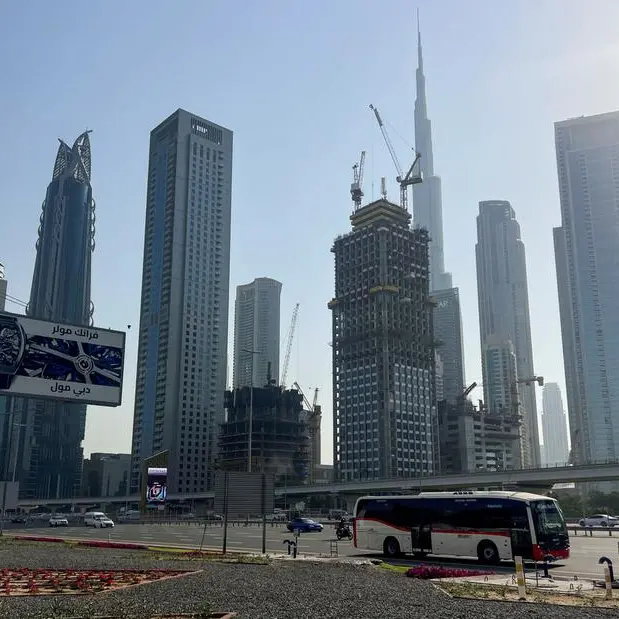
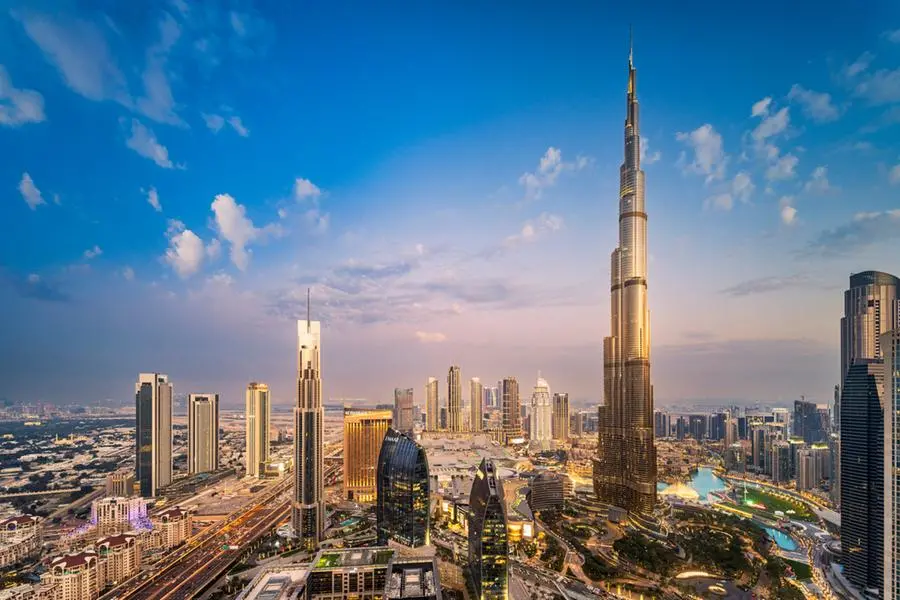
“It didn’t work out. During my research I came across this crew of hip-hop dancers. They’d made a little promo clip of themselves dancing in front of these monolithic spaces, like Burj Khalifa. It was funny. The music they used was by a friend of mine in Detroit, who’s not a well-known MC at all.
“There are a lot of different traditional dances here and they all symbolize different things, but I wanted to use one that wasn’t religious, one that was more spectacular ... because this art fair is all about spectacle, in a way.”
Namy eventually settled on a dance called the madima. Compared to other forms, he says, “it’s more up-tempo and celebratory. One person steps in the middle, tags someone on the other side and they come in. It’s basically solo dance with everyone cheering the dancers on.
“The dance is popular, energetic and fun but it isn’t actually native to here,” he continues. “This is one of the reasons I like it. It comes from Africa via Oman, [disseminating along] the trade routes. That interested me because so much of Dubai is actually imported.
“It’s very similar to hip-hop, in that you have a cypher, where you form a circle or two lines, each dancer showcasing his own skill one at a time.”
The madima troupe is from the Dubai Folklore Society, touted to be one of the Emirates’ best dance ensembles, adept at all the country’s traditional forms.
“I thought I would have a hard time convincing the traditional dancers to participate,” he says, “because some of them are older. But they were really into the idea.
“The break dancers are from here as well,” he continues, “but they’re much younger. They were born and raised here but they’re not Emirati by heritage. They’re a mix – Iraqi, Indian ... This interests me because the Emirates are like this generally. Only 15 percent of the population is actually Emirati.”
Grounded in the mingling of local and global cultural practice, Namy says his work speaks to broader issues of cultural resilience and transformation.
“I like that connection between the traditional and the modern, just questioning culture in general. I’m interested in how we define ‘culture.’ I consider hip-hop to be a culture. Others would say it’s a subculture.”
Since there is no question that the madima is legitimate local culture, Namy’s piece doubles as a work of advocacy for cultural syncretism.
“This is new,” he says of his project. “It’s the first time that this traditional dance – which has been preserved ... frozen in a way, not allowed to change” has been altered.
“At what point is [it determined] that, ‘OK, culture can’t develop any more. We have to preserve it as it is.’” You see this in “Lebanon, like with [the] Caracalla [dance troupe] and forms like that.”
In its inaugural performance, “Half Step” looks less like a dance-off between two squads than parallel performances to a common accompaniment. There is interaction between the two sides but it is less between the dancers than it is among the percussionists and both crews of dancers.
Compared to the street dancers, the madima’s soloists seem reticent. It’s as if they sense that the hip-hop-ocrats’ more spectacular acrobatics is a greater crowd-pleaser than their own improvization work.
The mingling of dance practices Namy suggests might have an impact upon the Gulf’s traditional dance practice, making it an organic reflection of the region’s increasingly complex socio-cultural fabric. It may be the two forms are simply incompatible. It will take more than an isolated performance at ArtDubai to know.
ArtDubai concludes on March 23. For more information, see artdubai.ae.
Copyright The Daily Star 2013.