Wednesday, Jul 13, 2011
Dubai: The guns have not stopped blazing nor has the rumble of tanks across Syrian streets and towns. In Libya, it is unlikely that an endgame will be sighted anytime soon.
In Egypt, concern and anger that the revolution has delivered more of the same with the only cosmetic change that Hosni Mubarak is no longer calling the shots is once again spilling over into the streets.
Given such sharp political ferment across large swathes of the Arab world, the Middle Easts advertising industry is still working on what the tone and pitch of its messages should be.
The industry has traditionally viewed the region as one homogenised entity rather than a disparate collection of individual markets.
So, how much of an impact has the regional situation had on ad spend patterns? "We believe the trend in the first quarter has been more downward, but has been recovering in a very positive manner in the second," said Nassib Boueri, CEO for the Mena territory at Y&R/Wunderman and vice-president of the IAA UAE Chapter.
As for the likely trends in the crucial second half of the year, "definitely some markets will still face lower spends", he added.
On the kinds of messages that advertisers are incorporating in what is an extremely volatile social and political environment, Boueri said: "Most clients have always been sensitive to cultural and political intricacies and in any case governments have always been careful in screening any sensitive message."
Spending patterns
And the conflict zones however distant they may be geographically still exercise an emotional and tangible pull on the rest of the region. So much so, it leaves an impact on spending patterns even in those markets.
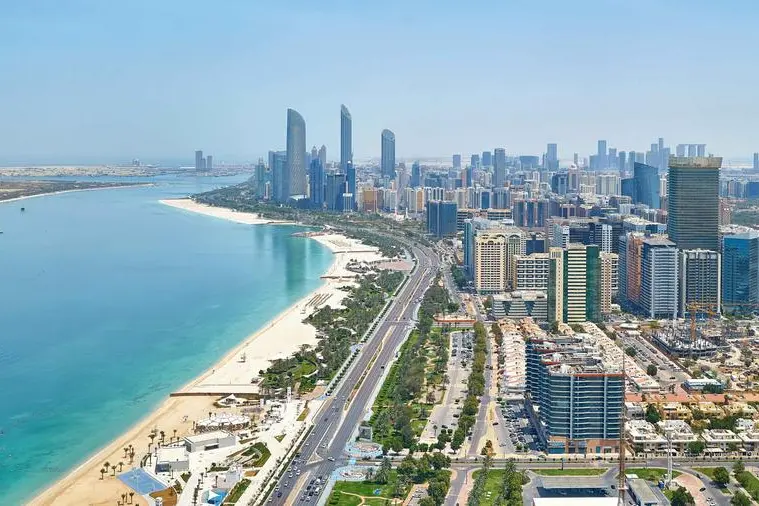
As a case in point, Kamal Dimachkie, Leo Burnett's managing director for the UAE, Kuwait and Lower Gulf, mentions Abu Dhabi.
"Abu Dhabi, like the good neighbour that it is and like the concerned sibling it has always proved to be, does not stand indifferent to what is going on in the region, at large, and in the GCC to be specific," said Dimachkie.
"It is currently financially supporting some countries in the GCC and Egypt. With money going to these markets, less is going to consumer facing companies either owned by the emirate or where the emirate has a stake.
"The bottom line is that as this situation is sustained we will either see a continuation of this pattern or an acceleration of this spending. If either of the two scenarios is met with depression in the price of oil, we will see radical exacerbation.
"On the other hand if the oil price goes up, more cash will be available; however, other industry sectors will suffer.
"Abu Dhabi is an exceptionally wealthy emirate and a few years ago we saw the significance of what this wealth could do we saw numerous projects in action such as real estate, entertainment, cultural and environmental. Today, a number of these projects are experiencing a dramatic tightening of the purse and management changes at senior levels.
"The result a radical curb on spending."
Not just governments and government owned entities, the big ad spenders in the private sector too are working on how best to deal with the political situation.
High-profile events
"It's a first experience of this kind for all of us and as advertisers we are still working on how we should be spending our marketing dollars and how to be sensitive to the wider political situation," said a senior official with a UAE-headquartered group which has extensive interests in high-end retail across the region.
The revised strategy would translate into assigning higher spends on individual markets and less of other broad pan-regional campaigns. There would be more emphasis on brand building exercises from a corporate or product perspective.
In other words, is it going to be a case of less being more? "There's obviously no one size fits all' answer as each client will have different business and communications objectives," said Jason Leavy, managing director of Dabo & Co, a communications consultancy.
"We're still seeing clients commit to high-profile events where there's a clear return on investment and there is no danger of the event being perceived as insensitive to the broader regional situation.
"We certainly have been advising certain clients in markets such as Bahrain and Syria to keep a low profile on the basis that being seen to promote certain products, particularly in the luxury sector, would be insensitive given the context of the unrest.
"By contrast though, in those markets where the unrest has subsided, we've been proactive in terms of encouraging clients to reappraise their communications strategies in light of the new landscape and leverage potential opportunities as a result."
Clearly, what's emerging is to take up opportunities on a case-by-case basis. Rather than the big picture, going for a smaller frame will do just fine.
And advertisers who integrate this into their upcoming campaigns in the shortest timeframe will set the pace.
Rosy outlook for Gulf
Within the rather bleak landscape that the ad industry has been wading through, some fundamentals remain intact. Rajeev Khanna, board member of IAA UAE Chapter and group advertisement manager for Gulf News, points to the population patterns as a cause for medium-term optimism.
"Despite governments being toppled and political systems rapidly changing, there is no sign of a population exodus from the region," said Khanna. "Therefore, as long as the critical mass of population remains untouched the markets will bounce back.
"Judging from the interest shown by some of our key advertisers we are of the belief that spends in the coming six months will show a healthy improvement.
"Understandably, certain pockets of the region will take a longer time to turn around, but the GCC should perform well."
By Manoj Nair, Associate Editor
Related Article: Turmoil helps TV viewing figures jump in first quarter
Gulf News 2011. All rights reserved.