11 July 2012
The Middle East banking sector put up a strong showing in the list of the World's Top 1,000 Banks.
The yearly ranking compiled by Financial Times' The Banker Magazine, had 91 Middle East banks, a major improvement from the 83 banks that represented the region in the 2011 list.
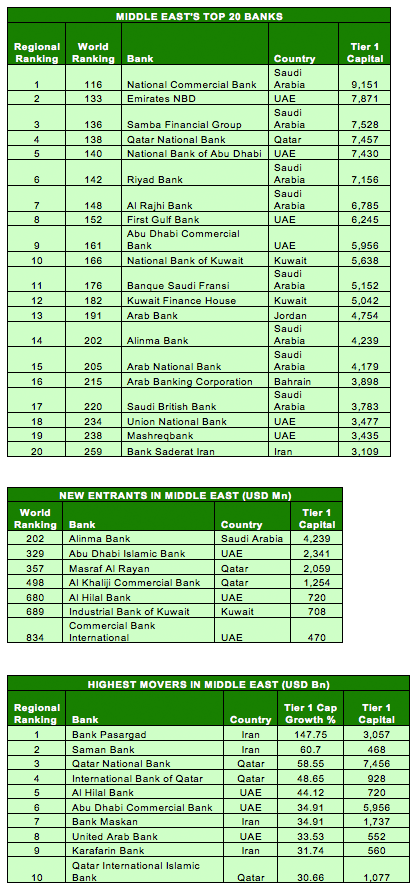
Saudi Arabia's National Commercial Bank led the regional list, with USD9.1- billion in Tier 1 Capital - a 10% increase over last year, but ranked 116th globally.
The UAE's Emirates NBD was second with USD7.8-billion in Tier 1 Capital, while the Kingdom's Samba Financial Group followed close behind in third place.
"The regional banking industry experienced a resurgence in 2011 with the total aggregate assets of the banks in the ranking growing by 15.1% to USD2168-billion while total profits increased by 17.25% to USD32.7-billion," The Banker said in a report. "Globally speaking, the region accounts for 3.72% of the total Tier 1 capital for the 1,000 banks in The Banker's overall ranking."
After enduring the global financial crisis of 2008 and beefing up their balance sheets over the past few years, regional banks are now expanding in their home base at the expense of western banks that are in retrenchment phase.
"This helps explain why there are seven new Gulf entrants in The Banker's Top 1000 World Bank ranking for 2012, compared to just two the previous year. The United Arab Emirates accounts for three of them, Qatar for two and Kuwait and Saudi Arabia with one each."
Iranian banks also fared well despite the crippling sanctions that are taking their toll on the economy. It will be interesting to see how the Persian banks fare next year as the Western sanctions take their full effect on the economy.
Qatari banks also moved up the ranking, posting impressive growths in Tier 1 Capital as the country's financial services sector mirrored the economy's underlying strength.
A report by Standard & Poor's confirms the rise of regional banks in the global arena.
Since the start of the global financial crisis in 2008 and despite slower balance sheet growth, most GCC banks have maintained healthy earnings generation before provisioning, noted S&P.
"Even though pockets of risk persist, asset quality continues to improve, and as a result banks do not need to set aside as many provisions to cover their loan losses. This trend of better asset quality and lower loan loss provisions is fueling the improvement in earnings at most Gulf banks."
The ratings agency expects lending growth in Kuwait and the UAE to be limited, but forecasts healthy growth for Saudi Arabia, Qatar, and Oman.
"For most GCC banks, funding profiles have improved visibly in the past few years on the back of declining balance sheet growth," said S&P, adding that the impact from the Eurozone crisis would be limited.
GLOBAL BANKS: RISE OF CHINA
The global banking sector as a whole has been unable to withstand the pressures of the eurozone crisis, however.
EU banks accounted for only 6% of the banking profits of the Top 1000 banks, eve though they accounted for 45% of the assets.
"On a ranking looking at the largest banking losses, 24 out of the top 25 banks were European," noted The Banker in a statement. "The rankings also unveil a massive dichotomy in the performance of UK banks. HSBC and Barclays' profits put them among the top 25 banks ranked by profit, but Lloyds and RBS suffered huge losses and featured at 9 and 21 on the Top 25 ranking of losses."
The European banks' loss was the Chinese banks' gain, with four banks from the Middle Kingdom in the top 10.
In fact, Chinese bank ICBC emerged as the third largest bank in the world - the highest rank reached by a Chinese bank, while the UK was represented by one solitary bank - HSBC - in the world's top 10.
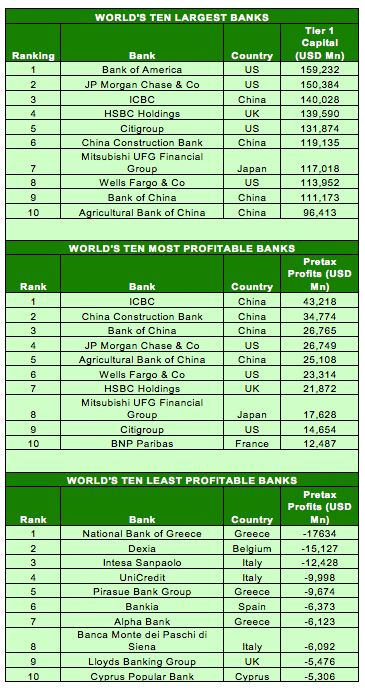
Overall, Bank of America retained its spot as the world's largest bank in terms of Tier 1 Capital with USD159-billion. JP Morgan also retained its position as the world's second largest bank with USD150-billion in capital.
However, Chinese banks dominated the list of most profitable banks. Industrial Commercial Bank of China, China Construction Bank Corporation and Bank of China were the three most profitable banks in the world.
Chinese dominance on the list was interrupted by JP Morgan Chase & CO which took fourth spot, although that may change by next year as the American bank 'whale' trade exposure unravels.
Agricultural Bank of China capped off the list of top five most profitable banks in the world.
At the other end of the spectrum, Greek, Italian, Spanish and other European banks dominated the list of banks with the worst losses. In fact there was not a single non-European entry in the list of 25 worst performing banks in the world.
That pretty much sums of the horrible state of the European financial services sector.
The Middle East banking sector put up a strong showing in the list of the World's Top 1,000 Banks.
The yearly ranking compiled by Financial Times' The Banker Magazine, had 91 Middle East banks, a major improvement from the 83 banks that represented the region in the 2011 list.
Saudi Arabia's National Commercial Bank led the regional list, with USD9.1- billion in Tier 1 Capital - a 10% increase over last year, but ranked 116th globally.
The UAE's Emirates NBD was second with USD7.8-billion in Tier 1 Capital, while the Kingdom's Samba Financial Group followed close behind in third place.
"The regional banking industry experienced a resurgence in 2011 with the total aggregate assets of the banks in the ranking growing by 15.1% to USD2168-billion while total profits increased by 17.25% to USD32.7-billion," The Banker said in a report. "Globally speaking, the region accounts for 3.72% of the total Tier 1 capital for the 1,000 banks in The Banker's overall ranking."
After enduring the global financial crisis of 2008 and beefing up their balance sheets over the past few years, regional banks are now expanding in their home base at the expense of western banks that are in retrenchment phase.
"This helps explain why there are seven new Gulf entrants in The Banker's Top 1000 World Bank ranking for 2012, compared to just two the previous year. The United Arab Emirates accounts for three of them, Qatar for two and Kuwait and Saudi Arabia with one each."
Iranian banks also fared well despite the crippling sanctions that are taking their toll on the economy. It will be interesting to see how the Persian banks fare next year as the Western sanctions take their full effect on the economy.
Qatari banks also moved up the ranking, posting impressive growths in Tier 1 Capital as the country's financial services sector mirrored the economy's underlying strength.
A report by Standard & Poor's confirms the rise of regional banks in the global arena.
Since the start of the global financial crisis in 2008 and despite slower balance sheet growth, most GCC banks have maintained healthy earnings generation before provisioning, noted S&P.
"Even though pockets of risk persist, asset quality continues to improve, and as a result banks do not need to set aside as many provisions to cover their loan losses. This trend of better asset quality and lower loan loss provisions is fueling the improvement in earnings at most Gulf banks."
The ratings agency expects lending growth in Kuwait and the UAE to be limited, but forecasts healthy growth for Saudi Arabia, Qatar, and Oman.
"For most GCC banks, funding profiles have improved visibly in the past few years on the back of declining balance sheet growth," said S&P, adding that the impact from the Eurozone crisis would be limited.
GLOBAL BANKS: RISE OF CHINA
The global banking sector as a whole has been unable to withstand the pressures of the eurozone crisis, however.
EU banks accounted for only 6% of the banking profits of the Top 1000 banks, eve though they accounted for 45% of the assets.
"On a ranking looking at the largest banking losses, 24 out of the top 25 banks were European," noted The Banker in a statement. "The rankings also unveil a massive dichotomy in the performance of UK banks. HSBC and Barclays' profits put them among the top 25 banks ranked by profit, but Lloyds and RBS suffered huge losses and featured at 9 and 21 on the Top 25 ranking of losses."
The European banks' loss was the Chinese banks' gain, with four banks from the Middle Kingdom in the top 10.
In fact, Chinese bank ICBC emerged as the third largest bank in the world - the highest rank reached by a Chinese bank, while the UK was represented by one solitary bank - HSBC - in the world's top 10.
Overall, Bank of America retained its spot as the world's largest bank in terms of Tier 1 Capital with USD159-billion. JP Morgan also retained its position as the world's second largest bank with USD150-billion in capital.
However, Chinese banks dominated the list of most profitable banks. Industrial Commercial Bank of China, China Construction Bank Corporation and Bank of China were the three most profitable banks in the world.
Chinese dominance on the list was interrupted by JP Morgan Chase & CO which took fourth spot, although that may change by next year as the American bank 'whale' trade exposure unravels.
Agricultural Bank of China capped off the list of top five most profitable banks in the world.
At the other end of the spectrum, Greek, Italian, Spanish and other European banks dominated the list of banks with the worst losses. In fact there was not a single non-European entry in the list of 25 worst performing banks in the world.
That pretty much sums of the horrible state of the European financial services sector.
© alifarabia.com 2012