Saudi Arabia is no longer in the list of the ten safest sovereign debtors in the world, meanwhile Lebanon, Iraq, Dubai and Egypt all find themselves in the list of ten riskiest sovereign debtors, according to new data.
Saudi Arabia is no longer in the list of the ten safest sovereign debtors in the world, meanwhile Lebanon, Iraq, Dubai and Egypt all find themselves in the list of top ten riskiest sovereign debtors, as markets traders reassessed Middle East risk in the first quarter of the year.
CMA Datavision tracks credit default swaps (CDS) and bond pricing based on data collected from its consortium of more than 35 CDS buy-side firms. For the purposes of the report, CMA has identified Dubai and Abu Dhabi as sovereign states.
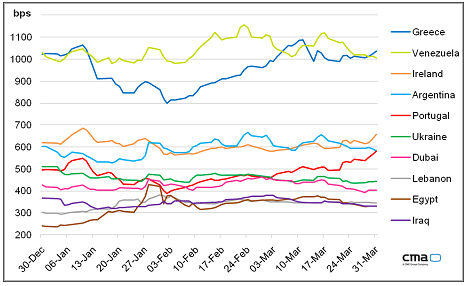
There was no change to the top six countries in the list from the last quarter, with Greece rallying 200bp in January, but widening back out reaching a high of 1100bp following downgrades by Moody's in early March, ending the quarter as the most risky sovereign debt with a 58% chance of a debt restructuring occurring within five years, wrote CMA in its Global Sovereign Credit Risk Report for Q1, 2011.
"Spain and Hungary have moved out of the top 10 being replaced by Egypt and Lebanon, as unrest in the Middle East took its toll, making it a testing quarter for the region," the quarterly report notes.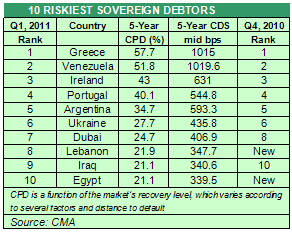
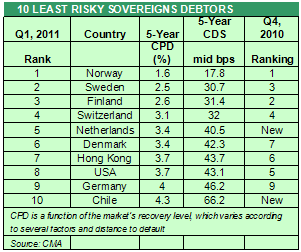
Not surprisingly, Bahrain was the worst performing sovereign in the quarter, as its government tried to clamp down on a restive population and called in a Gulf-wide force to restore calm to the tiny Kingdom.
And proof that Saudi Arabia is not immune to the crisis was evident in its rank as the second worst performing sovereign in the first quarter.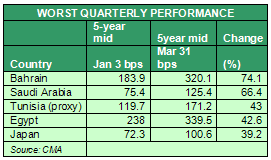
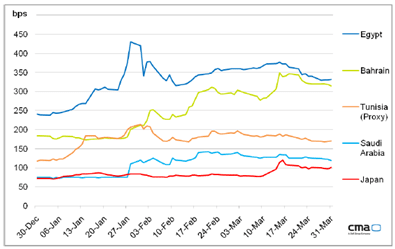
"As the Middle East enters a turning point in its history, the cost of debt insurance widened out this quarter as bond investors' move to the side lines, waiting for the unrest to pass," notes CMA.
The credit market seems to be indicating that the changes will be positive, illustrated by Egypt which hit a high of 430bp at the height of the tension (28th January), but rallied back almost to the widening level of 300bp, ending the quarter at 339bp.
Dubai and Iraq, which were present in 10 riskiest list in the Q4 report as well, were seen as riskier still, both rising up primarily as the overall Middle East outlook turned bearish.
Dubai is working its way through its $129-billion debt pile. Government-owned Dubai World, which was the centre of the emirate's debt crisis, signed a final deal with all its creditors in late March. The emirate is looking to raise $800 million financed by road toll receipts, while government-owned Dubai Electricity & Water Authority said it plans to repay $1.47-billion in syndicated loans in April, with half the amount being returned before its maturity date.
However, according to a Barclays Bank report, the emirate may still need Abu Dhabi's help.
"As higher oil prices and production replenishes the coffers in Saudi, Kuwait and UAE on improving fiscal and external balances, we would not rule out oil-rich Abu Dhabi supporting Dubai in meeting some of its refinancing needs to avoid negative headlines and confirm its solidarity with other emirates," Alia Moubayed, senior economist for Barclays said in the report.
Here is the complete list of 64 countries from the CMA report, with the Middle East nations highlighted.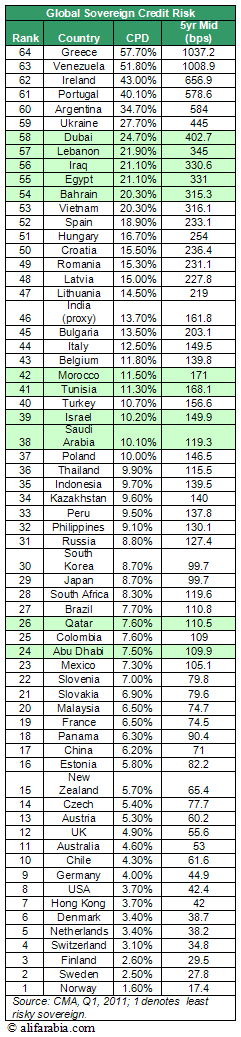
© alifarabia.com 2011