08 September 2009
BEIRUT: Foreign Minister Fawzi Salloukh said Lebanon’s ambassador in Gabon reassured him on Monday that all Lebanese citizens in the African country were “safe and sound.” Speaking on public television, Salloukh said that in his telephone conversation with Am-bassador Micheline Baz, the envoy assured him that Leba-nese residents of the Gabon city of Port-Gentil “are all safe.”
Violence erupted in Gabon’s second city of Port-Gentil on Thursday when Ali Bongo, 50, was declared the winner of presidential election to succeed his father Omar Bongo, who ruled the West African nation for 41 years until his death in June.
Most of the Lebanese community in Gabon resides in Port-Gentil, considered the economic capital of Gabon.
“Ambassador Baz is planning to submit to the Foreign Ministry a detailed report on the losses of the Lebanese community in Gabon,” Salloukh said.
Vehicles owned by Lebanese were destroyed and several shops were vandalized by demonstrators in the city.
Around 5,000 Lebanese work in Gabon. Most are owners of big investment firms.
On Monday, Gabon security forces patrolled the second city of Port-Gentil as civilian traffic began to resume after the government threatened to invoke emergency powers to quell deadly post-election violence.
The West African country’s oil hub remains under a dawn-to-dusk curfew but taxis and some civilian traffic returned to the streets on Monday. Some stores opened for the first time in days, but banks and many shops remained shut.
Dozens of residents had fled Port-Gentil aboard motorized canoes over the weekend. But flights resumed from the peninsular seaport on Monday after being suspended when France’s consulate and a club for French oil workers were torched.
At least three people have died in the violence. Port-Gentil, epicenter of the unrest, is the stronghold of opposition leader Pierre Mamboundou, who alleged widespread fraud.
Mamboundou made his first public appearance in four days when he attended an opposition press conference in the capital Libreville on Monday.
His Union of Gabonese People party had expressed fears for his life after saying it had not seen him since police dispersed an opposition protest outside the offices of the electoral committee on September 3.
Mamboundou, who appeared alongside another defeated candidate, former Interior Minister Andre Mba Obame, bore no signs of injury, despite Mba Oba-me’s claims that he had seen police striking the candidate.
The poorer areas of the city bore the brunt of the violence, with dozens of cars, shops and market stalls burned out by rioters angry at France’s perceived influence in bringing another Bongo to power.
France has repeatedly denied influencing the vote.
Stall owners picked through the wreckage of their businesses on Monday after a weekend of rioting. “I’ve lost everything,” said fruit-seller Justine Obame. “The first night they burned everything in the area. The next night, they came back to take what they had left behind. I have 13 children and I don’t know what I’m going to do.”
Interior Minister Jean-Francois Ndongou said during a visit to Port-Gentil Sunday that calm was returning to the city.
However, the situation was described as precarious by an official in Mamboundou’s UPG party who did not want to be identified. “It’s all uncertain, something could happen at any moment,” the official said.
Mamboundou took the lion’s share of the vote locally but only came third nationally, with 25 percent of the vote, behind Bongo, who polled 42 percent and former interior minister Andre Mba Obame with 26 percent.
Mba Obame made his first public appearance in three days on Saturday, during a meeting of defeated candidates, but he made no public comment.
Even in the aftermath of the violence Monday, local youths remained defiant. “We don’t want Ali. Mamboundou is the one who won the election,” said one.
“Bongo did nothing for the country in 40 years. What’s Ali going to bring us. Nothing!” shouted another.
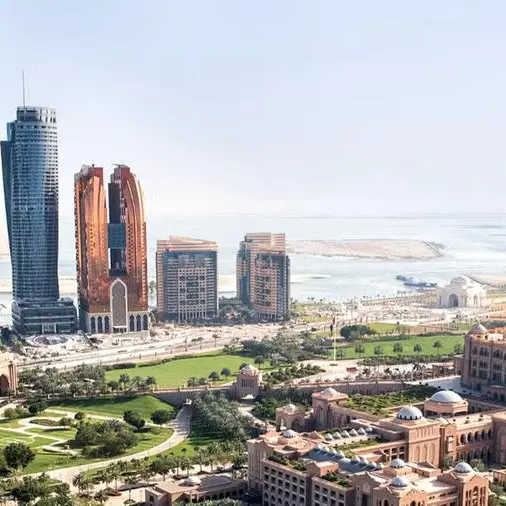
During the campaign, Bongo junior promised to make his country, sub-Saharan Africa’s fourth-biggest oil producer, into a “little Dubai.”
In the city’s Grand-Village riot scarred market area, someone had written on the door of a burned-out shop: “Give us a little Dubai.” – The Daily Star, with AFP
Copyright The Daily Star 2009.