Kuwait has yet many unexplored potentials for production of commercially viable petroleum derivatives, which if exploited to the fullest could lead to the much-needed diversification of Kuwait's economy.
Scientist Dr Khaled A. Al-Banaa, Associate Research Scientist CAD/EUD at Kuwait Institute for Scientific Research (KISR), was talking to the Arab Times sharing his insights into how scientific research can resolve Kuwait's power and water crises. The scientist also clinically dissected the possibility of nuclear reactors in Kuwait, aside of politics and controversies, and analyzed some of the ecological challenges associated with it.
Q: What is your assessment of the scientific field in Kuwait? Are you getting enough support from the government?
A: Talking about KISR, we act as consultants offering technical support to the government. So there is a great deal of cooperation between us and the government. Basically, we conduct assessments and studies for most of the mega government projects.
As a coastal engineering department, we are actively involved in all coastal projects, doing studies on marine environmental conditions and other related aspects.
Q: KISR has many departments. Which of these departments gets the most attention from the government?
A: KISR is comprised of five divisions (Environment, Food Resources, Petroleum, Economics, and Water Resources) that house seventeen departments.
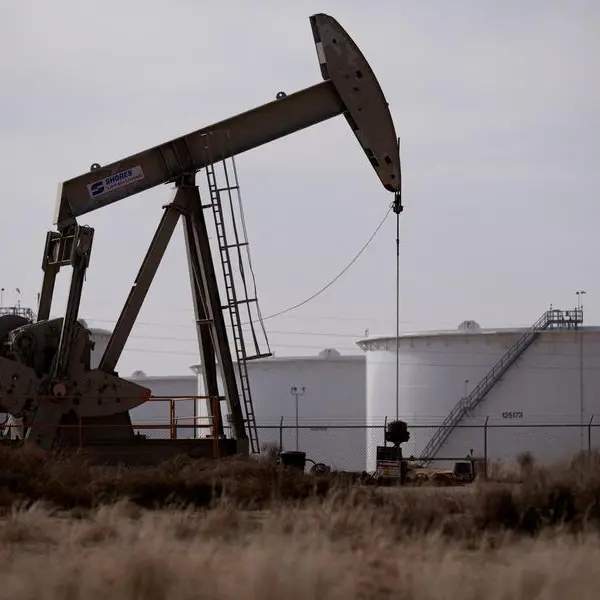
Obviously, Kuwait's economy depends heavily on petroleum; consequently, that department gets a large share of attention, which is why their campus is located closer to the client in Al-Ahmadi.
While the government mainly focuses on petroleum, it is also actively seeking alternative energy sources or new methods of conserving energy. This effort has been made more urgent due to the recent power crises we have been experiencing in the country over the past few years.
We are currently exploring renewable/alternative energy sources like solar, ocean, and wind power. We are looking carefully at these options, and preliminary studies are on-going. It is feasible: consumption of electricity is at its peak during the summer, and that is when wind and solar energy are most abundant. It is possible that various technologies could be combined in some type of hybrid system.
Q: Is electricity generation from petroleum really a feasible option, apart from the fact that it (oil) is available abundantly in Kuwait?
A: For a country without oil resources, power generation from petroleum would be a very expensive affair. Since Kuwait has abundant oil resources, generating power from petroleum is a viable option.
However, we could think of alternative energy sources and put our natural resources to better use, especially when oil prices are high. In addition, oil is an infinite source; therefore it is in the best interest of the long term future of Kuwait to study renewable energy sources.
Q: What about thermal power? Is coal a viable option for Kuwait?
A: First of all, coal is not readily available in Kuwait. Second of all, a lot of countries are not very open to the use of coal because of the pollution it creates.
Q: How far is Kuwait from nuclear technology? Does that option feature on our agenda?
A: Most people consider the production of nuclear energy as being dangerous. Actually, it is not. It is a very clean method of generating electricity. It's a clean technology. More than 6 percent of the world's energy is produced from nuclear power plants.
The US, France, and Japan have been successfully using nuclear power to generate electricity for many years. Some GCC countries are already considering building the first reactor in this area.
Q: Which nuclear know-how country are we planning to rope in for this?
A: There are many countries with whom we could collaborate, but I don't have any specific knowledge about this.
Q: Isn't disposal of nuclear waste a problem?
A: No, it is not, because the nuclear power plants do not release harmful waste as in traditional power plants (e.g. air pollution). However, it does require a huge amount of water for cooling its systems.
So, most of the countries in Europe using nuclear energy have rivers or lakes and the power plants are located close to such water bodies.
A nuclear plant will require 5 to 6 times more water than what we use in a conventional power station.
Q: You are talking about thermal dispersion. What about nuclear waste?
A: Due to the relatively small size of Kuwait both geographically and population wise, a large number of nuclear power plants would not be required. Therefore, the nuclear waste could be disposed of in deep oceans or designated areas. It should be contained and the radiation should dissipate to below dangerous levels before it is disposed of.
Q: But what about the danger to marine life?
A: Yes, there is a danger to marine life in case of a leakage that spreads to the sea or the soil.
However, the waste would be properly contained and buried deep beneath the sea bed as stated in relevant international safety standards.
You have to have safety measures in place. That's why you have to have reputed international companies with sufficient know how to carry out these projects.
Q: What about the politics of nuclear energy? We know about Iran's nuclear ambitions?
A: I am not a politician. From the perspective of Kuwait, the only politics we will have to tackle in setting up a nuclear plant are bilateral agreements with our neighbors, as it entails using water resources we share with other countries. Then there is also the worry of accidents that have to be addressed. Finally, there is the issue of transparency. We should not misuse nuclear technology for military ends.
Q: Considering accidents, is there a threat even if reactors are built for civilian purposes?
A: Yes, there is always risk involved when dealing with such matters. So we have to always to be prepared and take all necessary precautions.
Q: When the oil prices were breaking all records recently, we saw the world was looking for alternative energy sources. How close do you think the world is from discovering an effective alternative energy to replace oil?
A: You need time to develop and meet the global demand. India and China are growing. There is high demand for energy. For the time being, only oil can meet all this demand. We have it in abundance.
There are alternative energy sources even today. There is bio fuel, methane, wind and sun energy and so forth. It's just a matter of cracking the right technology to tap these resources to the fullest in a manner of making them viable to industry demands. With time, yes we will arrive at some solution, but that does not mean that oil will be wholly done away with.
The world's population is growing. So there will be demand. Alternative methods will supplement the conventional method to ease pressure.
According to economists, fluctuating oil prices is only a trend. The instability is not good for anyone, neither buyer nor seller. So the oil price has to even out at some rational level. When oil reached $ 140 plus per barrel, consumers demanded that oil producing countries should step up production. But it was not a problem of volume. Prices were going up because of inflation.
So it's a trend. It goes up and down.
Q: Do we have any estimation on how long oil will last in Kuwait?
A: I am not in the oil sector. But generally it is said that oil will last for approximately 100 years. But these predictions are based on what we have right now and do not take into account the unexplored resources.
Q: As a scientist how do you imagine Kuwait without oil?
A: I think Kuwait's economy depends about 95 percent on oil. And as an oil producing country, we will have surplus in our coffers when oil prices go up. This we have to invest in education. The first priority is to educate people, then let's invest in national and international projects. I don't think oil will be depleted in the near future.
Using oil we must generate an alternative economy, so that we can decrease our dependence on oil.
Q: When you say diversify, do you think Kuwait should become an industrialized country, get into manufacturing?
A: Yes. Kuwait is already manufacturing some items. But it's not just about producing. We have to produce with quality. Iran makes cars, but their cars are not well known. When you make things you have to meet the quality and demand of international markets.
You have to bring your standard up. We should continually learn from our mistakes.
Kuwait can think of producing further derivatives from oil like newer polymers or something like that. We have to be specialists in that so the world market will turn to us for that product.
Q: Are there any efforts happening in that direction?
A: If you are talking about KISR, we are trying to find new technologies for supplementary productions from oil. KISR's leadership has plans to produce something that we can commercialize.
We are looking for alternative resources. Where there is a will there is a way.
Q: Didn't your department come up with a new breakwater technology? What happened to that project?
A: Breakwaters are meant to protect your projects along the coastline. Some use materials from the same region. It's common to use rocks; we don't have rocks, so we have to import them. In Kuwait, generally the waves are not high, and the dynamic forces from the waves are not strong. So we thought we could use something that is not very strong.
That's how we hit upon the idea of modeling breakwater like a soda crate; this breakwater has holes and when aligned in a certain way it acts as a wave absorber. They absorb the energy. It is a porous material. Some energy is dissipated and some is reflected.
Q: Was that very unique? Was it the first of its kind in the world?
A: The world has always tried out different breakwater technologies based on the location. We tested it in a wave flume and it was successful.
Q: Has it been used in any project so far?
A: Not yet. Usually here they use the conventional technology to be on the safe side.
Q: Probably, the fact that Kuwait has a long coastline makes your department more relevant to the state's developmental ambitions?
A: Yes. As I mentioned any project along the coastline has to be studied to find out how the project would affect the environment. For example, if the project in question involves a power plant using cooling system from the sea, you have some thermal pollution. Then we will have to conduct studies to assess its impact on marine life and so forth.
We get insights from our colleagues in the fisheries department, because we are engineers. Our preliminary studies help determine if some areas are suitable for certain projects.
We also do environmental impact assessments to find out if projects are doing justice to the design and how the environment is affected by the project. There could be erosion in some areas of the coast and deposits in some other areas because of the project.
In most of the power plants in Kuwait, we monitor the intake, outfall and dispersion of heat in the water. We study the optimum depth of thermal plume discharge as well as thermal circulation.
Qaruh Island has problems with deposition and erosion. Some say the island is moving, while others say that it came up all of a sudden. Such stories are being said because laymen do not understand the processes of nature. You have net sediment during seasons. In winter there is erosion on one side and deposition on the other, while in summer it could be reversed. This phenomenon creates the illusion of the island moving.
Thus we are doing a complete study, including numerical modeling. And we are thinking of how to protect it. Part of the study entails whether we have to apply breakwaters, and if yes what type and so on. The island has coral reefs and unfortunately they are not protected. People go there on unregulated recreational trips which end up spoiling the natural resources.
We are undertaking another project dealing with a harbor in Failaka Island. We are conducting a rehabilitation study on it to know how feasible it is to use that harbor for our maritime purposes and for developing a new marina.
You can have any international companies to build your projects, but at the end of the day you need to have data for accurate design and planning. These data are available only with us. We have data on wave, tide, current, wind conditions and so on. So we can use such information to design better projects.
Q: Is it true that Kuwait is undergoing a climatic change? People who have been here for long say that winters are getting warmer and shorter and so on. Is that correct?
A: Yes. There is climatic change but it is occurring on a global scale. Some areas are getting colder and some are getting warmer. It's a trend. It's cyclic. But definitely there is global climatic change, because of large scale man-made pollution.
If you have noticed Kuwait is not getting enough rain. We didn't have rain this year. But China saw floods. Some parts of China also experienced snow, where it had never snowed before. This is further evidence of climate change. As a coastal engineer, the most important thing to me is to monitor sea surface rise. It is predicted that for every 10 years there is a rise of roughly 1 mm in the sea level.
We have projects close to the shoreline. A hundred years from now, the sea is going to be in my backyard, so we have to take this into consideration. How can you predict it? We have to have an accurate field measurement system. Same thing with temperature. We should monitor it with precise instruments.
We should be able to accurately estimate what would be the temperature in 10 or 20 years, and how high the sea level would be. We are working on it, and we need to collaborate with other relevant entities and institutions.
So, we have to take care of it by monitoring nature closely. In Kuwait Bay we study the importance of tidal flats. Generally in Kuwait Bay the flushing rate is not good; and traces of sewage were found there. If not addressed immediately, sewage waste will accumulate over the years and will adversely affect marine life.
Q: What is the single biggest environmental threat to Kuwait right now? There was the 'fish kill' some years ago.
A: That happens as a trend due to environmental phenomena such as red tide. That's why it is so important to monitor parameters such as the sea surface temperature, nutrient levels and so on. The fish kills tend to happen during the warmer months. We found the phenomenon has a correlation with temperature. It happens on the warmer days of summer, when overall weather conditions are calm.
When the disaster struck, oxygen content in water was low, and there were traces of sewage contamination, which helped micro organisms to thrive. These conditions helped contribute to the overall fish kill.
Q: Apart from that, do you see any other threat to our environment?
A: Oil spills: we have to have a way to predict their occurrence and conveyance. If spills reach the intake of power plants, it can be disastrous. There should be some warning system to shut down the pipes in case of such contamination, so it can be stopped before it affects drinking water supplies.
There are many oil tankers in the region, and possibility of oil spills is imminent. So we must have a contingency plan to combat this problem: contain it, vacuum it, treat it and reuse it. Our vital infrastructure should be protected from it.
Then there is the threat from leaked nuclear radiation from reactors in the region. We should be well prepared and we should develop an early warning system to alert people.
Q: In the event of a nuclear leakage in the neighborhood, how well prepared are we to defend ourselves?
A: If there is a nuclear leakage, obviously we cannot stop it, but we can at least try to contain it and warn as much of the population as possible. We can have people wearing masks and taking necessary precautions. But we have to have a system for different scenarios. That's the only model we can have.
We had a conference on early warning systems and disaster management in Nov. 2008 where some of the papers discussed were on nuclear leakage.
Q: Shouldn't ordinary citizens also be trained to face such situations?
A: Yes, I think we should all train and practice different emergency drills. Fire drills, emergency drills, nuclear drills etc. should start from kindergarten. And we should have warning systems for different types of disasters. During the last Gulf war we had such sirens.
Q: You made an interesting note about global warming. You said it is not so hyped now as it once was.
That reminds me of a book by Michael Crichton called State of Fear in which he portrays the whole phenomenon of global warming as a conspiracy invented by some corporations with ulterior business motives? It was also said the book had political aims because the Bush government then had made an about face on Kyoto protocol and denied to ratify it.
A: No. What I meant was people have stopped using the phrase 'Global Warming' and instead use the more accurate 'Climate Change' because we notice that not all areas of the world are getting hotter; some are getting colder. It is not a conspiracy, because we are experiencing it. We are in winter now and we can move about in light clothes. So it is a proven fact. We have to worry about it and do something about it. Now Al Gore is doing an excellent job in dealing with this topic. He is determined to find a global solution to this problem, and we should be doing our part.
By Valiya S. Sajjad
© Arab Times 2009