Many factors are driving the growth of the pre-cast concrete sector in the Arabian Gulf, from increased investment in the petrochemicals industry to a growing middle class. Bank of America Merrill Lynch, for example, sees three clear trends pushing the construction-dependent sector to new highs: "First, and most immediately, we believe heavy investment in petrochemicals will now begin to see improving returns due to their global competitive advantage. Second, we believe a shift will require an ongoing need to invest in regional infrastructure. Third, we see a social and economic need for a growing middle class, supporting the growth of consumer sectors."
This augurs well for the pre-cast concrete industry, which is not dependent on a building type but can tap into any part of the construction sector, be it residential, commercial or infrastructure.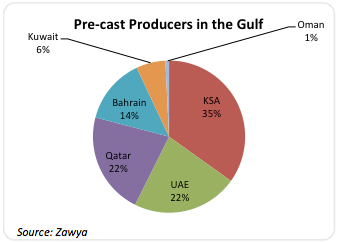
This view is supported by research done at the national level, especially in countries like Saudi Arabia and Qatar, where construction activity is peaking due to a variety of reasons. "Massive investment in Qatar's construction sector on the back of strong economic fundamentals" will trigger demand for cement, according to a report from Commercialbank Capital, an arm of the Commercial Bank of Qatar.
The existing demand can be met by current production capacity. However, Commercialbank Capital expects consumption will be at its peak in 2013 and 2014 as a majority of the projects that are planned or under construction will be completed by 2015. Qatari companies are "unlikely to match this demand", which means excess requirement for cement will have to be met through imports from Saudi Arabia and the UAE.
Riyadh-based Al Rajhi Bank noted in a report that "the positive outlook on the kingdom's cement sector is underpinned by the massive USD 385 billion planned infrastructure projects until 2014. Government spending remains the major catalyst for the cement sector in the medium term."
Al Rajhi also noted that the government is committed to boosting education, healthcare and public utilities. "The government has further announced constructing 500,000 residential units as part of a kingdom-wide plan to boost real estate investments to accommodate the increase in young population." More business for the pre-cast sector to tap into.
"We are an essential part of construction. The pre-cast concrete industry can get involved in any type of construction - be it complete buildings or parts such as walls, columns, beams, slabs, bridges and so on. Sometimes, pre-cast is the only preferred option for bridges, especially long-span bridges," Emad Shahin, general manager at Arabtec Precast, told Zawya. "We have succeeded in making different products such as manholes, barriers and kerb stones at the smallest level and can go on to do complete buildings.
"When it comes to malls and skyscrapers, we suggest clients make optimum use of pre-cast concrete but do not recommend that they do the entire building in pre-cast. We choose for the client based on the architect's design. We make similar recommendations to use pre-cast columns, beams and slabs for industrial projects," Shahin said. "However, we would definitely ask the client to use pre-cast when it comes to large villa housing projects, which involve repetitive design. This will result in 10% savings in construction time and a quicker return on investment in terms of earning rentals for the developer."
Low Maintenance Cost
Pre-cast concrete systems are gaining popularity on constructions sites because of their low maintenance cost. They also offer greater resistance to the harsh Gulf summers, which take a toll on building structures.
"We have a very tough climate in the GCC. If you do a building using the conventional methods, one can see cracks in the plaster after one or two years due the humidity and the extreme variations in the daily temperatures throughout summer," said Shahin. "If we do a wall in a controlled factory environment and cast it on a steel table, the outer surface will be very smooth and takes away the need for plaster. You can also get it pre-finished with marble or other finishes, which does not require any maintenance in the long run. A 10-year-old pre-cast building will look different from a building using traditional methods."
Moreover, pre-cast concrete structures are fully recyclable, while pre-cast concrete components also help lower interior lighting costs because of their reflectance qualities. Being a made-to-order building material, pre-cast concrete also ensures that there is less on-site construction waste while helping improve quality control.
Factoring in all its green attributes, pre-cast concrete can help building owners reach as many as 21 of the 26 points needed to achieve minimum LEED certification or contribute to Estidama Pearl rating in Abu Dhabi, said MAPEI, a manufacturer of adhesives, sealants and chemical products for buildings.
Repetitive Design
Pre-cast concrete is used mainly in housing projects like low-rise residential buildings, labor accommodation and hostels because most of these have repetitive designs or structures, which makes it more practical to pre-fabricate certain components. Commercial buildings such as office facilities and shopping malls comprise the second-biggest market for pre-cast concrete, benefiting from its flexibility to create and implement unique designs for modern malls and other iconic structures.
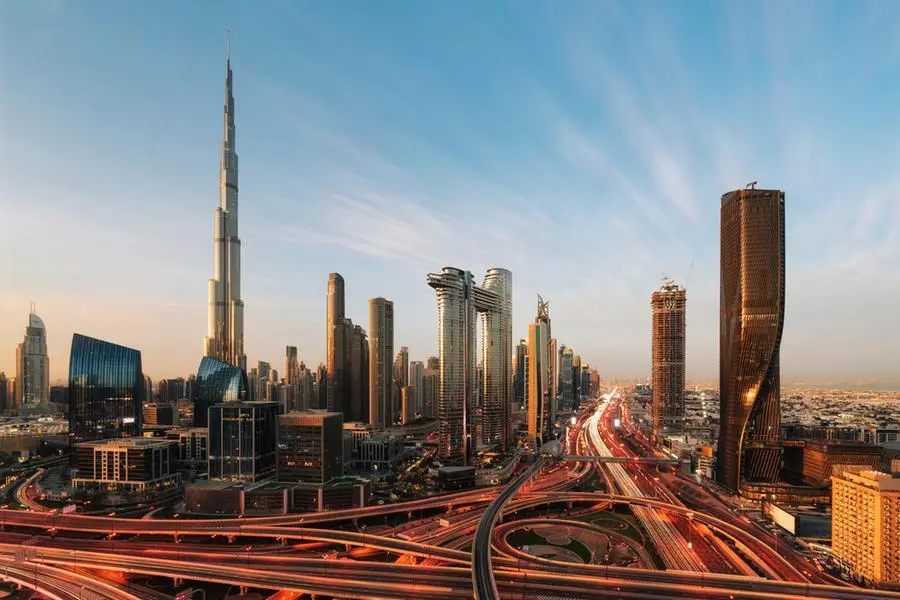
It also reduces the need for huge manpower resources since most of the work is finished at the factory stage. "Most of the slabs in Burj Khalifa are pre-cast. Likewise, all slabs in the Mall of the Emirates, the Deira City Centre's exterior cladding and parking, the exterior of the BurJuman Shopping Centre, the cladding at the Dubai International Airport and the entire Marina Mall in Abu Dhabi have used pre-cast and are great examples of high-profile projects in UAE using this method of construction," said Shahin.
At a recent pre-cast concrete seminar, Max Jordan, senior director at Fluor Middle East, said: "Using pre-cast fabrications reduces labor costs by up to 25% as compared to conventional concrete. The Al Falah project, a huge real estate development of 4,856 villas built on an area of 12 million square feet, offers a prime example. Over 1,000 villas were completed in April while the rest will be ready by the end 2012."
Growing Footprint
According to statistical data provided by the Abu Dhabi Chamber of Commerce and Industry, the pre-cast sector in the UAE is valued at AED 6 billion and employs more than 25,000 technicians and skilled workers.
Shahin said that when he first came to the UAE from Saudi Arabia, the former had four or five pre-cast factories. There was also a resistance to the sector in the region till the construction boom in the last decade.
Today, the UAE has 29 players, Saudi has 45 pre-cast factories, Qatar has 10 major players (with 18 smaller players), Oman has one factory and is in the process of building a second one, according to Zawya data. "Though the smallest country in the Arab world, Bahrain was the first Gulf country to extensively use pre-cast in the region," Shahin said. Zawya data show that Bahrain today has 16 companies producing pre-cast products and Kuwait has eight.
While the total size of the pre-cast concrete sector is unavailable, Shahin said it accounts for about 15% of construction work, "which is not a small amount when you consider that civil work constitutes 30% of a project, followed by MEP at 30%".
"We are trying to inch it up to between 20% and 25%," said Shahin who is part of a 10-member informal group of pre-cast concrete players in the UAE who are seeking to disseminate and educate clients and consultants through seminars. The companies include Arabtec, Concrete Technology, Dubai Precast, Emarat Europe, Exeed Precast, Gulf Precast, Hard Precast, RAK Precast, United Precast Concrete, and Xtramix. The group is also looking at creating a local chapter of the Precast/Prestressed Concrete Institute to improve best practices and raise the standards of the industry.
The last two years have been rough. "The challenges are the same that are faced by the construction industry. Not many projects being awarded and the cake is too small, particularly in the UAE," said Shahin. "Markets are not encouraging and competition is very high. Contractors are squeezing prices and pre-cast concrete manufacturers cannot reach break-even.
"A factory is not like a construction company, which can reduce its size of staff depending on the stage and size of the projects. Compared to the boom where we were working to full capacity and with the market seeing the introduction of new factories every year, it has reached a stage where some factories are operating at only 20% of capacity."
But all is not lost. "Today, construction is moving towards villas and national housing is becoming a priority. In Qatar, we see opportunity in sport-related infrastructure and the hospitality sector. Saudi Arabia has many projects for national housing as well as for the army and most of them are looking at pre-cast as an option. Dubai has slowly started moving and we are all waiting for the different jobs that will arise when Abu Dhabi will award certain much-awaited contracts. Qatar has just started to move from the design stage to the next phase."
According to Commercialbank Capital, "Qatar's successful bid to host the 2022 FIFA World Cup led the government to plan for high levels of investment in infrastructure and real estate development - approximately USD 225 billion between 2011 and 2016, of which USD 125 billion has been unveiled for construction and energy projects alone.
"Spending directly related to preparations for the 2022 World Cup will amount to an estimated USD 80 billion, encompassing commercial and infrastructure projects and therefore the construction boom in Qatar is expected to continue, albeit with different priorities and involving new players."
Expanding to neighboring countries and forming joint ventures, which will help to combine experience and capacity-building for large projects while reducing transportation costs will help the pre-cast industry to tap the next boom.
© Zawya 2012