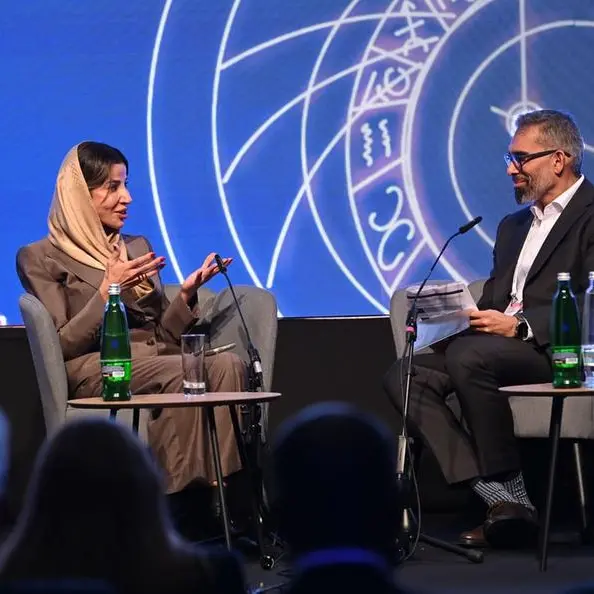
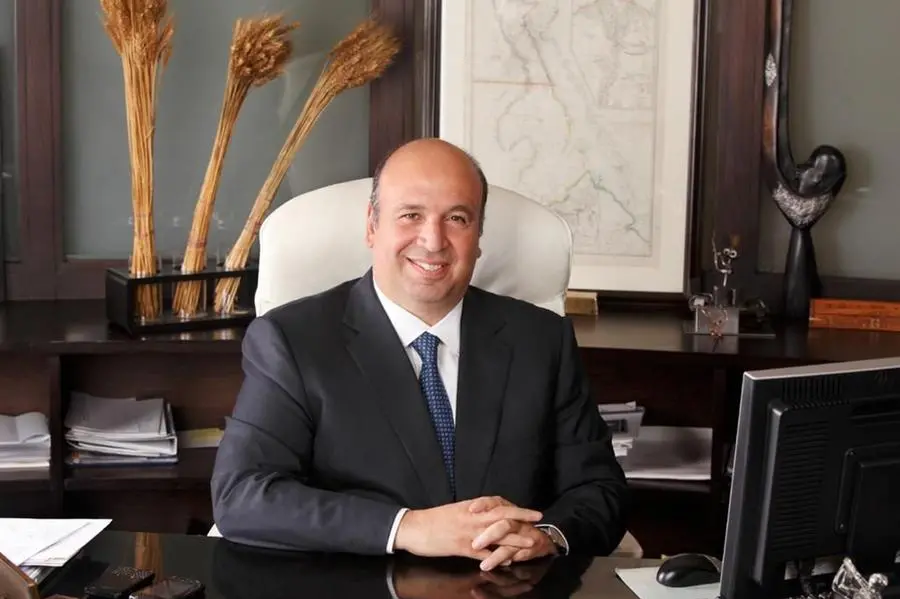
Egypt is still an under-valued economy with huge potential for growth," says Marianne Ghali. As fund manager for the University Education Endowment Fund Investment Company (UEEFIC), she knows quite a bit about potential, as she heads the independent company tasked with managing and growing the endowment of the American University in Cairo, Egypt's premiere private university.
Under her watch, corporate and individual donations are invested mostly in the Egyptian economy; monies generated are used to support AUC as it educates the next generation of Egyptian and Arab leaders.
Ghali says the inauguration of the Nazif government in 2004 has had a "tremendously positive effect on the economy, bringing about a different mind-set, orientation and dynamic, with speed and delivery of goals and objectives. Nazif, with the team of other ministers, each in his function, has brought about tectonic changes in Egypt's business environment."
Reforms from "the centralization of activities to assist investors in clearing up procedures to the liberalization of the banking sector and of the exchange rate" have encouraged foreign investors to tap into Egypt's market.
One of the major changes that will benefit Egypt, according to Ghali, is the amendment of the Tax Act, which simplified the filing process and capped corporate income tax rates at 20%. Despite the cap, the fund manager says that the new law will generate new revenue.
"In the real effect, most of the organizations did not pay taxes legally because of all the tax shelters that were provided to investment opportunities, whether for new industrial zones or getting a [tax-break] on new capital," Ghali notes. "In effect, the organizations were not paying any taxes, which is a positive thing for the company, but as a whole, the government was running up a huge deficit to be able to fund national health, education and infrastructure. Now, the sources of public revenue will increase to offset the deficit [resulting in a] healthier economy"
On the macroeconomic level, Ghali says, "There is significant evidence of speed of privatization, reform, restructure and economic improvement. I think the emphasis now is to get unemployment to a level that is within acceptable norms because the complaint on the street is that the macro-story is doing very well, but the man on the street is not reaping the benefits."
Egypt has a "high percentage of university graduates, creating a shortage of skilled labor in the industrial sector. There are semi-skilled, blue-collar activities that do not require a university degree," Ghali points out.
"Perhaps some of the attention can be focused on upgrading the skills of those people and therefore provide them with a better income. You don't have to be a university graduate to earn an income."
As the government continues to strive towards economic growth and expansion, Egypt's economic map is taking on a new shape. "Today, there is a sifting of mice and men, if you like: The small companies are no longer viable entities, so there is a consolidation trend over the next 3-4 years where smaller and medium size investments are going to be aligning themselves to become bigger and more efficient entities," the fund manager predicts.
Ghali notes that Egypt is beginning to focus on industries in which it has a comparative advantage, such as the textile sector. There is also a shift towards manpower-intensive rather than capital-intensive companies.
"In the information technology sector," she says, "the concentration will be on labor-intensive activities that will be able to compete with India and the Far East, such as call centers, software development and systems integration, where the human factor is the most important element, helping the sector outperform."
She points to ceramics and tiles, food processing and natural-gas-dependent industries such as fertilizers as healthy sectors buoyed by an abundance of raw materials. "Egypt's agricultural sector will grow very strongly, but it has to go into more organized mass production to become more worthwhile for the investor and the economy."
Some observers may be uneasy with the Nazif government's reforms, but not Ghali.
"While political risk does exist, as democracy always brings along winds of change, there is hope that rationale will prevail and an increase in political awareness and involvement will come about," she says. "I'm very comfortable that the political risk is being addressed in a prudent manner by changing the mind-set and not in a dramatic way. [The government] is bringing in very skilled people with different backgrounds that contribute to the overall growth."
Marianne Ghali (57)
Fund Manager, University Education Endowment Fund Investment Company
Education: BA Economics (AUC)
Past experience: Two years at the UK's Manchester School of Business. In Kuwait, she helped automate the country's social security system; privately published a compilation of historical financial information and analysis of companies listed on the Kuwait Stock Exchange. She also manages the Citadel Fund for Gulf investors in the Egyptian economy.
WHAT I WANTED TO BE GROWING UP: This is where I've always wanted to be. I think I was influenced by my husband, who is into private equity.
By Fatima El-Saadani
© Business Today Egypt 2006