Collaborative consumption is an economic model based on sharing, swapping, trading or renting of products and services, enabling customers to have access to goods without ownership. Businesses that leverage this trend are now commonly known as peer to peer, or P2P, as they enable peers (or consumers) to buy and sell products and services from each other. The business brings the consumers together and facilitates the transaction for a fee. Examples of P2P businesses include eBay, Airbnb, Snapcar, Zilok and Zopa.
P2P is not new, but more businesses are beginning to leverage this common human behavior due to the power of technologies that enhance these interactions. Since virtually all P2P transactions rely on the Internet, businesses have benefited from new web technologies - especially on the back-end - and from the increase in Internet bandwidth and availability. Smartphones and other mobile devices make P2P businesses more accessible. There has been also an increase in trust by consumers, who not long ago may have hesitated to make a purchase online from a reputable business, let alone from a complete stranger.
I would also argue that the dramatic rise of community-based networking (social networks) has contributed to the popularity of P2P businesses. Consider that 72% of all internet users are now active on social media, and that there are 684,478 pieces of content shared on Facebook, 3,600 new photos on Instagram, and 2,083 check-ins on Foursquare during every minute of every day.
There is obviously wide adoption of the "community" concept and it is growing. If people will share information, opinion, photos and so on in a social community, then they will be more open to the idea of services and products being distributed among networks of connected individuals.
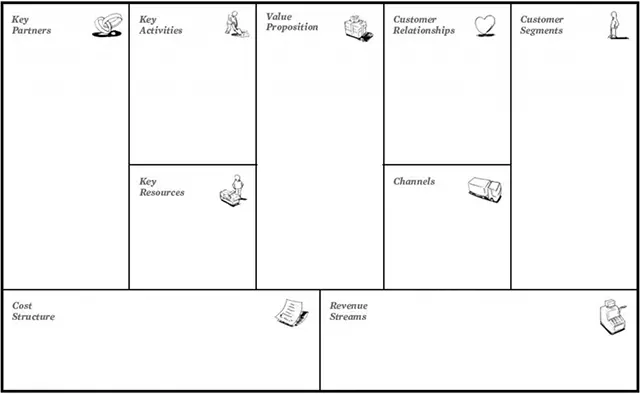
The question I would like to pose, then, is: does the traditional business model canvas need to be revised to better reflect the building blocks of P2P businesses?
The usual business model emphasizes the nine building blocks (e.g., offering/value proposition, target customer, channels to customer, customer relationships, revenue streams, cost structure, key activities, key partners, and core capabilities).