20 November 2008
Many investors are rushing to snap up cheap assets in the United States - but Gulf Capital remains unmoved. The company, one of the GCC's largest private equity firms, continues to focus on investment opportunities in the region.
"The US is very enticing but it is not our mandate," founder and CEO Dr Karim El Solh told Emirates Business. "We are Gulf-focused. Our investors give us money to give them regional exposure. We are very disciplined and we like it this way. And I feel we are going to be rewarded in the long term for our discipline and focus."
El Solh said the global credit crunch had not dramatically impacted private equity firms in the region, but the lack of debt funding had made borrowing harder and more costly which translated into reduced margins.
"We would be deluding ourselves if we said that what's happening in the West has no impact on us. Banks have almost no liquidity right now so it's very hard to leverage transactions in the short-term," he said.
But the crisis could also be seen as a blessing, he added. "The positive is that valuations have come down drastically by about 50 per cent and we are able to find much sweeter deals. It is a great time to invest in private equity if you have the cash. And Gulf Capital is still sitting on a lot of liquidity," he said.
Gulf Capital was incorporated in Abu Dhabi in 2006 with a capital base of Dh1.2 billion provided by 300 institutional and individual investors. The company focuses on acquiring large and controlling stakes in highly profitable and rapidly growing companies in a number of emerging industries in the GCC region.
How are you being affected by the financial crisis in the West, which seems to be creeping into this region?
We are affected in several ways. First of all in our business, in leverage buyouts, you tend to want to leverage your transaction to boost your return on your IIRs. So you need access to debt financing to leverage your transactions and that has pretty much evaporated globally and regionally. Banks have almost no liquidity right now so it's very hard to leverage transactions in the short term. There's a lack of debt funding and even if we fund that it would be at much higher rates given how the spreads have moved.
The other area is that all companies across the Gulf will find it harder to borrow and will be borrowing at a higher cost. This will translate into slightly reduced margins and it will impact their bottom lines. Yes the international credit crunch will affect us, not dramatically, but it will still impact us. We would be deluding ourselves if we said that what's happening in the West has no impact on us.
Are you feeling the squeeze from the credit crunch?
We continue to invest - we are closing a new fund now. It's a mixed blessing. The positive is that valuations have come down drastically by about 50 per cent and we are able to find much sweeter deals. It is a great time to be investing in private equity. It is a great time to invest now if you have the cash. The negative is obviously the higher cost of financing as it will impact some of the margins of our portfolio companies.
Are you still very much liquid?
Yes, we are still sitting on a lot of liquidity. Between cash and revolving credit lines we have more than Dh1 bn of firepower, not to mention the Dh2bn fund that is coming online. So we have access to a lot of liquidity right now and we are in a fortunate position. We did not rush and invest everything up front. We took our time and are finding the right opportunities.
Do you plan to launch new funds?
Right now we are only focused on buy-outs and private equity. We are developing a deep expertise in that and are becoming a dominant player and we will see where we go from there. We want to become excellent at what we do and then we'll decide whether to expand and launch other divisions.
Private equity deals have gone down in the first half of this year in terms of the number of deals and the value. What is your outlook on this industry?
There are more than 125 equity funds, a number of players are coming to market and I think you will see the market solidify. There are too many players in the sector. There is a lot of cash chasing few opportunities so there will be a shake-up of the sector and not all the firms will survive. In the next two years you will see a breakaway of the leading firms from the rest of the pack. The total of 125 private equity funds is a large number, though if you look at the amount raised the percentage of GDP is still less than what you see in the US and Europe. But the number of funds launched is a little bit overdone. You will have companies either merging with others or not launching new funds, so I think you will see a drop in the number of players in the short term. There are not enough transactions being closed to justify the large number of funds. So obviously productivity is an issue for a large number of these funds.
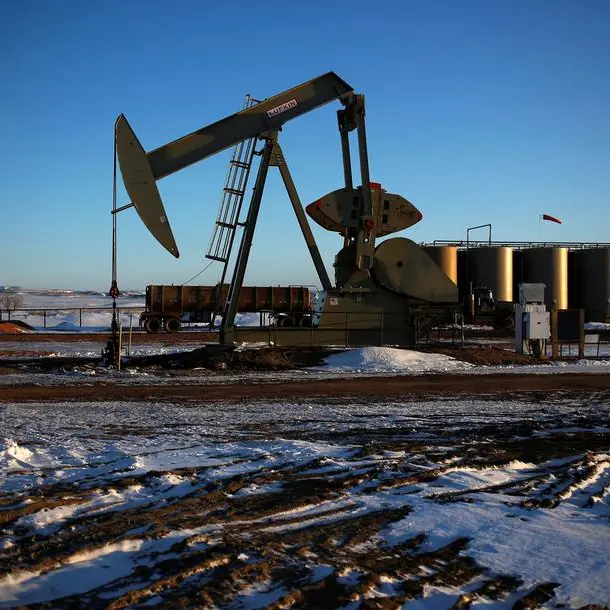
Most of your portfolio investments are in the oil and gas sector in companies such as Maritime Industrial Services (MIS) and Gulf Marine Services (GSM). However the oil and gas sector usually has a boom-bust cycle, though the boom curve this time has lasted longer than usual. Now that the issue of recession has come, how do you find these investments? How strategic are they?
GSM has the largest fleet of jack-up barges in the Gulf and works on the production of oil offshore and the maintenance of wells. Maintenance is a five, 10 or 15 years process. Once you drill you have to maintain the well, it's a long-term thing and is not cyclical. As for drilling, yes, as you drill when prices are high. When the oil price drops drilling slows down so it's a bit more risky. Companies such as GMS carry out maintenance work and this continues regardless of the cycle. It is a nice sector to invest in.
Did you apply the same rationale when you invested in MIS?
MIS has a slightly different profile. It is the largest builder of jack-up drilling rigs in the Gulf. From one, it now has seven. It has more than $1bn of backlogs and will execute those over the next three years. But the company also has other divisions such as the traditional engineering and fabrication business and technical services where it rent manpower and supply these resources to the oil companies. It also has a safety business whereby it monitors the safety of oil and gas operations by putting experts in the field. It is this diversification of high portfolio of services that if one goes up, one goes down, so on average they are okay. Both MIS and GSM are about 30 years old, well established, with proven and solid businesses.
You also have a stake in Metito. What are your expansion plans for the firm?
We originally bought 60 per cent of the company. Then we invited the International Finance Corporation and the World Bank to co-invest with us and we were diluted to 56 per cent. Metito is the oldest Arab water utility. It builds and operates desalination, water treatment and sewage plants. It has 23 concessions today around the world and is a promising business. It operates in North Africa, the Gulf and as far away as Indonesia and we are pushing into new territories. We are using our very solid Egyptian base to move further into North Africa and to countries such as Libya and Algeria. Our goal is to be the largest water desalination player in Mena so the focus clearly is on the region.
Overall, how is Gulf Capital performing in what some would call rainy days?
As a private company we don't disclose the numbers but our earnings are growing. We had a decent profitability last year but, more interestingly, we are improving the model of our business across a number of sectors and our investments are maturing.
Do you see earnings remaining good next year?
We make money in two ways. We get our share of earnings from our portfolio companies and their profits are growing in double-digits so that is good for us. And we also make capital gains on the investments that we take public. The share of earnings is solid and healthy and growing.
Profile: Dr Karim El Solh Founder and CEO, Gulf Capital
Karim El Solh has more than 16 years' experience in investment banking, private equity and asset management.
Before founding Gulf Capital he was CEO of The National Investor (TNI), one of the most active UAE investment banks. Prior to joining TNI he was responsible for European high-yield and leveraged-buyout (LBO) capital markets at Donaldson, Lufkin and Jenrette, now part of CSFB.
Dr El Solh has been involved in LBOs and debt financings worth more than $20bn (Dh73.46bn) in both Europe and the US. Prior to joining DLJ he worked as a senior banker at Citigroup Salomon Smith Barney.
He has a BSc in civil engineering from Cornell University, an MBA from Georgetown University, a PhD (summa cum laude) in economics from the Institute D'Etudes Politiques de Paris, a Certified Management Accountant diploma, a Professional Engineer Certification and an FSA certification from the UK.
He is a member of the Arab Business Council and the Young Presidents Organisation and was voted Young Global Leader by the World Economic Forum in 2007.
Many investors are rushing to snap up cheap assets in the United States - but Gulf Capital remains unmoved. The company, one of the GCC's largest private equity firms, continues to focus on investment opportunities in the region.
"The US is very enticing but it is not our mandate," founder and CEO Dr Karim El Solh told Emirates Business. "We are Gulf-focused. Our investors give us money to give them regional exposure. We are very disciplined and we like it this way. And I feel we are going to be rewarded in the long term for our discipline and focus."
El Solh said the global credit crunch had not dramatically impacted private equity firms in the region, but the lack of debt funding had made borrowing harder and more costly which translated into reduced margins.
"We would be deluding ourselves if we said that what's happening in the West has no impact on us. Banks have almost no liquidity right now so it's very hard to leverage transactions in the short-term," he said.
But the crisis could also be seen as a blessing, he added. "The positive is that valuations have come down drastically by about 50 per cent and we are able to find much sweeter deals. It is a great time to invest in private equity if you have the cash. And Gulf Capital is still sitting on a lot of liquidity," he said.
Gulf Capital was incorporated in Abu Dhabi in 2006 with a capital base of Dh1.2 billion provided by 300 institutional and individual investors. The company focuses on acquiring large and controlling stakes in highly profitable and rapidly growing companies in a number of emerging industries in the GCC region.
How are you being affected by the financial crisis in the West, which seems to be creeping into this region?
We are affected in several ways. First of all in our business, in leverage buyouts, you tend to want to leverage your transaction to boost your return on your IIRs. So you need access to debt financing to leverage your transactions and that has pretty much evaporated globally and regionally. Banks have almost no liquidity right now so it's very hard to leverage transactions in the short term. There's a lack of debt funding and even if we fund that it would be at much higher rates given how the spreads have moved.
The other area is that all companies across the Gulf will find it harder to borrow and will be borrowing at a higher cost. This will translate into slightly reduced margins and it will impact their bottom lines. Yes the international credit crunch will affect us, not dramatically, but it will still impact us. We would be deluding ourselves if we said that what's happening in the West has no impact on us.
Are you feeling the squeeze from the credit crunch?
We continue to invest - we are closing a new fund now. It's a mixed blessing. The positive is that valuations have come down drastically by about 50 per cent and we are able to find much sweeter deals. It is a great time to be investing in private equity. It is a great time to invest now if you have the cash. The negative is obviously the higher cost of financing as it will impact some of the margins of our portfolio companies.
Are you still very much liquid?
Yes, we are still sitting on a lot of liquidity. Between cash and revolving credit lines we have more than Dh1 bn of firepower, not to mention the Dh2bn fund that is coming online. So we have access to a lot of liquidity right now and we are in a fortunate position. We did not rush and invest everything up front. We took our time and are finding the right opportunities.
Do you plan to launch new funds?
Right now we are only focused on buy-outs and private equity. We are developing a deep expertise in that and are becoming a dominant player and we will see where we go from there. We want to become excellent at what we do and then we'll decide whether to expand and launch other divisions.
Private equity deals have gone down in the first half of this year in terms of the number of deals and the value. What is your outlook on this industry?
There are more than 125 equity funds, a number of players are coming to market and I think you will see the market solidify. There are too many players in the sector. There is a lot of cash chasing few opportunities so there will be a shake-up of the sector and not all the firms will survive. In the next two years you will see a breakaway of the leading firms from the rest of the pack. The total of 125 private equity funds is a large number, though if you look at the amount raised the percentage of GDP is still less than what you see in the US and Europe. But the number of funds launched is a little bit overdone. You will have companies either merging with others or not launching new funds, so I think you will see a drop in the number of players in the short term. There are not enough transactions being closed to justify the large number of funds. So obviously productivity is an issue for a large number of these funds.
Most of your portfolio investments are in the oil and gas sector in companies such as Maritime Industrial Services (MIS) and Gulf Marine Services (GSM). However the oil and gas sector usually has a boom-bust cycle, though the boom curve this time has lasted longer than usual. Now that the issue of recession has come, how do you find these investments? How strategic are they?
GSM has the largest fleet of jack-up barges in the Gulf and works on the production of oil offshore and the maintenance of wells. Maintenance is a five, 10 or 15 years process. Once you drill you have to maintain the well, it's a long-term thing and is not cyclical. As for drilling, yes, as you drill when prices are high. When the oil price drops drilling slows down so it's a bit more risky. Companies such as GMS carry out maintenance work and this continues regardless of the cycle. It is a nice sector to invest in.
Did you apply the same rationale when you invested in MIS?
MIS has a slightly different profile. It is the largest builder of jack-up drilling rigs in the Gulf. From one, it now has seven. It has more than $1bn of backlogs and will execute those over the next three years. But the company also has other divisions such as the traditional engineering and fabrication business and technical services where it rent manpower and supply these resources to the oil companies. It also has a safety business whereby it monitors the safety of oil and gas operations by putting experts in the field. It is this diversification of high portfolio of services that if one goes up, one goes down, so on average they are okay. Both MIS and GSM are about 30 years old, well established, with proven and solid businesses.
You also have a stake in Metito. What are your expansion plans for the firm?
We originally bought 60 per cent of the company. Then we invited the International Finance Corporation and the World Bank to co-invest with us and we were diluted to 56 per cent. Metito is the oldest Arab water utility. It builds and operates desalination, water treatment and sewage plants. It has 23 concessions today around the world and is a promising business. It operates in North Africa, the Gulf and as far away as Indonesia and we are pushing into new territories. We are using our very solid Egyptian base to move further into North Africa and to countries such as Libya and Algeria. Our goal is to be the largest water desalination player in Mena so the focus clearly is on the region.
Overall, how is Gulf Capital performing in what some would call rainy days?
As a private company we don't disclose the numbers but our earnings are growing. We had a decent profitability last year but, more interestingly, we are improving the model of our business across a number of sectors and our investments are maturing.
Do you see earnings remaining good next year?
We make money in two ways. We get our share of earnings from our portfolio companies and their profits are growing in double-digits so that is good for us. And we also make capital gains on the investments that we take public. The share of earnings is solid and healthy and growing.
Profile: Dr Karim El Solh Founder and CEO, Gulf Capital
Karim El Solh has more than 16 years' experience in investment banking, private equity and asset management.
Before founding Gulf Capital he was CEO of The National Investor (TNI), one of the most active UAE investment banks. Prior to joining TNI he was responsible for European high-yield and leveraged-buyout (LBO) capital markets at Donaldson, Lufkin and Jenrette, now part of CSFB.
Dr El Solh has been involved in LBOs and debt financings worth more than $20bn (Dh73.46bn) in both Europe and the US. Prior to joining DLJ he worked as a senior banker at Citigroup Salomon Smith Barney.
He has a BSc in civil engineering from Cornell University, an MBA from Georgetown University, a PhD (summa cum laude) in economics from the Institute D'Etudes Politiques de Paris, a Certified Management Accountant diploma, a Professional Engineer Certification and an FSA certification from the UK.
He is a member of the Arab Business Council and the Young Presidents Organisation and was voted Young Global Leader by the World Economic Forum in 2007.
By Karen Remo-Listama
© Emirates Business 24/7 2008