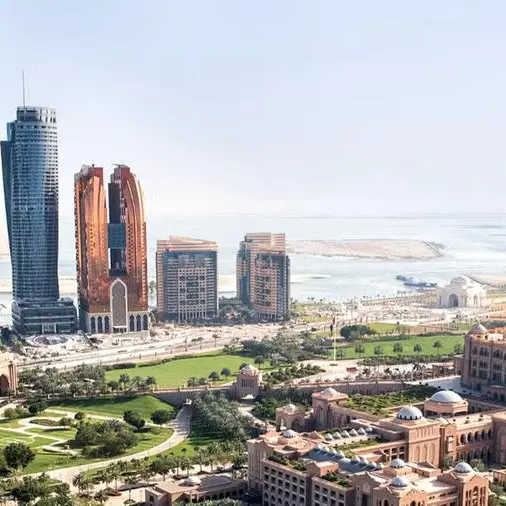
Qatar's Education City, a "university of universities" located on a 2,500 acre campus outside the capital city of Doha, is a multi billion dollar investment in strategic thinking applied to the challenges and opportunities of education. The relevance of the Education City goes far beyond Qatar itself, with lessons for the region as a whole, as well as for educational thinking in other parts of the world.
The vision for Education City was born in a need to migrate an increasingly wealthy country from a culture of consumers to a culture of producers. To achieve this goal, Qatar chose to focus on the foundational requirements of education, Dr. Pradeep is the Global Managing Partner of Meridian Consulting LLC. For more information, visit www.consultmeridian.com building a sustainable infrastructure to generate worldclass educational opportunities for all Qataris, and to do so in partnership with many of the strongest educational institutions in the world.
This vision led to the development of a network of centers and partnerships with elite institutions, all committed to the principle that a nation's greatest natural resource is its people. Education City is designed to be a center of excellence in education and research that will help transform Qatar into a knowledge based society.
"They have the resources to bring what is a very costly system of education that developed over centuries in North America and bring it here" in a period of just a few years, says Daniel Alonso, Dean of Cornell's Medical School in Qatar, which offers a full medical degree at the Qatar campus.
In this article, we review the experience of the Education City from two key perspectives, answering two questions that this unique experiment poses:
What repeatable and scalable best practices went into the design and development of the Education City that can be adopted elsewhere around the world?
What specific opportunities does the Education City represent for the business and investment community in the United States?
Taken together, these questions address the key dimensions of what might be called the Return on Education represented by Qatar's Education City returns from investing in a national educational infrastructure, returns for Qatar and its citizens, and returns for the American business community to support and leverage world class education in the heart of the Middle East.
What Qatar did right
Education City was the first major initiative of the Qatar Foundation for Education, Science and Community Development. Both the Foundation and the Education City were established by the Emir in 1995. Key to the concept and vision of the Education City were two themes: first, to become an international leader in totaling over 130 students, come from more than 20 countries on four continents: Africa, America, Asia and Europe.
Several lessons and best practices can be identified from the Education City experience that can be applied successfully elsewhere. These include:
Obtained sponsorship and involvement by National leaders
Not only was Education City founded at the explicit direction of the Emir, but it has enjoyed continued and deep attention by the royal family since its inception. Sheikha Mozah Bint Nasser Al-Missned, wife of Qatar's Emir, is the Chairperson of the Qatar Foundation, which oversees all aspects of Education City development.
In addition, all Ministers of government agencies are mandated to provide sponsorship for Education City initiatives, based on their portfolios.
Sheikha Mozah has heard the familiar argument that it would be cheaper to send Qatari students abroad than spend billions on a few at home. "But progressive education and cutting-edge research dedicated to training the region's next generation of leaders and innovators, and second, to partner with world class institutions in a setting of worldclass facilities, well trained graduates, and world-class faculty and researchers in the pursuit of real world solutions.
Education City has been successful on both these fronts. It is developing world class facilities to support teaching and research in engineering, healthcare, science and technology, and other leading edge disciplines. It has established precedent setting partnerships with numerous elite institutions that now offer full degree-granting branch campuses in Qatar, including Virginia Commonwealth School of the Arts, Cornell Medical School, Texas A&M University, The RAND Institute, Carnegie-Mellon University, and Georgetown University.
Enrollment has a distinctive international flavor. Members of the first four classes at the Cornell Medical College in Qatar, it's not just educating a few individuals. It's educating the whole nation," she says.
Treated initiative as commercial venture, not charity
From the beginning, the Education City was planned as a commercial venture, not a government hand-out.
Each institution is expected to be commercially viable. All research institutes work closely with commercial partners to provide a steady flow of funding and support for the work undertaken.
This focus on commercial viability helps maintain an unyielding focus on truly useful research directions. The focus on being self-sustaining also naturally creates the avoidance of business blunders..
Adopted rigors of American academic institutions
To attract American academic institutions, strict academic standards and credentials were put in place as part of the Qatar campus requirements. This included strict admissions policies based on merit, unencumbered by any extraneous factors that might favor one student over another.
In addition to admissions, the curricula and evaluation procedures are the same as the policies in the sister institutions in America. Outstanding American standards are continuously maintained.
Established bridge programs for students
The Qatar Foundation launched its Academic Bridge Program in 2001 to provide college preparatory courses for all students preparing for entrance into Education City institutions. This provides a smooth transition program to bring students up to worldclass educational standards, rather than requesting a "transitional period" of lowered standards. For elite colleges and Universities, this commitment provided critical evidence that Qatar was serious about adopting the highest standards for its educational institutions.
Positioned local colleges as community colleges and education city as State University
Qatar dealt with the relationship between its existing local colleges and the Education City by adopting a model not unlike the California model of Community Colleges and State Universities. This provides an integrated educational picture, with clear positioning and objectives for both types of institutions in a single system, alleviating any lingering concerns regarding the role and future of the local Qatari colleges.
Provided scholarships to attracts best and brightest
An important component of world-class educational institutions is need blind, nondiscriminatory opportunity for admission for any qualified student. By providing a generous scholarship program to ensure that no student is turned away based on need, the Education City has shown its commitment to this critical educational pillar.
Created faculty developments programs
Education City planners recognized from the beginning that faculty development was as critical for success as student development. Education City institutions provide numerous development programs that give faculty members incentives to deepen their professional expertise through independent study, institutional membership, joint research and other programs. The focus on faculty and their continued well being is essential to attracting and retaining great talent.
Allied with science park to leverage entrepreneurial talent
Perhaps the most important element in the Education City's blueprint for success is its affiliation with the Qatar Science and Technology Park (QSTP), a world-class R&D and entrepreneurial business park located adjacent to the Education City campus.
Modeled on the example of American Universities and Research Parks, this combination of world-class Universities and entrepreneurial companies creates and feeds an entrepreneurial climate that links education, research, and commercial success.
QSTP makes it easy and attractive for foreign technology companies to set up in Qatar. It operates as an economic "free zone" in which tenants are allowed to independently own and operate local entities that are not subject to tax, duty or capital controls.
Implications for the Ameican business community
There are numerous ways that the American business community can participate in the exciting developments emerging from the Education City. American participation and support are important not only for the potential benefits we can gain through partnership, but also because the Education City is possibly the best hope in the Middle East for showcasing the values and strengths of the American educational model.
Terrorism is best fought through enhanced common understanding. American businesses can contribute to developing a generation of business leaders and young people that have an understanding and appreciation of American values and interests.
In turn, American businessmen can walk away with a deeper understanding of Arab culture and its values that can enable them to develop targeted products and services to this vast untapped market.
Participation in the Education City presents a unique opportunity for all.
American businesses can support and participate in the Education City experience in a number of innovative and mutually beneficial ways:
Work with Qatar to create venture capital infrustructure
As the Education City turns out graduates with world-class expertise and qualifications, it is only natural that such talent will seek economic gains from their educational experience. Just as Silicon Valley venture capitalists nurtured and subsequently profited by tapping into the graduating talent of Stanford University and the University of California at Berkeley, a similar opportunity exists in Qatar.
While there are numerous banking, lending and other financial institutions in Qatar, the unique venture capital funding infrastructure is noticeably absent. This void provides a clear opportunity for American venture institutions to develop, invest, and participate in the creation of this unique infrastructure. Venture capital is equally about the excitement, principle, and discipline of entrepreneurship as it is about raising money. The American venture infrastructure would be well-aligned with the Qatari government's vision to create a country and culture of producers.
Leverage research and faculty involvement in commercial ventures
American businesses can create a research component of commercial ventures in Qatar to involve the faculty in Education City. Faculty members are motivated to seek out and engage in commercial research.
In addition to being world-class investigators and researchers, they bring a deep understanding of Qatar to any commercial venture. The Qatari government is very welcoming of bids and proposals that involve the faculty, expertise, and infrastructure of the Education City. There is considerable ongoing investment in the nation's infrastructure that presents tremendous opportunities for American businesses. Deep collaboration with the Education City can provide a significant competitive advantage to those interested in securing a share of these lucrative contracts.
Create enduring relationships with the next generations of leaders through internships and student involvement
The next generation of Qatarileaders will arise from within the walls of the Education City.
Structuring early and genuine relationships with these young leaders constitutes a worthwhile long-term investment for American businesses. As the young scholars continue their pursuit of higher learning, American businesses can involve the best and brightest of them on an ongoing basis to participate in commercial activity and gain experience.
Such early exposure to the unique means and methods of American business not only adds to their expertise, but also familiarizes them with the modalities and nuances of the American approach to commerce. Leaders in positions of influence and power in the next generation will be relatively young, so creating an early comfort with American business practices and opportunities can pay longerterm dividends.
Partner to accelerate the creation of a true science park and high technology incubator
The Qatar Science Park is putting in place considerable infrastructure and incentives to attract its first round of anchor tenants and partners. The various branches of government and local industry are standing ready to generously reward and nurture the anchor tenants who make a commitment to growing a technology and research base in the country. American businesses have much to gain by establishing an anchor presence that is genuinely dedicated to research and development, not just a glorified sales and service arm. A sincere commitment to research and development in Qatar can not only enable the creation of a unique set of products and services for Qatar, but can become a launching pad and hub to engage the entire region. As the various arms of government have specified the Science Park presence to be a prerequisite to serious commercial involvement, it follows that early and deep Science Park presence can be a significant competitive advantage in the region going forward.
Leverage understanding of American values and approach to life
Faculty teaching at the Education City do more than just impart knowledge to young minds. They impart in subtle ways core American values and our unique approach to life, while respectfully absorbing and blending the nuances of Arab values and culture. In their classrooms the faculty perform this task many times more efficiently than fly-by diplomats or propaganda broadcasting channels.
Students are quick to recognize the benefits. Anas Abou-Ismail, an 18 year old Syrian pre-med student at the Cornell Medical College in Qatar, describes the American-based education model as one of the most influential factors in promoting peace and tolerance in the region.
"You learn to accept all different ideas and not to be scared of someone because he comes from a certain country or region, or because he's of a certain religion," Abou-Ismail said. "You learn to be very open minded and accept things and new ideas."
The Education City offers an extraordinary opportunity to explain, challenge, and debate the numerous aspects of the great American experiment with brilliant and inquisitive young minds. American businesses should consider sending some of their executives on sabbaticals to the Education City where they could teach, write, and engage in constructive dialog about various aspects of business. In doing so, they will bring a deep understanding of American life to the students, while attaining and bringing back to their businesses a richer and deeper understanding of Arab values and culture.
In conclusion
The Education City in Qatar is emerging as one of the greatest experiments in the utilization and leveraging of national wealth to support global education and collaboration.
We have described how the systematic application of eight educational best practices has contributed to the success of the Education City. We have seen how a lofty vision and unyielding commitment to realizing it can provide a unique blueprint for other nations pursuing ambitious 21st Century educational goals.
In addition, we have shown how this is a truly historic occasion for the American business community to forge deep and enduring partnerships with Qatar to extract extraordinary ROE Return on Education from the educational vision and commitment represented by the Education City.
By Dr. A. K. Pradeep
ABANA Review 2006