PHOTO
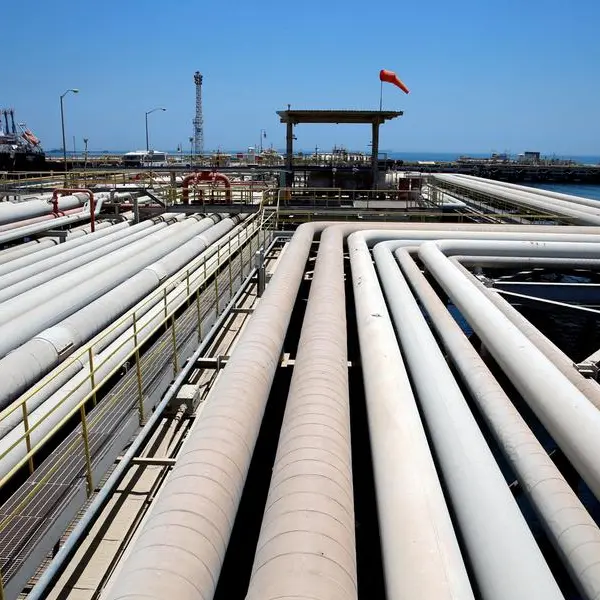
Opposition from Morocco's finance ministry was behind an energy ministry decision to suspend an invitation for bids to build a natural gas pipeline, an official document showed and a source familiar with the matter said on Tuesday.
Launched last month by the energy ministry, the pipeline tender was part of efforts to facilitate the import of gas and transition away from coal, but was vetoed due to what the finance ministry saw as procedural breaches, fiscal risks and uncertainty over a new gas law, the document and the source said.
The energy ministry had said on Monday it was putting the tender on hold due to what it called "new parameters and assumptions", but gave no further details. Both ministries did not respond to requests for comment on Tuesday.
The finance ministry said in the document, which was seen by Reuters, that it "reiterates its commitment to continue supporting this project" and that it stands ready to resume evaluation once the required conditions are met.
PIPELINE WOULD HAVE LINKED TO FUTURE TERMINAL
Rachid Ennasiri, director at independent climate think tank IMAL, said: "Putting this pipeline on hold may prove a prudent risk-management decision in a context of volatile fossil-fuel prices and shifting gas markets."
"Across many power systems, governments are responding to prices and security risks by accelerating the deployment of renewables, storage and grid flexibility, and avoiding long-term gas lock-in," he added, saying Morocco's energy interests lie in domestic renewables.
The tender, framed as a public-private partnership, was to build a pipeline linking a future gas terminal at the Mediterranean port of Nador West Med to an existing pipeline that Morocco uses to import LNG via Spanish terminals. It set February 3 as the date for opening bids.
The tender also covered a section linking the existing pipeline to industrial zones in Mohammedia and Kenitra on the Atlantic coast.
The document said the pipeline tender was vetoed by the finance ministry on the basis of an opinion made by the commission in charge of approving public-private partnerships on January 20.
MOROCCO LOOKING TO REDUCE COAL RELIANCE
Signed by the finance minister, the document said the tender had been launched without the finance ministry's prior approval of the eligibility of the project to public-private partnership status.
It also cited uncertainty over which public institution should oversee the project, along with concerns about the project's "budget sustainability” and an “unbalanced allocation of risks between the private operator and the public entity."
It added that the project lacked a target scenario for structuring the partnership.
Morocco is seeking to expand natural gas use to reduce reliance on coal while advancing a renewable energy plan that targets 52% of installed capacity by 2030, up from 45% now.
In 2024, coal accounted for 60% of Morocco's electricity production, compared with 10% for natural gas and 25% for wind and solar, according to the national electricity regulator (ANRE).
The country's gas demand is expected to rise to 8 billion cubic metres by 2027 from about 1 bcm currently, according to ministry estimates. Morocco imports most of its gas needs from Spanish LNG terminals using a pipeline that previously carried Algerian gas.
(Reporting by Ahmed El Jechtimi; Editing by David Holmes)