PHOTO
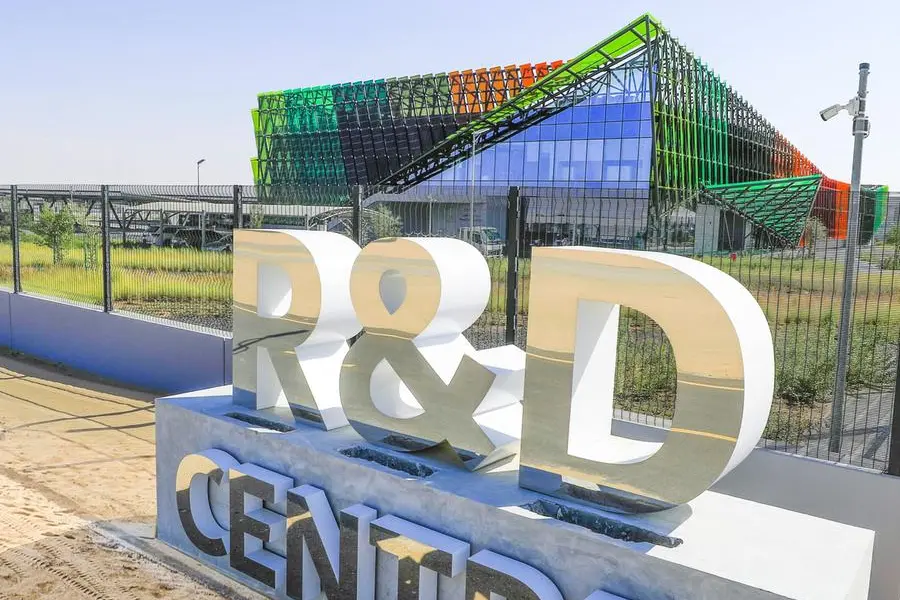
Saeed Mohammed Al Tayer, MD and CEO of Dubai Electricity and Water Authority (DEWA), announced that DEWA’s Research and Development (R&D) Centre has published its fifth Transactions Report, highlighting Scopus-indexed scientific and research papers presented at international conferences and in peer-reviewed journals.
“The total number of research papers published by the Centre in international peer-reviewed scientific conferences and journals has risen to 346 papers, after the report added 71 new research papers. The research covered diverse fields including solar energy, energy systems, smart grids, Fourth Industrial Revolution technologies and advanced materials. The Centre also achieved a milestone in innovation by registering 64 patents, of which 18 have been granted, while the remaining applications are currently under review. Supporting these research efforts is a team of 44 employees, including 9 Ph.D. holders and 19 Master’s degree holders,” Al Tayer said.
“We are working to make Dubai a global destination for the best scientists and researchers in the region and the world, and to strengthen the emirate’s position as a global hub for a knowledge economy. The R&D Centre plays a vital role in strengthening our global leadership by harnessing scientific research to drive significant advancements, promote the sustainable management of water and energy resources, and deliver innovative solutions and technologies that elevate DEWA’s operational excellence and service quality. This enhances our efforts to exceed stakeholder expectations, support Dubai's energy systems, and accelerate the global energy transition,” Al Tayer added.
Waleed bin Salman, Executive Vice President of Business Development and Excellence at DEWA, said, “The research papers published by the centre reflect DEWA’s commitment to innovation and to strengthening collaboration with leading international institutions, including the Fraunhofer Society, Stanford University and the Swiss Center for Electronics and Microtechnology (CSEM), in addition to researchers from various divisions at DEWA.”
The scientific and research topics featured in the centre’s fifth report include enhancing the resilience of solar photovoltaic (PV) models under harsh desert conditions and developing next-generation PV cells; deep learning-based non-intrusive load monitoring using convolutional neural networks; comparative analysis of heating, ventilation and air conditioning energy performance standards in the GCC region; grid demand flexibility; the use of microphase measurement units (μPMUs) for incipient fault detection in distribution networks through real-time detection and classification using hardware-in-the-loop testing; automated underground utility mapping through robotic solutions and sensor technologies; advances in 3D printing and vanadium redox flow batteries; and the Generalizable Energy Optimization System GENOS model developed by DEWA to enhance renewable energy resilience.