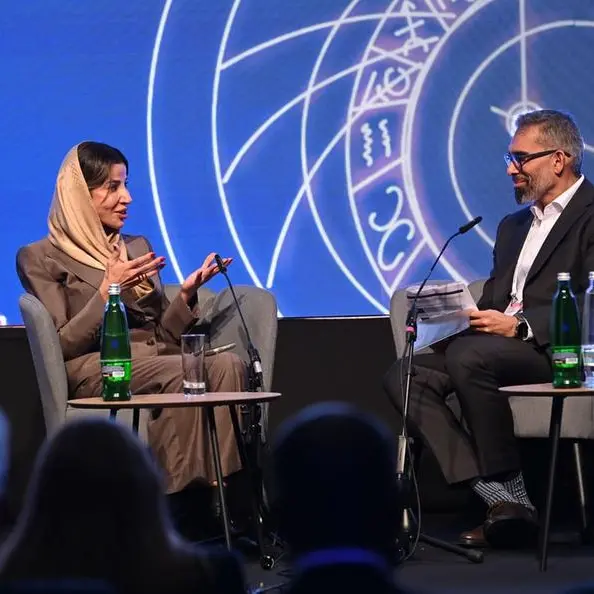
Doha: Brookings Doha Center yesterday discussed the US-GCC relations after the Arab awakening from a Washington prospective.
Salman Shaikh, Director of Brookings Doha Center, mediated the discussion which started with the basic assumption that with deeply rooted economic, political and military ties with the GCC, in addition to its ongoing anxiety over Iran, the United States is faced with challenging circumstances in the Gulf.
Challenges that at the moment the US seems not interested in dealing with are the domestic economic crisis prevailing on every aspects of the American foreign policy. "This leads to a new isolation of the American foreign policy as both liberals from the Democratic party and people from the Republican party in the US are only focused on domestic issues and on the state of the American economy," said Kenneth Pollack, Director of the Saban Center for Middle East Policy at Brookings. The upcoming elections in the US will be played on internal issues and this will aggravate the lack of interest in foreign policy.
This is a new page for the US as the country has based its identity on its foreign policy for years. But the US' invasiveness is so evident that the country can't just quit its engagements in the Arab world to take care of its own business. Regarding the GCC countries, Hillary Clinton has supported women driving cars in Saudi Arabia, but "American interests in Saudi Arabia are so strong that in the end any US intervention in Saudi Arabia would be detrimental to their relations," said Suzanne Maloney, Senior Fellow at the Saban Center. In this case in fact the US' low profile is due to its own strategy, not because its economic crisis or agenda.
But from now on, US foreign policy will not be dictated by its agenda. American politics concentrates on what interests its people and right now foreign policy is their last problem, so the government will take care of the most urgent issue, taking time on the others. And the GCC countries seem to be standing in this last area of interest.
Obama's administration has no interest in staying longer in Iraq. He wants to leave as soon as possible both to demonstrate that the promises have been kept and to tell the people that the government will not go on wasting the US citizens' money on Iraqi invasion, especially now that this is a very sensitive issue for the protesters occupying Wall Street.
The other hot issue is dealing with the democratisation process in the North African countries. "Hillary Clinton is struggling to get aid packages for Egypt, Libya, Tunisia ... but the Congress has no interest in increasing the US foreign policy budget," said Pollack. "The US is trying to be as creative as possible with coming up with money and programmes, but it won't be able to give the generous aid that is needed by these countries," he added.
The Iranian plot to kill the Saudi Ambassador to the US has raised again the evidence of the Iranian threat. "One of the most important consequences of the Arab Spring is the intensification of the competition between Saudi Arabia and Iran" said Maloney. Obama started with a soft approach towards Iran, but without receiving any feedback, he decided to take a more assertive approach, increasing pressure over Iran as Bush did.
But as Suzanne Maloney said, there are no prospects of success for Obama to take Iran to a table of negotiations. "This strategy of pressure and persuasion has failed" said Maloney. "This policy is working in the sense that the sanctions are working on an economic and strategic level by making Iran's life more difficult both economically speaking and in its relations with other countries. But it's not working in changing Iran's view on its nuclear programme and bringing it to negotiation," she added.
Even analyzing the international community approach towards Iran, the panorama doesn't give much hope. On one side this is the first time that a conventional arms ban and sanctions were established, showing a higher level of international cooperation in pressuring Iran. But on the other side the UN Security Council will never take action as Russia and China will veto any initiative against Iran.
© The Peninsula 2011