PHOTO
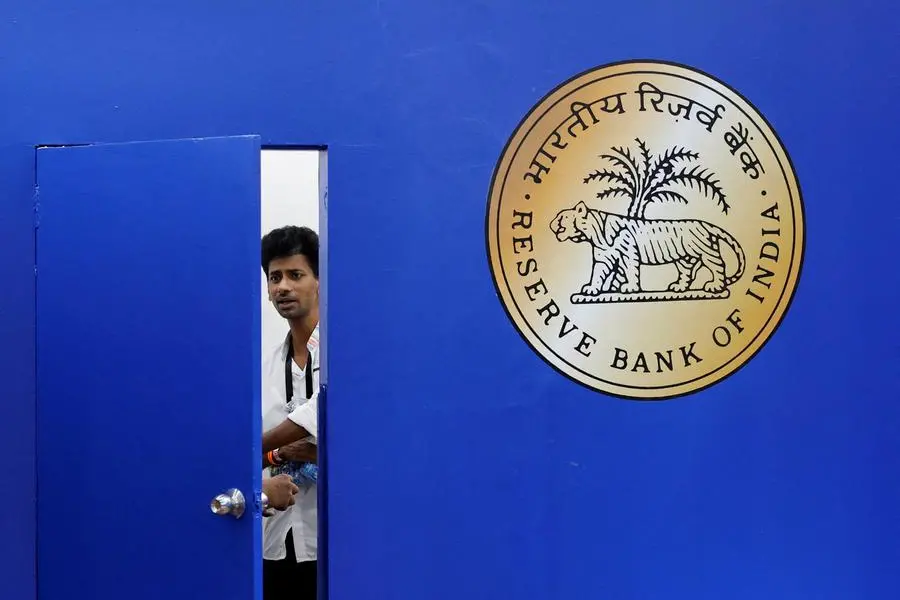
MUMBAI - India's central bank once again resorted to heavy intervention on Wednesday to support the rupee, six traders said, pushing the currency past the 90-per-dollar mark following a dip at the market open.
The rupee traded at 89.9325 per U.S. dollar, up 0.26% on the day, having slipped to 90.2250 shortly after the open. The currency hit an intraday high of 89.7550 on the interbank order-matching system.
Wednesday's intervention followed a familiar playbook that the Reserve Bank of India used repeatedly last year, when it stepped in aggressively to push the rupee higher, aiming to disrupt one-way moves.
The rupee continues to face headwinds from persistent foreign selling of Indian equities, a trend that has extended from 2025 into the New Year, alongside lingering uncertainty over a U.S.–India trade agreement.
"There was clearly some build-up in (long dollar) positions, although it’s hard to say whether it had become excessive," a trader at a private sector bank said.
"Maybe the larger concern was that it (dollar/rupee) was moving in a very one-way fashion."
In previous episodes, intervention typically came amid a build-up of speculative long dollar positions and expectations of consistent rupee depreciation, according to bankers who track the foreign exchange market.
Prior to the RBI-engineered recovery on Wednesday, the rupee had fallen about 1% over the past two weeks.
Unlike Tuesday’s session, in which opinion was divided about whether the central bank was present in the market, Wednesday’s move left little room for doubt about whether it was involved.
"Today the move was too quick for it to be anything else.” said another trader at a private sector bank.
(Reporting by Nimesh Vora; Editing by Nivedita Bhattacharjee)