PHOTO
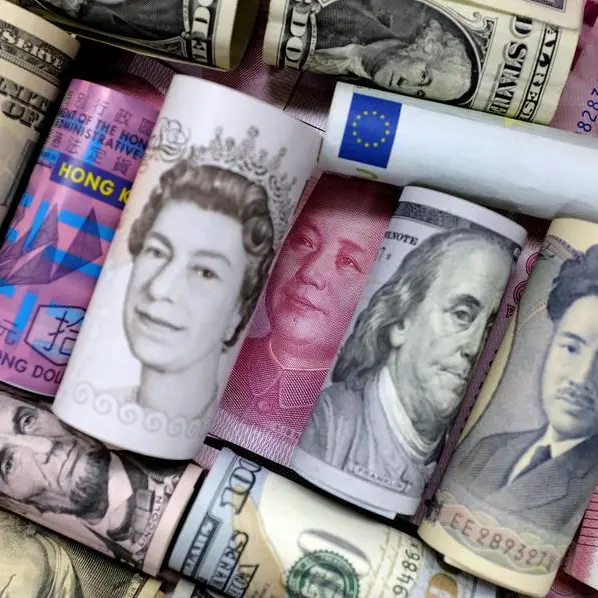
The dollar slipped on Friday, on pace for a second straight weekly fall as investors stayed cautiously optimistic about a swift end to the Middle East conflict, after President Donald Trump said the ceasefire remained in place despite renewed U.S.-Iran hostilities.
The two sides have occasionally exchanged fire since the ceasefire took effect on April 7, with Iran hitting targets in Gulf countries including the UAE.
Analysts said investors were taking heart from the fact that while oil prices were modestly higher, a fragile ceasefire broadly held.
"The U.S. has strongly suggested it is trying to avoid escalation and wants the ceasefire intact," said Kyle Chapman, FX markets analyst at Ballinger Group in London.
The dollar index measured against key peers fell 0.28% at 97.96, after hitting 97.623 earlier this week, its lowest level since February 27, a day before the war started. It was set for a weekly drop of 0.3% after falling about as much the previous week.
The euro was up 0.4% at $1.1773, poised to end the week a touch firmer.
Investors, who had flocked to the safe-haven dollar and sold currencies of oil import-dependent economies such as Japan and the euro area after oil prices surged following Iran's effective closure of the Strait of Hormuz, drifted toward riskier currencies in recent weeks as hopes grew for a resolution to the Iran conflict.
LABOR MARKET RESILIENCE
The U.S. currency was little-moved after data on Friday showed U.S. employment increased more than expected in April while the unemployment rate held steady at 4.3%, pointing to labor market resilience and reinforcing expectations that the Federal Reserve would leave interest rates unchanged for some time.
Payrolls have been choppy since mid-2025, alternating between gains and losses.
"The payrolls volatility this year should steer the market away from placing too much emphasis on a single print - the trend still leans towards softening, and it points firmly to a Fed on hold this year," Ballinger Group's Chapman said.
YEN SUPPORTED BY INTERVENTION RISKS
Traders remained focused on the Japanese yen after recent interventions and verbal warnings from Tokyo kept sharp selling at bay. Against the yen, the dollar was 0.3% weaker at 156.585.
Japan faces no constraints on how often it can intervene in currency markets and is in daily contact with U.S. authorities, its top currency diplomat said on Thursday, reinforcing Tokyo's resolve to defend the embattled yen.
"The reports of clashes between the U.S. and Iran in the Strait of Hormuz certainly raises the risk of a renewed jump in crude oil prices that scuppers Japan’s efforts to halt a move in dollar/yen through the 160-level," said Derek Halpenny, head of research global markets at MUFG.
Analysts argued that until macro and technical conditions change, traders are likely to keep testing the Bank of Japan's resolve.
RISKIER CURRENCIES RISE
The pound and UK government bonds climbed on Friday after British Prime Minister Keir Starmer said he would not resign despite bruising losses for his ruling Labour Party in local elections.
The pound was up 0.5% at $1.36155.
The Australian dollar rose 0.4% to $0.72390, and the New Zealand kiwi was 0.3% higher at $0.5958, both on track to post gains for the week on improved risk appetite.
Leading cryptocurrency bitcoin was about flat on the day at $79,635, not far from the more than three-month high of $82,793 touched on Wednesday.
(Reporting by Saqib Iqbal Ahmed; Additional reporting by Stefano Rebaudo in London; Editing by Shri Navaratnam, Kim Coghill, William Maclean and Nick Zieminski)