Nader Azar gives an account of the recent challenges that beset the Amman Stock Exchange and how it has seen a reversal of fortune in the first quarter of 2013.
Despite the challenges brought on by high oil prices and the increased government subsidies on basic commodities and energy supplies, Jordan's GDP managed to post a real growth rate of 2.7% in 2012, according to preliminary indicators.
The political tension in neighboring countries, however, continues to put pressure on the Jordanian economy. As a result, sovereign debt reached an all-time high and the budget deficit surpassed its anticipated level. Inflation was also slightly higher at 4.8% in 2012, compared with 4.4% in 2011.
In addition, the Central Bank of Jordan (CBJ) raised the rediscount rate by 0.5% last year. Interest rates on six months treasury bills also jumped by 0.6% and the weighted average interest rates on credit facilities - extended in the form of loans and advances - rose by 0.3% at the end of 2012.
Local liquidity as measured by money supply (M2) grew by 3.4%. However, foreign currency reserves at the CBJ stood at JOD 4.7 billion at the end of 2012, plunging by 37% from the JOD 7.45 billion recorded in 2011.
As for the outstanding public debt, the central government's obligations soared by a significant 23.7% last year to reach USD 23.4 billion. Domestic public debt totaled USD 16.43 billion, while the outstanding external public debt reached almost USD 7 billion during the period.
The CBJ expects the country's real economic growth to be around 3.3% with inflation rate at 6% in 2013.
Q1 2013 stock market performance
The first three months of 2013 proved favorable for ASE - trading value surged by 41% to reach JOD 824 million, traded shares were 29% higher at 935 million and the number of executed transactions was up by 15% at 335,000.
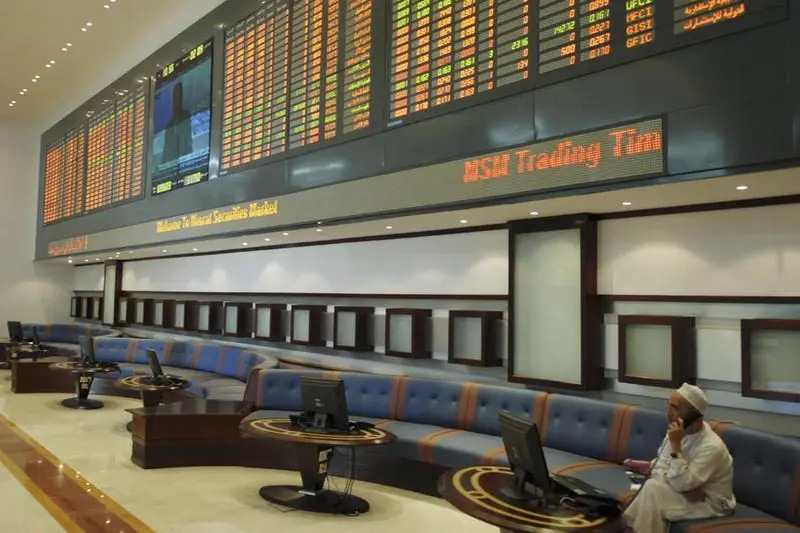
Stock prices increased by 7% until the end of March 2013 and the exchange's total market capitalization soared to USD 27.8 billion, representing 96% of the GDP. At the end of the first quarter, the ASE ranked fourth among regional stock markets dominated by Abu Dhabi Securities Exchange, Kuwait Stock Exchange and the Dubai Financial Market, which posted growth of 15%, 13% and 12.7% respectively. Amman even outperformed Saudi Tadawul's 5% positive return and Muscat Securities Market's 4% growth.
But despite the increase in stock prices and market capitalization, the price-earnings (P/E) ratio at ASE dropped to 14.8 (times) at the end of March compared with 15.6 (times) at the end of December 2012. This has been attributed to the increase of shareholding companies' profits in 2012. The number of companies that provided the ASE with their annual reports is 207 and their combined profits grew by 12.5% compared with figures posted in 2011.
The net of non-Jordanian investment recorded at the end of February showed an increase of JOD 11.3 million, compared with an increase of JOD 3.4 million in the same period of 2012. Foreign ownership of companies listed at the ASE at the end of February represented 51.2% of the total market value, with Arab investors accounting for 33.8% and non-Arab investors at 17.4%.
Hope in capital markets
The global financial crisis in 2008 and the Arab Spring in 2011 brought Jordan's economy to its knees. Nervous investors were only eager to take their money out of the country as evidenced by the stock market carnage experienced in recent years. Trading values at the Amman Stock Exchange (ASE) dropped dramatically to USD 2.8 billion in 2012 from USD 28.6 billion in 2006.
The lackluster performance reflected Jordan's unstable economic condition, which has been mired by regional uncertainty. It is also a clear indication of the strong relationship between secondary and primary markets.
Increasing the activity in the secondary market helps build confidence and attract more equity investments. As past trends in the ASE would indicate, a more active secondary market also leads to increased activities in the primary market.
The Amman bourse's trading activity indicators for 2013 have so far been promising. Looking at these indicators, we believe that hard times for the ASE will soon come to an end. We expect the activity of the secondary market to increase and attract more investors. We are also confident that the primary market will gather pace next year. These projections can be attributed to the government's focus on raising capital expenditures, which will result to higher growth rates and stock market activities.
The number of listed companies and the activity of the secondary offerings will likely grow in the future as the ASE remains highly attractive to institutional investors, who are looking for stable, competitive and well regulated markets.
ASE: An overview
The ASE has been committed to developing the Jordanian capital market and expanding the exchange's investment structure by attracting more investors and raising market depth. It seeks to introduce new financial instruments and diversify investment options.
The Amman bourse benefits from its partnership with other exchanges worldwide. It is an active member of various groups such as the World Federation of Exchanges, the Federation of Euro-Asian Stock Exchanges, the Federation of Arab Exchanges and the International Organization of Securities Commissions, to name a few.
Prior to the recent regional turmoil and global financial crisis, ASE's extraordinary returns have spurred high activity in the primary market during the years 2004 to 2008. The free-float index also registered some of the highest growth levels in the bourse's history with 62% in 2003, 55% in 2004 and 56% in 2005.
These competitive returns, coupled with the secondary market's high activity, were instrumental in drawing investors to the stock market. Many existing companies were also encouraged to raise capital and investors were keen to establish new companies. As a result, a total of USD 3.4 billion was raised in 2006 through the establishment of new companies and the capital hike of already established companies.
Trading Values at the ASE (USD million)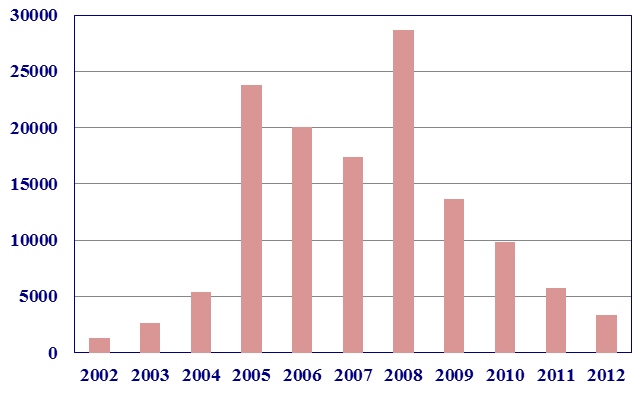
From 2004 to 2008, a substantial number of new companies were established and a large number of listed companies engaged in secondary offerings. All of these developments were brought about by investors' desire to benefit from attractive market opportunities and high liquidity levels.
The inventory of listed companies grew from 161 in 2003 to 243 at the end of 2012. At that time, the secondary market witnessed very heavy trading with yearly average value exceeding USD 20 billion, and stock prices reaching their peak.
Primary Market Activity (USD million)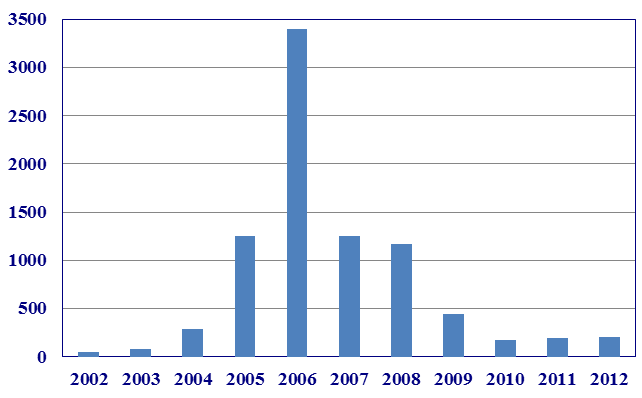
While regional market conditions may remain challenging, we believe that the Jordanian economy continues to offer diverse investment opportunities in various economic sectors, including the capital markets.
Nader Azar is acting chief executive officer of the Amman Stock Exchange (ASE).
Zawya 2013